Yamamoto Answers the Bell When It Matters Most
By Ty Whitney ·
The Dodgers' ace matched his career strikeout high while the bullpen sat idle, signaling why Dave Roberts trusts him in high-leverage innings that other starters won't shoulder.
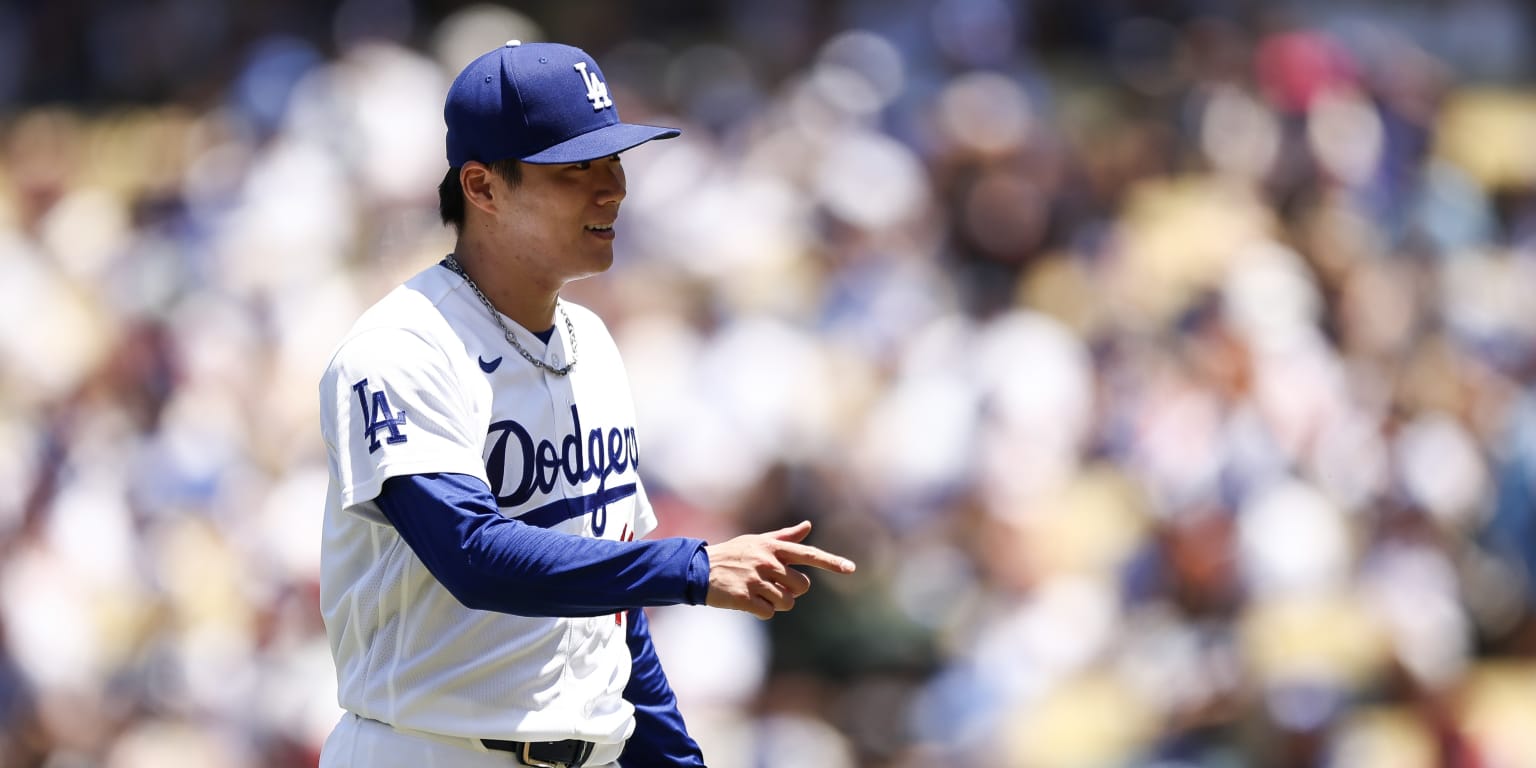
Yoshinobu Yamamoto threw 104 pitches across 5⅓ scoreless innings Sunday against Philadelphia, matching his career-high 10 strikeouts to secure the series finale. The performance wasn't a one-off—it was a deliberate deployment choice by Dave Roberts, who had carefully managed workload for Justin Wrobleski (seven innings, sub-90 pitches Friday) and Roki Sasaki (5⅓ innings, sub-90 pitches Saturday) precisely because he knew he'd need Yamamoto to absorb the wear-and-tear when lineup pressure came.
The Phillies' game plan was textbook: work the count, force length, grind Yamamoto into fatigue across a series finale. He needed 94 pitches just to get through five frames—elite efficiency it wasn't—but Roberts kept him in for the sixth anyway. The reason cuts directly to availability: both Alex Vesia and Tanner Scott were unavailable in the bullpen, leaving only Jack Dreyer as a left-hander. That created a choice: burn Dreyer in the sixth against Harper and Brandon Marsh, or let Yamamoto—already at 94 pitches—climb the ladder himself. Roberts picked Yamamoto, and the ace answered by striking out Harper to cap his 10th K of the game.
What matters for proposition tracking is the consistency underneath the surface. Yamamoto has now crossed 100 pitches four times this season. No other Dodgers starter has done it more than twice. That gap isn't accident—it reflects how deeply Roberts depends on Yamamoto's capacity to extend himself in moments when the bullpen is constrained or the stakes are highest. Games where Yamamoto exceeds 100 pitches tend to cluster around series finales, division matchups, or situations where the bench has already absorbed heavy usage earlier in the series. Catcher Dalton Rushing's VAR challenges also yielded two strike calls against Schwarber and Harper in the first inning, signaling that the Dodgers' framing advantage with Yamamoto extends beyond just his stuff—the entire catching approach creates additional strikeout opportunities.
For bettors tracking Yamamoto strikeout props in high-stakes matchups, the pattern is clear: when Roberts signals the bullpen is taxed or unavailable, Yamamoto's usage extends further into games and his pitch counts climb. That extension historically produces elevated K totals because he pitches deeper into situations that other starters would hand off. A 10-strikeout game matches his ceiling, but 8+ strikeouts becomes a reasonable target when the opponent's lineup is grinding and the Dodgers' relievers are banged up. The leverage context matters as much as the matchup itself.