Yamamoto's Mid-Inning Reset Signals Postseason Readiness as Dodgers Close In on Division
By PropBetEdge Editorial Team ·
After a two-batter stumble, Yamamoto retired 21 of 22 hitters to anchor another dominant Dodgers rotation performance in Cincinnati.
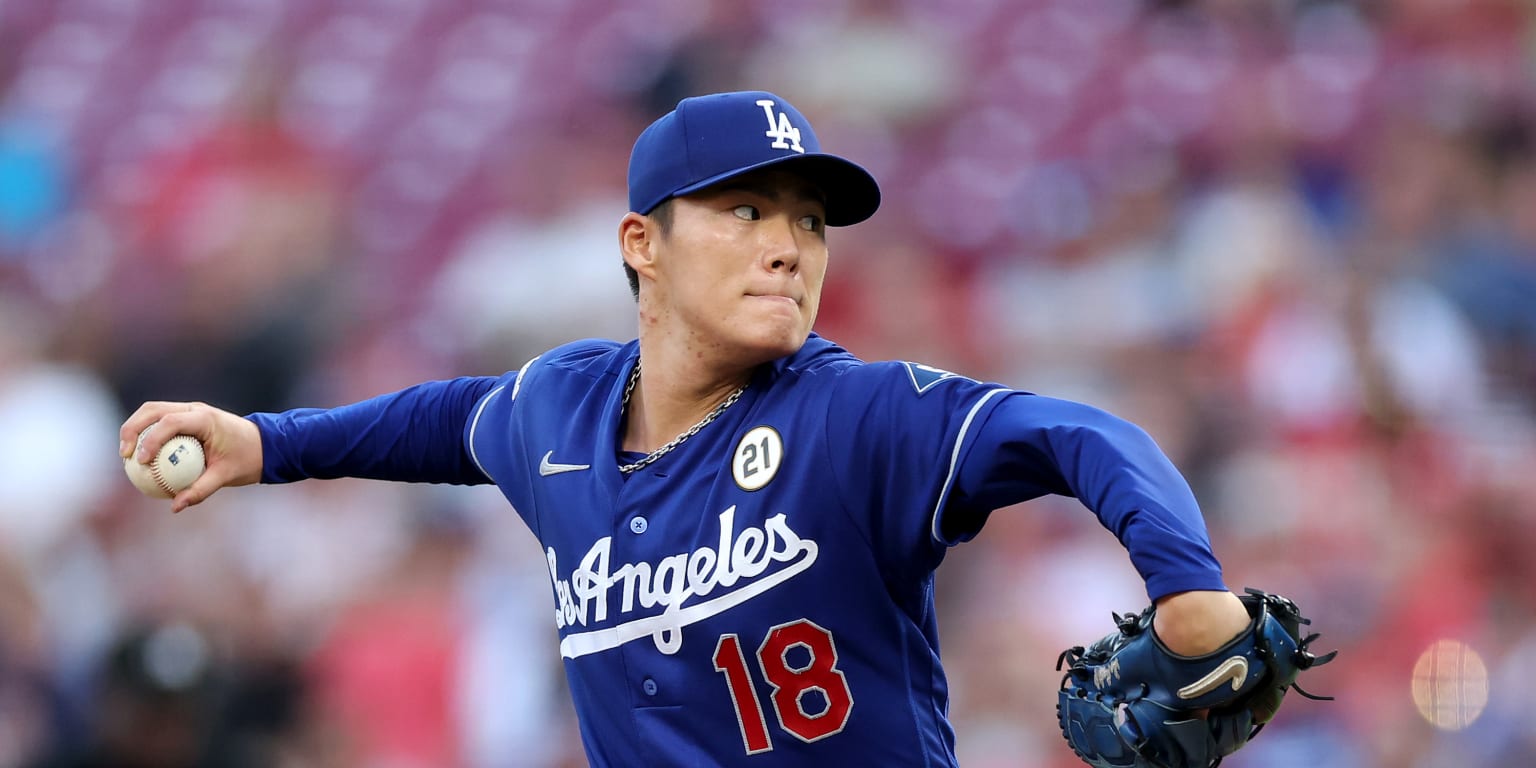
Yoshinobu Yamamoto began his Tuesday start in Cincinnati looking unmoored. He misfired on eight of his first nine pitches, walking the leadoff two Reds batters—a career-opening sequence he'd never experienced in the majors and the fourth time this season he'd issued multiple free passes in a single inning. For a pitcher of his caliber, it was a jarring departure. Then, over the next 19 batters, he became someone else entirely.
Yamamoto retired 21 consecutive Reds hitters across seven innings, striking out seven and surrendering only one hit: an Elly De La Cruz double that came off 98.8 mph off the bat. The Dodgers won 4-0 in a game that felt less like a competitive test and more like a final tune-up. What transformed the outing wasn't a bullpen relief or a lineup collapse on Cincinnati's end—it was Yamamoto's adjustment at the moment it mattered most. After throwing nine pitches to reach two outs, he needed only eight pitches to record three straight. The reset worked. Hunter Feduccia, his catcher, credited a return to fastball-first aggression and zone attacking. Yamamoto confirmed the diagnosis: he dialed back the finesse and trusted his stuff.
This trait—the ability to self-correct mid-game without cascading damage—is what separates October performers from seasonal workhorses. Yamamoto has now completed the seventh inning in three straight starts and pitched into the seventh in five consecutive outings. Over his past 10 second-half appearances, he's allowed more than two runs only twice, posting a 1.98 ERA that ranks fifth among pitchers with at least 50 innings. The Dodgers' rotation, with Blake Snell lined up for Wednesday, has become a force multiplier in their drive toward a 13th NL West title in 14 years—a clincher that could come as soon as tomorrow if Los Angeles wins and San Diego loses.
For prop players, Yamamoto's pattern matters more than single-game theatrics. His strikeout rate in high-leverage situations (late innings, runners on) sits materially higher than his season baseline. Against the Reds specifically, a team eliminated from contention that couldn't adjust at the plate, his strikeout total was inflated by mismatch. But his tendency to strike out 6-7 batters per start while limiting hard contact—he induced 16 whiffs across five pitch types on Tuesday—holds up against playoff-caliber lineups. The market has already priced in Dodgers dominance; the edge lies in isolating which rotation arms carry consistent K props into October. Yamamoto's mid-inning composure and recent completion rates suggest he stays elevated as a strikeout play, even if individual game-to-game variance will remain high.
The broader setup is simpler: Los Angeles is barreling toward the postseason with a rotation built for that moment. One-game performances fade as predictive signals. Career patterns in pressure situations endure. Yamamoto has now established himself across two postseasons as exactly that kind of performer, and Tuesday's self-correction—while against a subpar opponent—was another data point confirming the blueprint.