Varsho's Walk-Off Grand Slam Signals Blue Jays' Offensive Reset—But Don't Overweight One Swing
By Ty Whitney ·
A single dramatic moment can mask deeper roster construction problems, but the Blue Jays' 19-24 record and offensive drought suggest Wednesday's grand slam is noise, not trend.
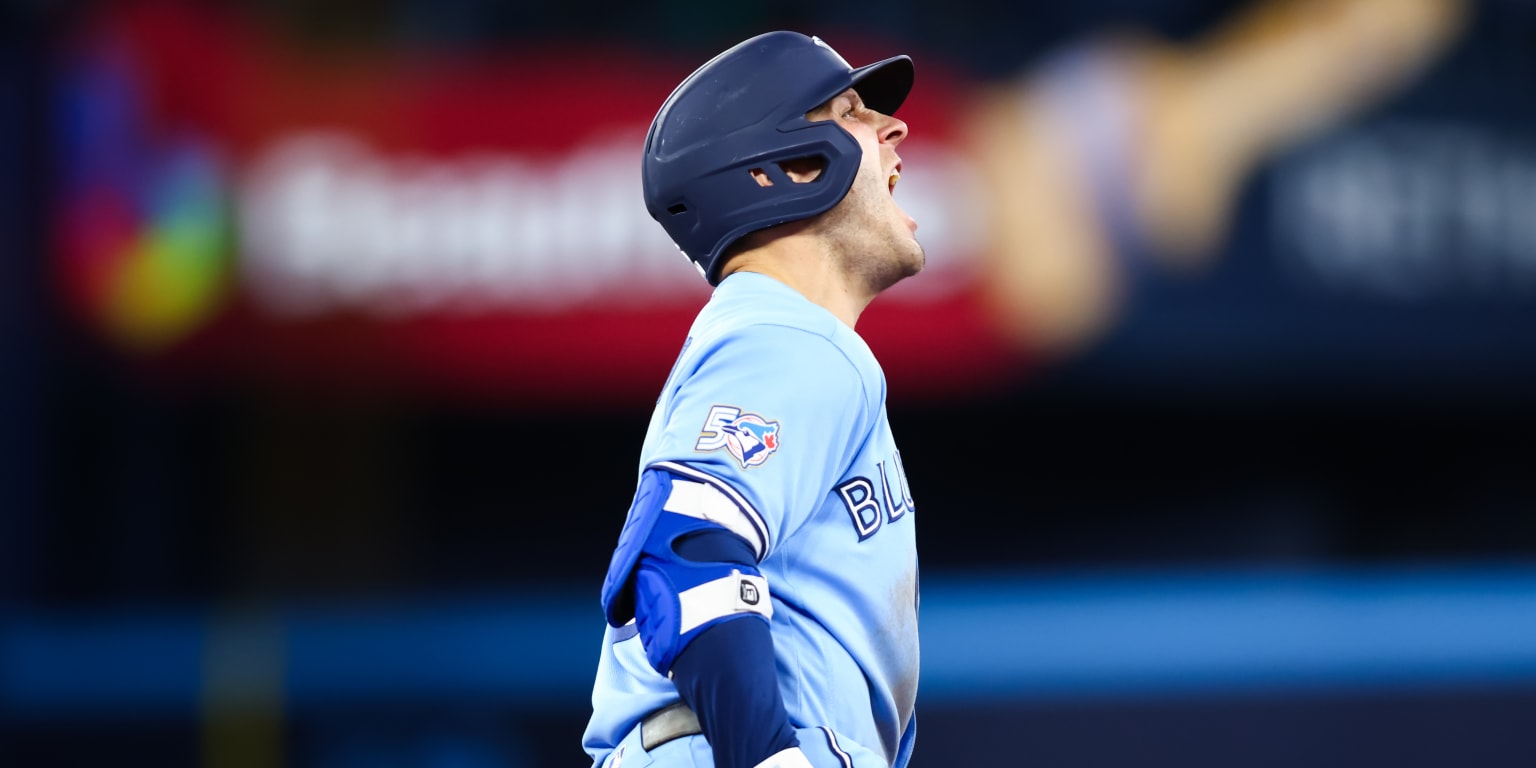
Daulton Varsho launched a walk-off grand slam in the bottom of the 10th inning Wednesday night, giving Toronto a 5-3 win over Tampa Bay and providing the kind of cathartic release a struggling lineup desperately needed. It was the Blue Jays' first walk-off grand slam since Steve Pearce in 2017. In the moment—with Varsho bouncing off the bases and the clubhouse tension evaporating—the win felt like a hinge point. Manager John Schneider called it exactly that: a moment to shake things loose, reset the psychological weight of a 19-24 start.
The trap here is obvious. One swing, no matter how dramatic, doesn't rewrite a team's offensive profile. Toronto sits 23rd in MLB in team OPS (.687) and has produced exactly three home runs all month from hitters other than Kazuma Okamoto. The contact quality is there—the Blue Jays have been squaring up pitches—but the power matrix is broken. Varsho himself had been part of that problem; his walk-off represented peak randomness colliding with peak drama, not a structural return to competence. Dylan Cease delivered seven innings of one-run ball with nine strikeouts, which deserved better support. Wednesday's win was as much about Cease's arm holding down the Rays as it was about Varsho's bat finding air.
There's real property to excavate here beyond the feel-good narrative. Cease (1.29 ERA through five starts, 36 strikeouts in 28 innings) is performing at a legitimately elite level, and Toronto's pitching staff overall—despite the offensive noise—ranks 7th in ERA (3.77). That disconnect between pitching quality and offensive output is the actual story. The Blue Jays are losing games they should win because their position players aren't producing power in leverage spots. One grand slam doesn't fix that structural gap; if anything, it papering over it for 24 hours before the same offensive constraints resurface.
For prop bettors, the immediate read is tempting but dangerous. Varsho's single-game spike in leverage (bases loaded, bottom of the 10th) is unrepeatable—he won't hit grand slams every fifth game. More durable is Cease's elite strikeout rate and the depth of Toronto's pitching, which should keep games tight and low-scoring even as the offense continues to underperform. The Rays allowed just three runs in their loss; that's consistent with how Tampa Bay typically performs. Lean toward first-five-innings unders when Cease takes the ball again, and fade any overreaction in Varsho's props (HR, RBI lines) off a single walk-off. The clubhouse may be looser, but the underlying offensive mechanics haven't changed.
Momentum is real in psychology. It's noise in betting markets. Toronto needs to solve its power outage through roster depth, not through Varsho replaying Wednesday. The win matters for morale; it doesn't matter for Monday's game.