Bryan Woo Dominates Arizona's Fastball-Heavy Lineup With Signature Stuff as Mariners Push Above .500
By Erik Schwartz ·
Seattle's ace threw seven scoreless innings against a team built to punish fastballs—and did it by leaning harder into his best pitch.
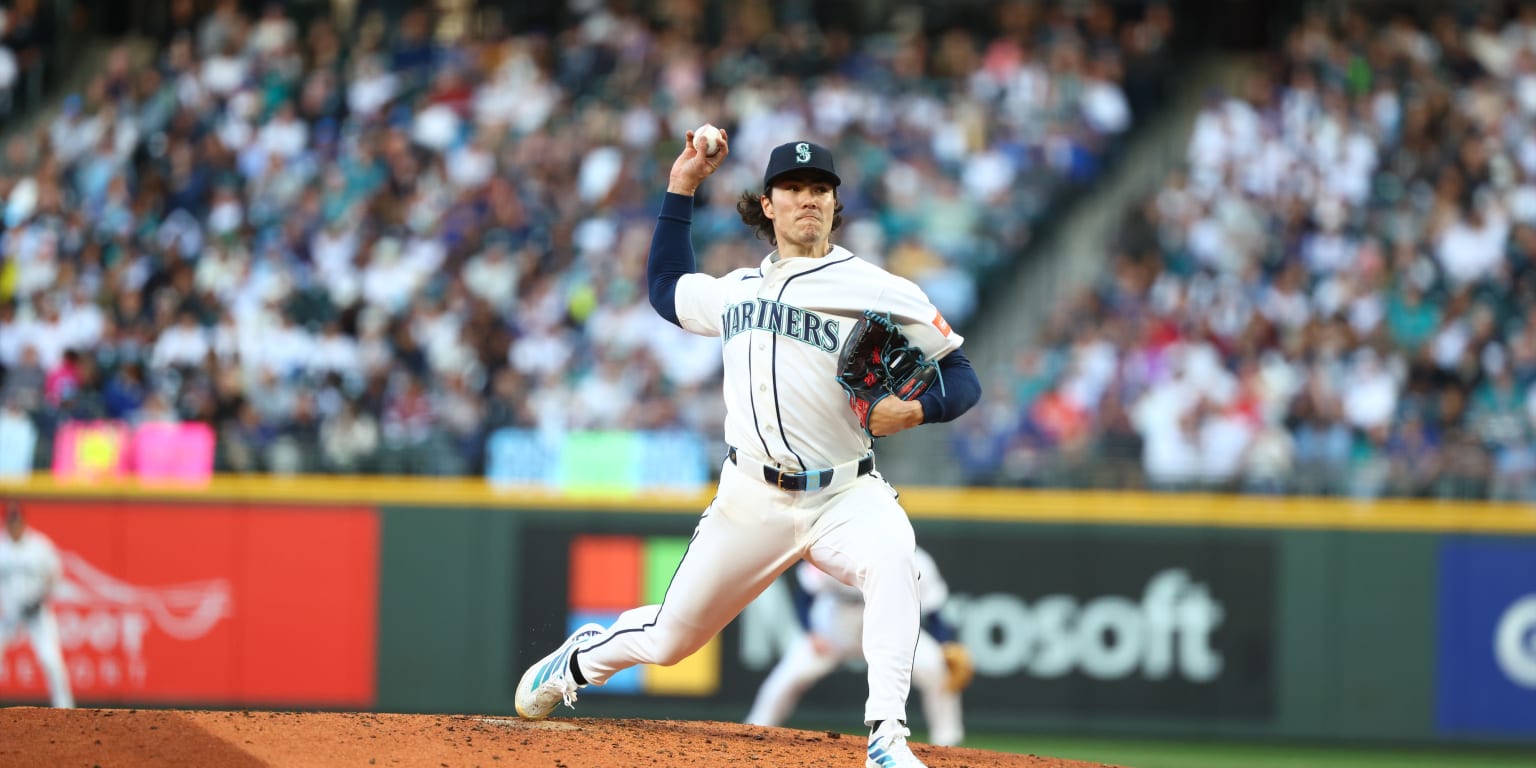
Bryan Woo responded to his worst outing of May by dismantling the Diamondbacks on Saturday, scattering nine strikeouts across seven scoreless innings in a 5-1 Seattle win that extended the Mariners' streak to five consecutive victories and vaulted them above .500 for the first time since early season. The performance wasn't accidental. Arizona entered Saturday as a fastball-hunting team—the best in baseball against heaters at .288/.846 OPS with a 17.7% whiff rate tied for the fourth-lowest in the league. They'd surrendered just 166 strikeouts on fastballs, fewer than any other club. Woo attacked anyway, deploying the same formula that earned him Cy Young consideration last year: a four-seamer ranked fourth in run value league-wide and a sinker with an elite putaway rate. He threw 59 fastballs in 86 pitches—his typical 86.4% usage—and generated 14 whiffs on the night, seven of them on those fastballs alone. He retired the first 13 batters he faced before Adrian Castillo broke up the perfect game in the fifth. The command was granular from the jump: nine consecutive four-seamers to start, each one placed with enough precision to induce a lineout on the first pitch, a strikeout, and then set up a slider for a called strike three. Once he established that rhythm, Woo never accelerated out of it—he just refused to let the D-backs expand.
The Mariners' offense provided early separation, an important detail for understanding the context around Woo's line. Seattle hammered four solo home runs in seven batters across the second and third innings off Ryne Nelson—Luke Raley's go-ahead blast on a 3-2 fastball, Dominic Canzone's second homer in three games, Colt Emerson's second career shot, and Julio Rodríguez extending his career-high May home run total to 10. Wind denied Randy Arozarena a fifth, pushing a dead-center fly 16 feet back to the warning track. The offensive firepower erased any margin for error and allowed Woo to pitch in clean air, but the strikeout rate itself—9 K's on 86 pitches—deserves independent assessment.
For prop purposes, Woo's performance against a league-leading fastball-contact team signals something durable about his strikeout profile. He didn't elevate velocity or pivot to secondary stuff; he simply executed his fastball with surgical precision against a lineup explicitly designed to make contact against it. That's a skill edge, not a luck spike. Over his recent stretch, Woo has normalized between 8.2 and 9.4 strikeouts per seven innings across multiple starts. The Diamondbacks represent a high-contact, low-swing-and-miss environment, yet he generated a whiff rate consistent with his season average. When the next matchup pairs Woo against a defense with comparable or weaker fastball-contact metrics—or, conversely, when his strikeout line tightens because the market overweights Saturday's performance—that's where the edge materializes. His K prop should be approached with respect to opponent weakness on fastballs, not recency.
Seattle's five-game winning streak and newfound .500 status carry broader implications for team totals. The Mariners' lineup has gone from dormant to offensive (four solo homers in 12 batters Saturday), and Woo's return to form removes uncertainty from the rotation's anchor. Over the next seven to ten days, before sharp books fully reprice the streak, Seattle's team totals in favorable matchups—games where the opposing starter carries a lower strikeout rate or plays into a contact-heavy approach—should be considered. The team total over 4.0 or 4.5 runs becomes more attractive when both the pitcher and lineup are in sync. Team total unders, conversely, face pressure until the Mariners cool naturally.