Woodruff's Shoulder Collapses Again: Milwaukee's Rotation Just Lost Its Anchor
By PropBetEdge Editorial Team ·
Brandon Woodruff lasted 3⅔ innings before shoulder inflammation forced him out—his third start back—and the Brewers face weeks without their most reliable arm.
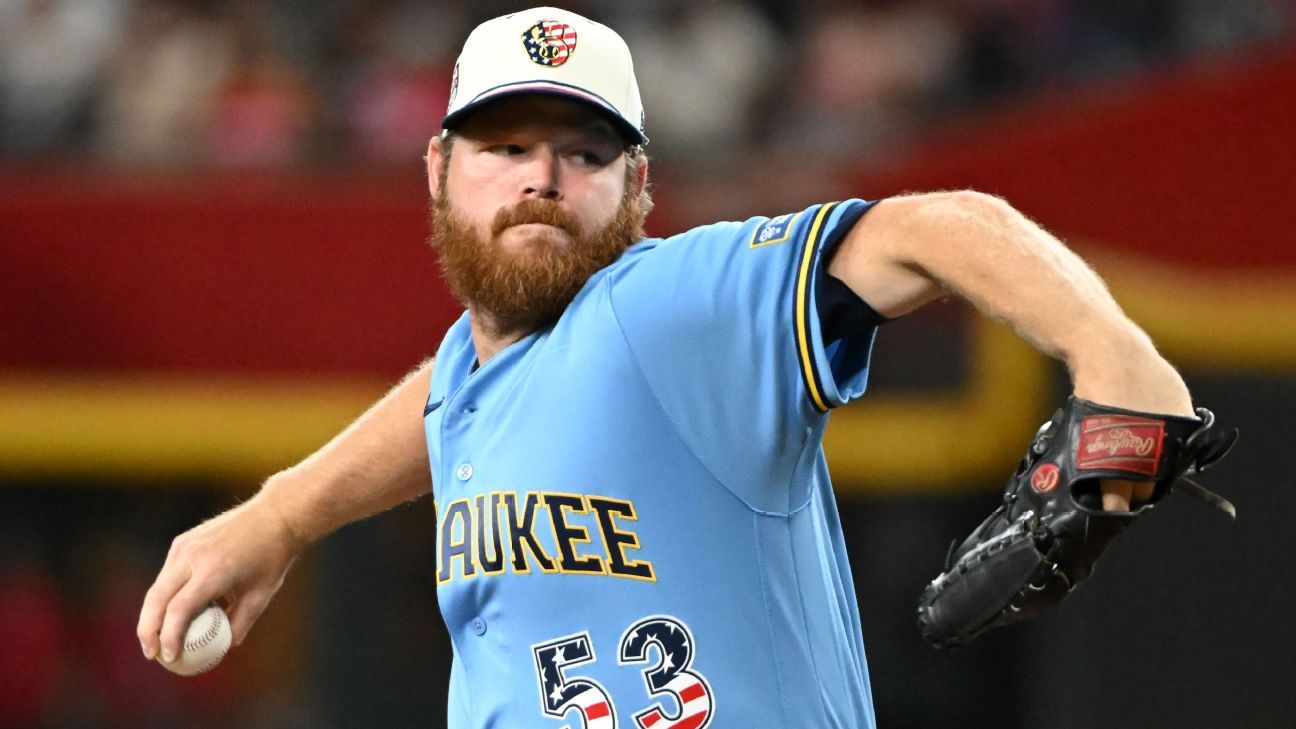
Brandon Woodruff exited Saturday's game against Arizona in the fourth inning with right shoulder inflammation, the same injury that sent him to the IL weeks earlier. The 33-year-old right-hander, who was making only his third start since returning, felt discomfort building from the first inning onward and made the smart decision to pull himself before compounding the damage. Manager Pat Murphy indicated Woodruff would likely return to the injured list, ending what was supposed to be a measured ramp-up back to full availability.
The timing is devastating for Milwaukee's pitching depth. Woodruff has been a chronic fragility case since 2023—32 starts over three seasons, with an entire year (2024) lost to injury. His velocity in Saturday's abbreviated outing peaked at 87 mph, a significant dip from his normal fastball range, a telltale sign the shoulder was already compromised. He'd cruised through his previous two outings without allowing a run, which may have created a false sense of durability heading into this start. Instead, the shoulder flared up again, suggesting the underlying issue was never resolved, only masked by favorable circumstances.
For the Brewers, this isn't a one-week absence. Shoulder inflammation in a starting pitcher, especially one with Woodruff's injury history, typically requires 4-6 weeks minimum of modified activity before rotation deployment becomes feasible again. That window puts his realistic return into late August at the earliest—assuming no imaging reveals structural damage. The Brewers' rotation was already thin; losing their ERA leader (2.98 mark) to the IL strips away one of their few reliable innings-eaters heading into the stretch run.
The prop angle here centers on Milwaukee's team total and game totals over the next 3-4 weeks. Without Woodruff anchoring starts, the Brewers will rely on a thinner set of options, most of whom lack his command profile and durability. That translates to earlier bullpen usage, higher walk rates, and fewer quality innings per start—all of which suppress run prevention and team offensive potential (teams that fall behind early can't manufacture runs the same way when chasing). Brewers team totals should see structural downward pressure until Woodruff returns, if he returns healthy. Similarly, games where Milwaukee starts a non-Woodruff arm should lean toward the under, particularly if the opponent's lineup has speed and can capitalize on walks and early bullpen fatigue.