Woodruff Returns After Shoulder Drain, But Durability Questions Shadow Brewers Rotation
By Erik Schwartz ·
The Brewers activated Brandon Woodruff on Monday for the Cincinnati series opener, but his injury history and compressed recovery window raise red flags for in-season reliability.
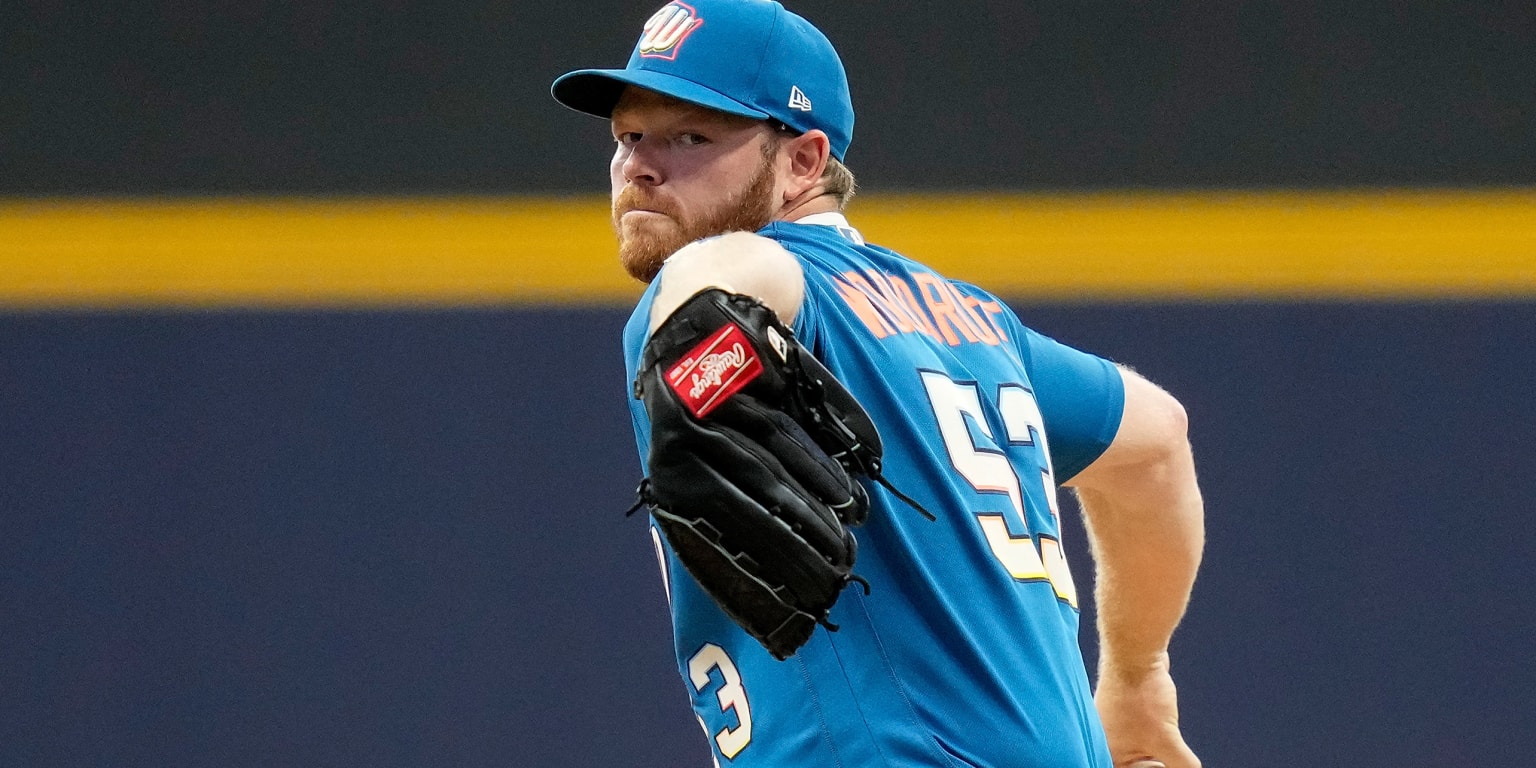
Brandon Woodruff is back. The Brewers activated their veteran right-hander on Monday ahead of the series opener against Cincinnati, clearing him to start after undergoing a cyst-drainage procedure on his shoulder earlier this month. Woodruff had been sidelined since April 30, when he exited his second start of 2026 in the second inning with a noticeable velocity dip—a classic early warning sign of shoulder trouble. The 15-day IL stint morphed into surgery and a rehab assignment, culminating in a June 16 appearance with High-A Wisconsin where he threw 82 pitches (55 strikes) across 5⅓ innings. That outing cleared the path for activation, and the Brewers wasted no time slotting him back into the rotation.
The surface metrics look intact. In six starts before the injury, Woodruff posted a 3.60 ERA and 1.03 WHIP with 25 strikeouts in 30 innings—solid work, if unremarkable. The strikeout rate (7.5 K/9) sits below his career trajectory, which is worth flagging. But the larger issue isn't what Woodruff did in April; it's what he hasn't done since 2022. He has made only 29 starts in the past three-plus seasons due to recurrent shoulder inflammation. That's an average of roughly 9-10 starts per season when a healthy starter typically logs 30-35. The shoulder—his right arm—has become a structural vulnerability, not a one-off setback. Drainage procedures can reduce swelling, but they don't rewire tissue or resolve the underlying mechanical stress that produced the cyst in the first place.
From a betting lens, Woodruff's return presents a sharp distinction between short-term and long-term edges. Over his next 2-3 starts, the market may price him at baseline value—treating the procedure as a reset button rather than a partial fix. That's your window to fade strikeout volume. His June 16 rehab appearance suggests he's working back to form at a measured pace, not returning fully unleashed. The 82 pitches in 5⅓ innings implies a pitch-count ceiling of 85-95 for his first start back, which compresses his runway to accumulate strikeouts. If the market is pricing Woodruff's K prop as if he's a full-strength version of himself—say, 7.5+ strikeouts—the edge tilts toward the under. The pitcher has three weeks (roughly 20 days) to prove durability before mid-July; early-season unders on Woodruff capture that conservatism before the market reprices him upward if he strings together healthy starts.
The Reds lineup won't force his hand. Cincinnati ranks 18th in strikeout rate (24.1%) and 16th in team OPS, offering no particular catalyst to spike K volume. Woodruff's strikeout-to-walk ratio (3.1 in 2026) is serviceable but pedestrian—not the stuff of a ceiling game. The real trade is timing: back Woodruff unders on strikeouts for the next two weeks, while the market assigns him starter's credit. If he stays healthy through July, that edge evaporates and you reassess.