Wood Powers Nationals to League's Best Scoring Pace; First-Inning Edge Reshaping Market Perception
By Ty Whitney ·
Washington's 5.39 runs per game lead the majors, and James Wood's presence atop the order is no coincidence—he's engineered a first-inning advantage that keeps opposing bullpens working extra innings before the game is decided.
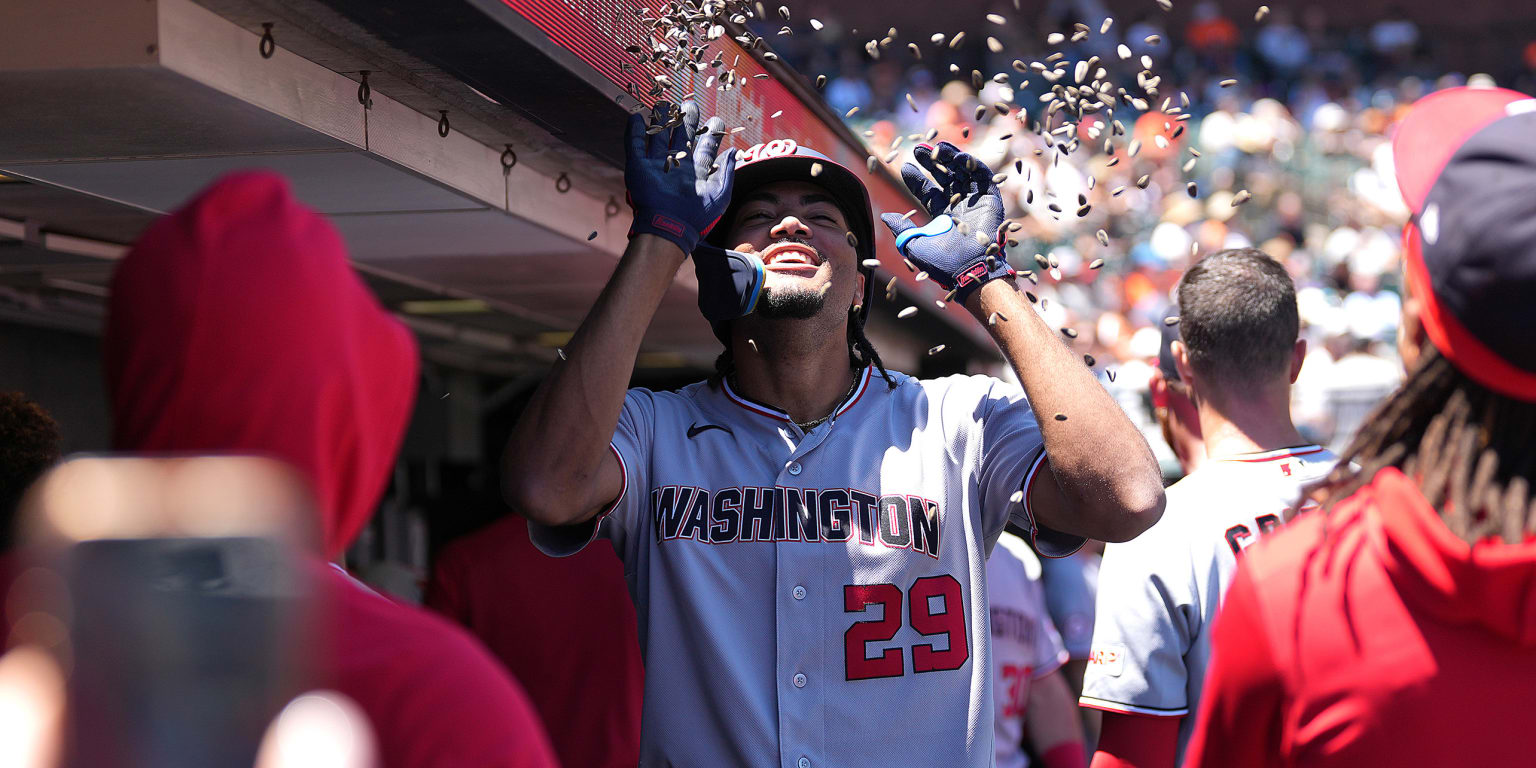
The Nationals are 69 games into the 2026 season and have scored 372 runs, more than any other team in baseball. That's not happenstance or a hot streak—it's the product of a specific structural advantage that Wood has weaponized from the leadoff spot. Through Wednesday, Washington recorded 53 first-inning runs, the most of any team this season. Wood has batted leadoff in each of those games, hitting .298 with four home runs and a .407 on-base percentage to start contests. When you consistently score first and establish early leads, you dictate game flow. Opposing relief cores face deeper work before the seventh inning arrives. That leverage cascades into higher-variance outcomes and inflated game totals.
Wood's individual numbers justify All-Star consideration on their own. He owns the fourth-best on-base percentage in the majors (.407), fourth in OPS (.941), and leads all qualified hitters with 62 runs scored. But his value is amplified in Washington's ecosystem. The Nationals have constructed a two-headed scoring apparatus: Wood reaches via contact and plate discipline (17 walks in 57 first-inning at-bats), then CJ Abrams (.287/.378/.526, 14 homers) follows him into scoring position. This isn't a pairing that will cool off; it's a design feature. Abrams carries a .369 average with runners in scoring position—elite territory for RISP hitters—which means Wood's on-base rate directly translates to run production.
The mechanism matters for wagering because team total pricing hasn't fully absorbed Washington's structural edge. Nats team totals have tended to open 4.5–5.5 runs depending on opponent pitching quality, but that baseline doesn't account for the compounding effect of first-inning dominance. Teams that score early and often force opposing pitchers into high-leverage situations in the third and fourth innings. Fatigue, pitch counts, and bullpen usage all spike. Late-inning scoring becomes more likely when games are already decided by the sixth. A Nationals offense that averages 5.39 runs doesn't distribute evenly across nine innings; it clusters in early frames, which paradoxically inflates totals because teams can't collapse a 3-0 deficit with conventional offense.
The betting implication is two-pronged. First, Nationals team totals should be viewed as underpriced when facing starting pitchers who've struggled to navigate first-inning appearances or who pitch for teams with weak bullpen arms. Wood's leadoff role guarantees at least one high-leverage scoring opportunity in the opening frame; if he reaches—which happens 40% of the time—and Abrams follows, the expectation value of that frame alone is north of one run. Second, opposite-team unders carry elevated volatility risk. When the Nationals score in the opening inning, the psychological and game-flow pressure shifts immediately. Opposing offenses face shortened windows and compressed emotional capital. Taking unders on Nats opponents without accounting for this structural disadvantage is folly.
Wood's candidacy for All-Star selection is separate from his bet-making value, but not unrelated. Player usage and motivation are correlated. A player in the All-Star conversation typically receives more at-bats and faces fewer defensive shifts (managers want their names on ballots). That means more instances of Wood reaching base, more opportunities for Abrams to drive him in, more validation of Washington's early-inning advantage. The Nationals have genuine title credentials if this 1-2 punch sustains, and the market has been slow to reprice game totals accordingly.