James Wood's Inside-the-Park Grand Slam Signals Nationals Offense Breaking Through Against Elite Arms
By Ty Whitney ·
Wood's rare feat—the first inside-the-park grand slam since 2022—came on a first-pitch sweeper against a quality Mets starter, a sign the Nationals lineup is making harder contact and attacking early in counts.
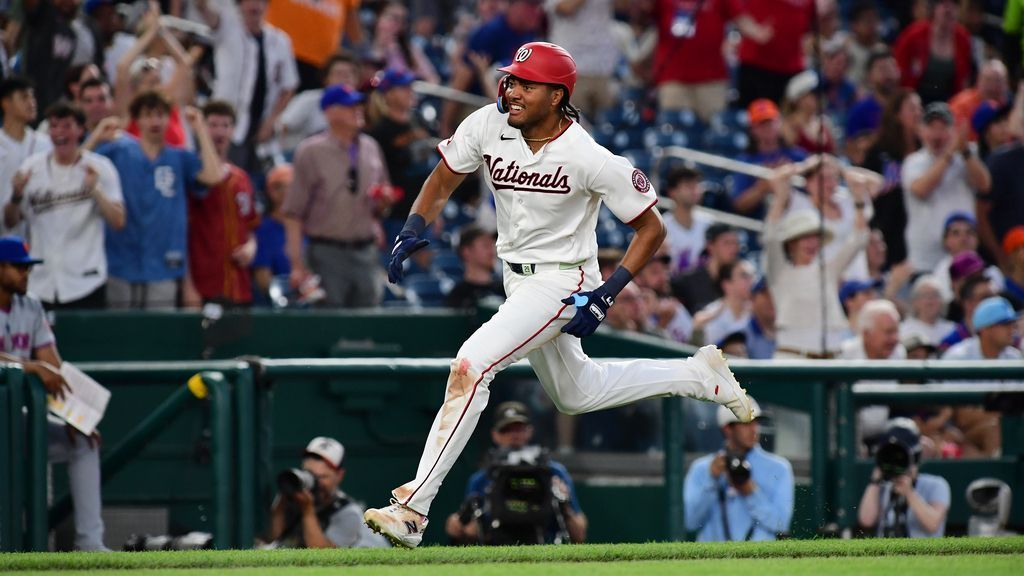
James Wood scorched a first-pitch sweeper to opposite field in the second inning Tuesday night, driving it hard enough to glance off Mets center fielder Nick Morabito's glove and bound into play. Wood circled the bases in 15.15 seconds for the majors' first inside-the-park grand slam since Raimel Tapia's July 2022 effort—a 9-6 Nationals victory that erased a 5-0 deficit. It was Wood's 13th homer of the season and first career grand slam.
Inside-the-park grand slams are among baseball's rarest events: nine have occurred since 1994, fewer than one per three seasons across 30 teams. They require a specific intersection of hard contact, outfield alignment, and ballpark dimensions—not random luck. Wood's came against Nolan McLean, a Mets starter with legitimate stuff, on a first pitch, which means the Nationals hitter was hunting fastball and executed within the strike zone. The opposite-field placement matters: it forced the corner outfielder into a bad angle and turned what might have been a routine out into a potential play with runners in motion.
From a roster standpoint, Wood's breakthrough matters more than the rarity. The 2024 first-round pick has been heating up since mid-May, and this grand slam came with the Nationals trailing and bases loaded—high-leverage situations where young power hitters either shrink or thrive. Wood chose the latter. His willingness to go opposite field against a premium fastball also suggests mechanical maturity: elite young hitters learn to spoil tough stuff early and create different launch angles rather than chasing hard stuff out of the zone.
For prop bettors, the Nationals' offensive trajectory through May is the real angle. They came into Tuesday's game ranked 24th in runs per game (4.1) and were down 5-0; they're not suddenly elite. But Wood's ability to generate a six-run swing on a single swing, paired with improved contact quality, suggests the under on Washington's team total may have overshot. If the Nationals stay competitive in late innings and don't face four-inning blowouts, team totals in the 4.0-4.5 range undervalue their recovery upside. The second-inning baserunning aggression (loaded bases, two outs, hunting first pitch) also indicates this lineup is no longer purely defensive—they're taking chances when ahead in the count.
The Mets' defensive inefficiency on Morabito's play is worth noting as well. Elite center fielders convert leaping swings into outs; a glancing deflection that bounces away costs runs. Tuesday's loss drops New York further from the division pace, and if McLean's inability to escape a first-pitch fastball becomes a pattern, Mets starters' workload could shorten in future starts, compressing offensive windows for the Nationals. For now, Wood's 15.15-second sprint around the bases is a novelty. The hitting approach that created it isn't.