James Wood's Left Side Injury Clouds Nationals Deadline Gamble
By Erik Schwartz ·
Washington's offensive centerpiece felt discomfort mid-swing Monday and will undergo imaging, forcing the team to navigate a season built around his production.
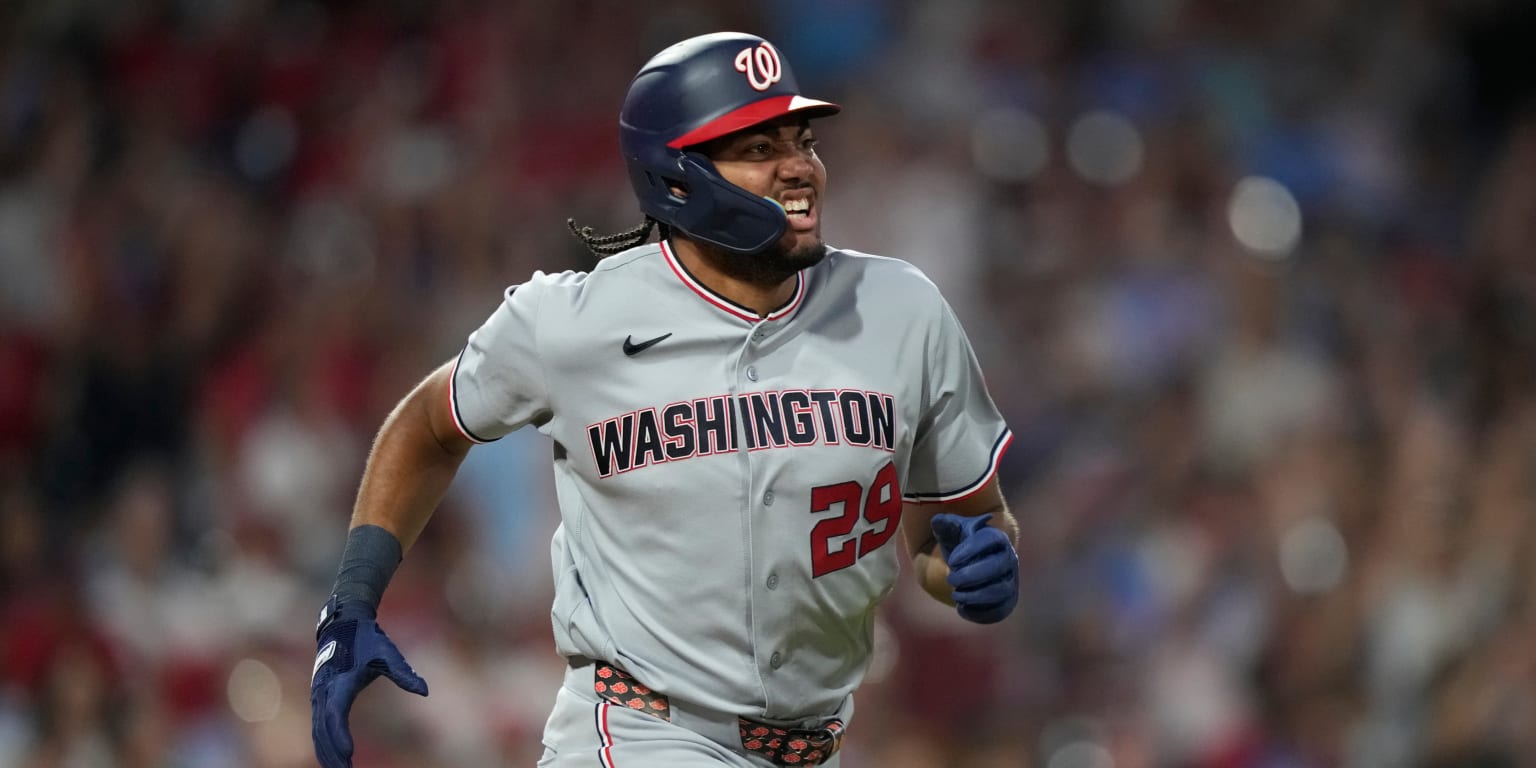
James Wood exited Monday's 6-3 loss to Philadelphia with left side discomfort after his seventh-inning at-bat against Kyle Backhus, triggering immediate imaging and fracturing what had been the Nationals' one reliable power source. The 23-year-old felt the twinge on the final pitch of the at-bat—a ground out to first—stayed in the field momentarily, but after taking practice swings in the dugout decided he couldn't continue. Dylan Crews replaced him in the bottom of the eighth. Wood told reporters he had never experienced this type of discomfort before, and when asked about his concern level, he punted: "I'm not really sure, honestly. We'll see when the imaging comes back."
The timing is brutal because it arrives 24 hours after Washington completed a set of pre-deadline trades that dismantled its secondary production. The Nationals dealt away Luis García Jr. and Curtis Mead—two hitters who carry offensive weight—leaving the team dependent on Wood to anchor an already-fractured lineup heading into the home stretch. Wood's profile is severe: 30 home runs (fourth in baseball), 100 runs scored (first), a .393 OBP (third), and a .928 OPS (third). Across all of baseball, he ranks top-10 in six different offensive categories. The Nationals built around that. Now they're waiting on an MRI.
Left side injuries in baseball can range from intercostal strain (manageable, 1-2 weeks) to rib stress or oblique involvement (weeks to months) depending on severity. The fact that Wood felt it on a swing—the most violent torque movement a hitter makes—suggests the injury is structural rather than muscular stiffness. His decision to remove himself after failing practice swings indicates he's not downplaying the discomfort. If imaging reveals anything more than a minor strain, the Nationals lose their only legitimate MVP-caliber bat for a crucial August stretch when the division is still competitive.
For prop bettors, this creates immediate cascading effects. Wood's home run and RBI props become uninvestable until the imaging clarifies his status—don't chase value on overs assuming he'll play through it. More importantly, the Nationals' team totals should compress meaningfully if Wood lands on the injured list. Without him, this becomes a sub-.500 offense depending on role players and bench depth. Joey Wiemer, the Rochester call-up option, represents a significant downgrade in production. Any team total over for Washington games should be considered high-variance until Wood's status is official. The oblique-adjacent positioning (left side discomfort during a swing) also creates injury recurrence risk even after his return; oblique and rib injuries are prone to reaggravation within the first 2-3 games back, making bet-on-return scenarios dangerous.
Tuesday's imaging will be the information inflection point. If it's a minor strain, expect lines to adjust only marginally downward and Wood could miss just a few games. If it's structural, the Nationals' August run takes on a different character entirely, and bettors should fade their team totals aggressively until confirmation he's back in the lineup.