Skenes' Velocity Collapse Signals Deeper Trouble Than Winless Streak
By Erik Schwartz ·
The Pirates ace's fastball has lost 4-6 mph and his offspeed arsenal has fallen from elite to 17th percentile; All-Star selection masks a mechanical breakdown that favors Atlanta's patient hitters.
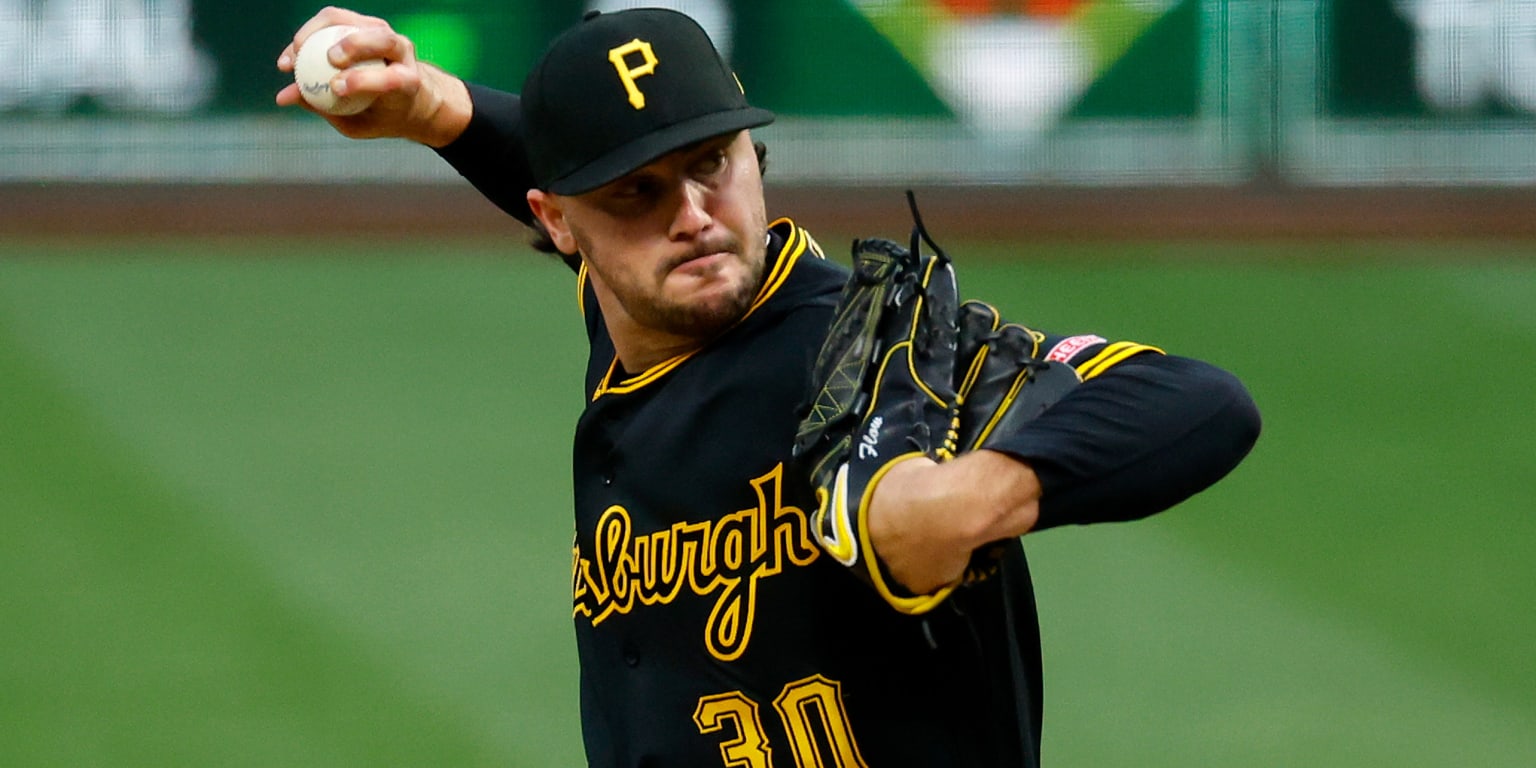
Paul Skenes has now gone nine starts without a win since May 12—tied for the second-longest drought by a reigning Cy Young Award winner and just one start shy of the record held by Blake Snell and Jim Perry. The news that he made his third consecutive All-Star team offers a soft landing for what is objectively his worst stretch as a major-league pitcher. But the surface-level winless record obscures the real story: Skenes is experiencing a measurable mechanical and physical deterioration that extends beyond typical variance or bad run support.
The velocity collapse is unmistakable and alarming. His four-seam fastball topped out at 101.9 mph two seasons ago; in his last outing against Philadelphia last Wednesday, it ranged from 93.6 to 97.9 mph—a loss of 4-6 ticks that tracks a sustained decline, not a one-game outlier. More telling: he averaged 26 pitches at 98-plus mph per outing through his first 55 starts; in his last three outings combined, he's thrown just four pitches that hard. His fastball spin rate has also drifted downward, dropping from 2,318 revolutions per minute on April 1 to 1,987 by July 1. Skenes acknowledged postgame that he doesn't know the cause—a red flag that suggests either an unreported physical issue or a mechanical drift he hasn't identified.
The secondary stuff has cratered even faster. His offspeed arsenal ranked in the 100th percentile as a rookie and held the 98th percentile mark through 2025. This season, that same package sits in the 17th percentile. Against Philadelphia, he coughed up eight runs (seven earned) in four innings on just two home runs, the damage compounded by his inability to use his historically elite breaking balls and changeups as a reliable out-getter when his fastball lost its edge. When your primary offering loses velocity and your out-pitch loses effectiveness in tandem, opposing lineups no longer have to choose which threat to respect—they can attack everything.
Skenes faces the Braves on Tuesday at 6:40 p.m. ET, and Atlanta's hitters are positioned to exploit both shortcomings. Ozzie Albies has a 1-for-2 mark with a walk in his limited Skenes exposure; Matt Olson is 0-for-3 but those three strikeouts came against the old Skenes, the one throwing 98-plus fastballs and elite spin on his breaking stuff. Ronald Acuña Jr. sits out with a left hamstring strain, removing Atlanta's most dangerous bat—a minor mercy that won't offset the loss of Skenes' stuff. The Braves' patience-first approach (they ranked top-five in walk rate) becomes more lethal when they're facing a pitcher who can no longer blow fastballs by anyone and whose secondary pitches have lost their bite. Under props on Skenes' strikeout total carry real value; the market has likely not fully priced in the gap between his 2024-25 form and his current 17th-percentile offspeed run-value.
The All-Star selection is a career highlight—a fourth pitcher in 25 years to make the Midsummer Classic in each of his first three seasons, alongside Yu Darvish, Dwight Gooden, and Tom Seaver. But accolades don't reverse mechanical decline or restore lost velocity. Skenes' next three starts, beginning tonight, represent a critical diagnostic window: if the velocity and spin remain suppressed, the Pirates and the wider betting market face a reckoning that transcends a nine-game winless streak.