Scherzer's Gradual Ramp Leaves Toronto's Rotation Fragile Into May
By PropBetEdge Editorial Team ·
Max Scherzer is throwing again, but a 22-pitch session and a multi-week comeback arc mean the Blue Jays can't count on their veteran ace to stabilize a staff buried in early-season volatility.
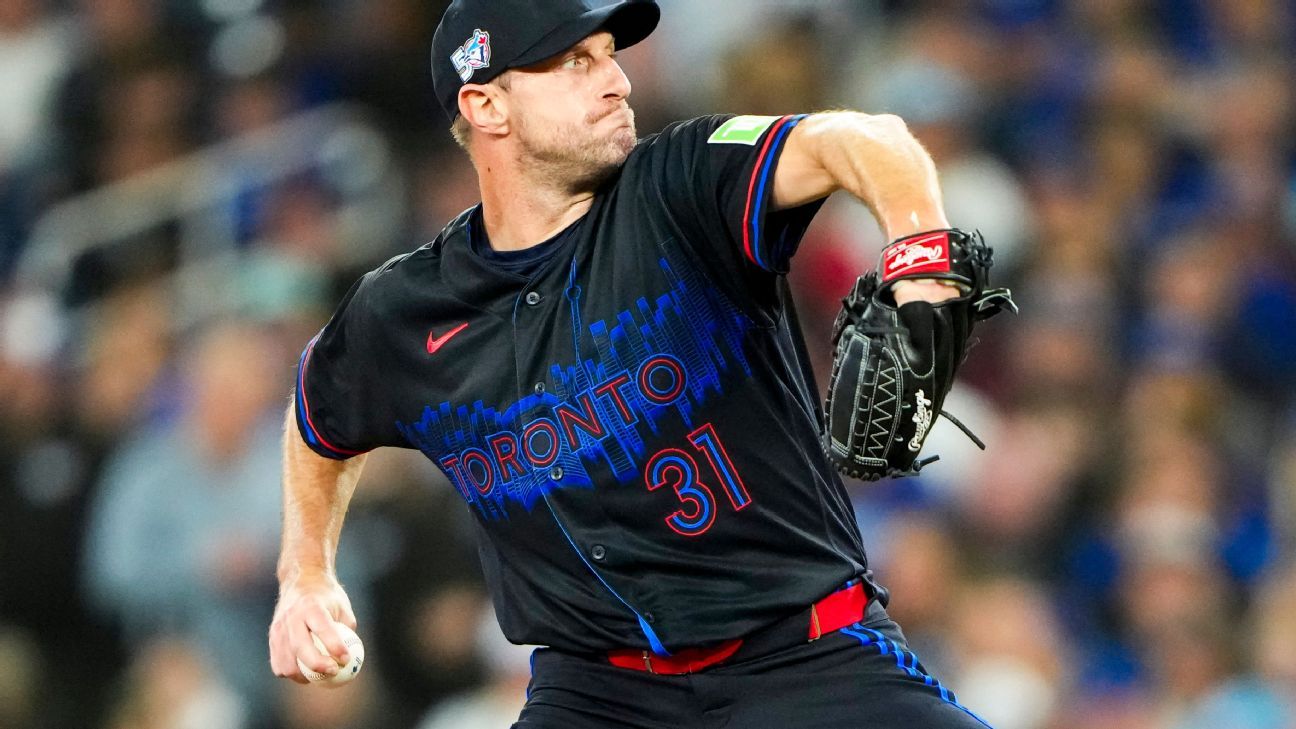
Max Scherzer threw 22 pitches in a bullop Monday at Yankee Stadium, advancing his recovery from right forearm tendinitis in what manager John Schneider framed as a measured progression. The 41-year-old will throw again Wednesday; if that session clears, he'll move to facing batters—likely in batting practice—before any return to game action. That timeline, even if accelerated, means Scherzer won't be available for regular rotation duty for at least another 10 days to two weeks. The context matters: Scherzer signed a $3 million, one-year deal last offseason after helping Toronto reach Game 7 of the World Series, but he's posted a 1-3 record and 9.24 ERA through five starts (last outing April 24). He wasn't the ace who signed the contract; he was already faltering when the injury sidelined him.
Toronto's injury stack deepens the rotation's fragility. Shane Bieber, who hasn't thrown competitively since spring training, is throwing batting practice Tuesday—30 pitches, two-inning simulation. That's not a step forward; that's a baby step on a long staircase. Yimi Garcia, back from offseason elbow surgery, throws a bullpen Tuesday. These are all low-intensity, controlled work. The Blue Jays are not rushing anyone. The market's reaction to Toronto's availability—their collective upside ceiling for May—should price in the reality that their top-end pitching depth is still under construction.
The broader issue is volatility and availability. When your ace is a 41-year-old recovering from inflammation, your second ace is throwing simulations after five months off, and your depth relievers are working through post-surgical ramps, your bullpen workload spikes immediately. The staff has to lean on arms that would normally get rest days or lower-leverage spots. Blowouts become more likely because overwork breeds inefficiency. Tight games favor teams with deeper, fresher arms.
From a betting lens, Toronto's team totals and pitching props carry elevated variance over the next two to three weeks. Any prop anchored on Scherzer's availability—strikeouts, ERA, or innings pitched—is essentially a lottery ticket until he throws a game-action session and gets a firm return date. The bookmakers have likely already adjusted moneylines downward for Toronto in series where Scherzer was penciled in as the starter, but the depth rotation (whoever fills his turn) will face inflated bullpen usage and fatigue. Unders on Blue Jays team totals are defensible when the starting pitcher uncertainty bleeds into bullpen risk. The mechanism isn't that Toronto will score fewer runs; it's that their pitching staff's structural instability forces managerial decisions that narrow offensive leverage and increase blowout probability. Lean unders on Blue Jays team totals in games where the starter is from the injury-recovery tier, particularly if the opponent's rotation is healthy and deep.