Eli Willits' High-A Power Surge Signals Prospect-Grade Hitting Tools Arriving Early
By PropBetEdge Editorial Team ·
Washington's 2025 No. 1 pick is translating elite bat speed into consecutive multi-hit performances, raising questions about the velocity of his major-league timeline.
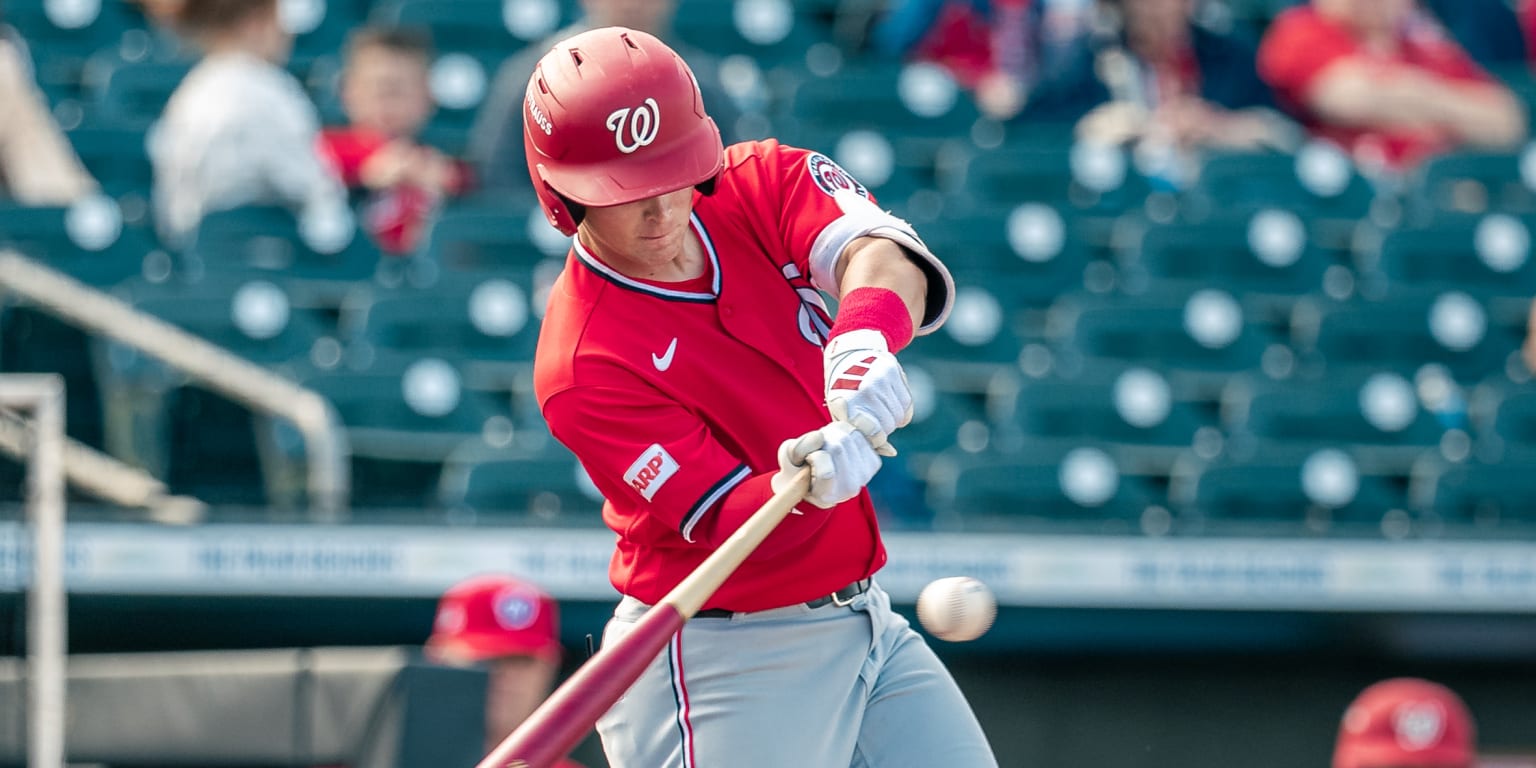
Eli Willits collected his first professional multi-homer game Wednesday night at High-A Wilmington, finishing 3-for-4 with two home runs and a single in a 4-3 loss to Greensboro. At 18 years old—still the age of a typical college freshman—Willits is operating at a developmental velocity that has few recent comparables. He became only the second 18-year-old to record a two-homer game at High-A since 2019, joining Leo De Vries, who accomplished the feat twice in 2025 before being traded to Oakland and subsequently promoted.
The power display capped a sprint-level acceleration that began in mid-April. After opening the season 9-for-50 (.180) through 13 games, Willits shifted into a different gear on April 18. From that point through his promotion to Wilmington, he slashed .345/.447/.581 with 20 extra-base hits, 35 RBIs, and 18 stolen bases across 36 games—including a 15-game hitting streak. He carried that hitting streak momentum into his first Wilmington game (where it snapped), then immediately bounced back with Wednesday's power outburst. Through 49 total games across Single-A assignments, Willits has compiled a .303 average with a .525 slugging percentage, 25 extra-base hits, and a walk rate over 9%, indicating he's not swinging at trash.
What matters for prospect-to-ML projection is the mechanism driving this acceleration. Willits didn't just wake up one day; he adjusted his approach at the plate and began making harder contact against off-speed pitches. His stolen base total (30 in 49 games, a 61% of bases rate) signals advanced pitch recognition and confidence in his reads—markers that translate. His walk rate jumped to 10.2% post-April 18, suggesting he's taking pitches earlier in counts rather than chasing. These aren't statistical flukes; they're foundational plate discipline improving under professional pressure. De Vries' comparable path (two-homer games, promoted through the system) now plays for Oakland. The market's current read on Willits' timeline assumes a multi-year Single-A/Double-A gauntlet. If his true-talent hitting profile is already at this caliber—which 25 extra-base hits and a .447 OBP in 49 games hints at—the path to prospect relevance compresses significantly.
For bettors tracking Nationals minor-league power production and positioning around future call-up catalysts, Willits' acceleration is a data point worth monitoring. His hit rates and extra-base frequencies are now north of what typical High-A performers post. If he repeats this power output over the next 30 games at Wilmington, the promotion to Double-A Harrisburg becomes likely by late summer, and with it, a shift in how major-league-relevant the Nationals' future outfield ceiling looks. That's not a prop angle today—it's a season-arc positioning note. The market will eventually price Willits' ETA forward; early acknowledgment of his contact quality and power trajectory gives you the edge on that repricing timeline.