Lombard's Miami homecoming signals Marlins' willingness to push young talent hard
By PropBetEdge Editorial Team ·
The 18-year-old first-rounder joins a farm system that fast-tracks prospects into competitive environments, setting expectations for rapid development.
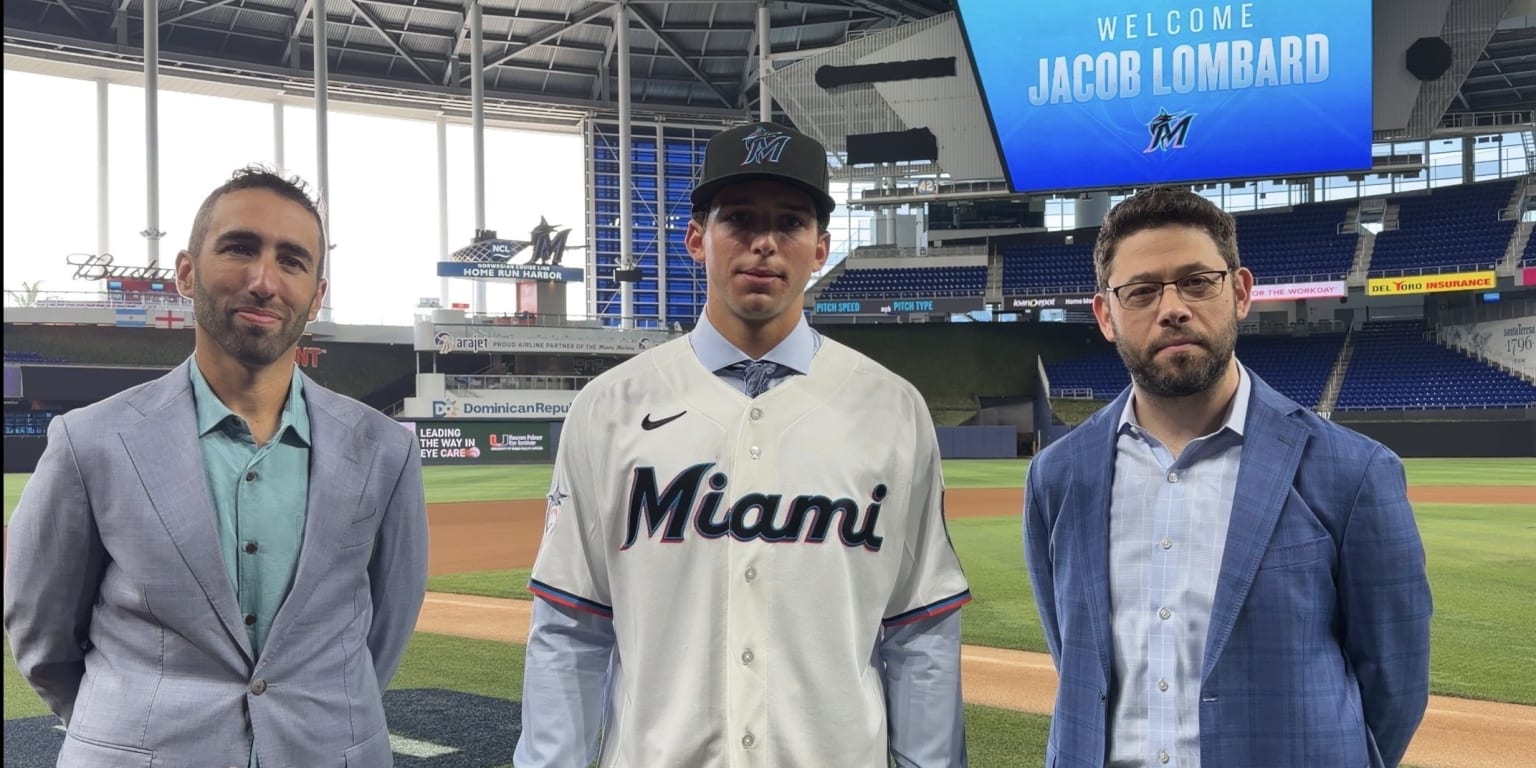
Jacob Lombard signed with the Miami Marlins on Thursday, five days after being selected 14th overall in the 2026 MLB Draft. The hometown kid—son of former big leaguer George Lombard and younger brother of Yankees prospect George Jr.—will begin his professional journey at Single-A Jupiter, where the Marlins have committed to placing him in a challenging developmental environment rather than easing him into the minor leagues. This directional choice matters: it tells you how Miami's front office values his ceiling and confidence in his ability to absorb real velocity immediately.
The Marlins' track record on prospect placement supports the decision. Last summer, top picks Aiva Arquette and Cam Cannarella moved directly from college ball to High-A Beloit, skipping traditional intermediate steps. Peter Bendix, the team's president of baseball operations, framed this as intentional philosophy—putting prospects in "environments that are not easy" to accelerate maturation. That's not typical for 18-year-olds coming out of high school. It's a bet on both physical tools and makeup, and it's a signal the organization sees elite trajectory here.
Lombard arrives with legitimate pedigree backing that confidence. He grew up in the Marlins' ecosystem, attended games at loanDepot Park as a kid when his father was traveling, and as recently as March fielded grounders on the same field during World Baseball Classic preparation (his father served as USA's first-base coach). His multi-sport athleticism—he played soccer until his senior year of high school—suggests the kind of body control and explosiveness that translates to baseball development. The Marlins scouting department, led by Frankie Piliere, described the evaluation process as "a culmination of a lot of work" and noted surprise at the opportunity to draft him; the team wasn't certain until "probably the night before" that Lombard would fall to pick 14.
For prop betting purposes, this scenario presents a medium-term organizational lens rather than an immediate impact play. Lombard won't appear in MLB box scores this season or likely next season. His brother George Jr., the Yankees' No. 1 prospect and MLB Pipeline's No. 20 overall, is years closer to the majors and represents the more actionable prop surface. However, the Marlins' willingness to stress-test Lombard in Single-A at 18—a decision public enough that Bendix explained it to the media—is institutional signal that Miami's farm infrastructure is functional and intentional about prospect acceleration. That matters for long-term organizational health and playoff positioning: teams that develop talent efficiently stay competitive longer. The Marlins currently hold the third and final NL Wild Card spot, and a working farm system supports that window.
The real betting angle sits at the team level, not the player level. The Marlins' confidence in their developmental apparatus—evidenced by aggressive placement of lottery picks—should factor into how you model their talent influx over the next 18 to 36 months. When a front office opts to challenge first-rounders rather than coddle them, that's either arrogance or justified conviction. Bendix's framing suggests the latter. Watch how Arquette and Cannarella perform in the coming weeks at Beloit; their outcomes validate whether Miami's placement philosophy actually works or whether the organization is burning out prospects too early. If it works, the Marlins' farm-to-major-league pipeline becomes a competitive advantage worth tracking in team-total projections down the line.