Rockies' Late-Game Execution Pattern Reshapes Series Value Against Boston
By Erik Schwartz ·
Colorado's second consecutive walk-off-adjacent comeback in three days signals a real offensive identity shift, not a variance spike—and the market hasn't fully repriced the team total yet.
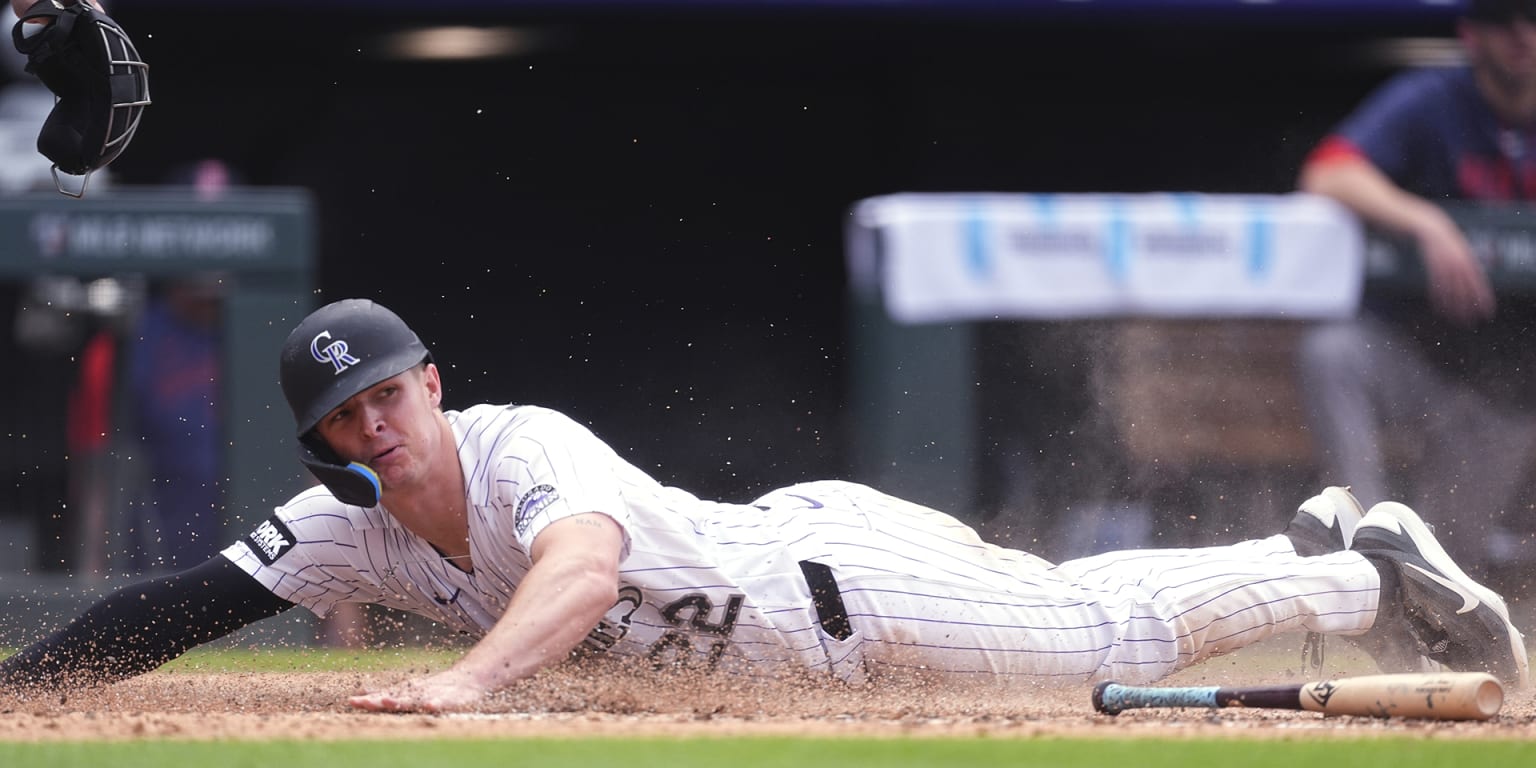
The Rockies erased a three-run deficit in the seventh and eighth innings Wednesday to beat Boston 8-6 at Coors Field, continuing a two-game stretch in which Colorado has manufactured five straight comeback wins. What started as a loss—Red Sox shortstop Marcelo Mayer's error on Hunter Goodman's potential inning-ending grounder in the seventh—became the hinge pin of another Rockies rally. Cole Carrigg and Jake McCarthy delivered run-scoring singles, Troy Johnston tied it 6-6 on a pinch-hit single, and the Rockies pushed across insurance in the eighth via Mickey Moniak's pinch-hit single and Carrigg's double. Antonio Senzatela earned his eighth win while Jimmy Herget recorded his second save.
But the headline obscures the mechanics. The Rockies didn't just get lucky twice in 48 hours. Monday night featured eight straight hits capped by Jake McCarthy's walk-off three-run triple from a 2-0 ninth-inning hole. Wednesday's pattern was identical in structure—late leverage, pinch hitters driving in runs, opposition making contact-negative decisions under pressure. This is not randomness. The Rockies are demonstrating repeatable late-inning aggression and a willingness to deploy bench bats in high-leverage spots that's actually executing. Carrigg is 3-for-3 in RBI situations across the two games. McCarthy has walked into two critical at-bats and delivered both times. Moniak's pinch-hit single and Freeman's sac bunt suggest a coaching staff making deliberate deployment choices, not swinging at chaos.
For Boston, the failure is equally traceable. Mayer's error came with the game still in play—it didn't cost the game directly, but it cost Boston the margin. The Red Sox offense couldn't extend past 6 runs on the road at Coors, a pitcher-friendly site when the wind cooperates but a house of mirrors for visiting lineups who can't establish early leads. Boston's bullpen also gave up the insurance run in the eighth with the game already tied—two runners on and Carrigg hitting with a clean slate is exactly where you lose control of a game you thought you'd secured.
From a prop lens, this shapes the next 3-5 games of the series differently than the pregame market assumed. The Rockies' team total opened in the mid-4s for Wednesday; they crushed it by hitting 8. Thursday and Friday's totals will likely land 4.5–5.5 depending on pitching matchups. The key angle: Coors Field is a 10% variance amplifier on team totals when one side is executing small-ball and the other is reactive. The Rockies have shown two consecutive games of controlled chaos—pinch hitters working counts, sacrifice bunts in leverage spots, relief pitchers in unfamiliar high-leverage situations. The Red Sox have shown defensive sloppiness and offensive flatness on the road. The sample is small, but the execution gap is visible. Colorado's next two home games against Boston carry an over lean if the bullpen remains healthy and McCarthy/Carrigg stay in the nightly mix.
One caveat: Senzatela's eighth win is relevant to total context because it signals the Rockies' rotation is eating innings cleanly (fewer bullpen exposures = lower team totals in theory, but higher when the bench is generating late-inning value). Keep an eye on whether the Rockies deploy Moniak and Johnston again in Friday's game. If they do, the pattern is systematic. If it was one-game noise, those pinch hitters sit.