Sánchez's Grand Slam Signals Blue Jays' Power Crisis May Be Breaking
By PropBetEdge Editorial Team ·
Toronto's struggling lineup finally got the explosive moment it needed, but one swing doesn't fix a season-long manufacturing problem.
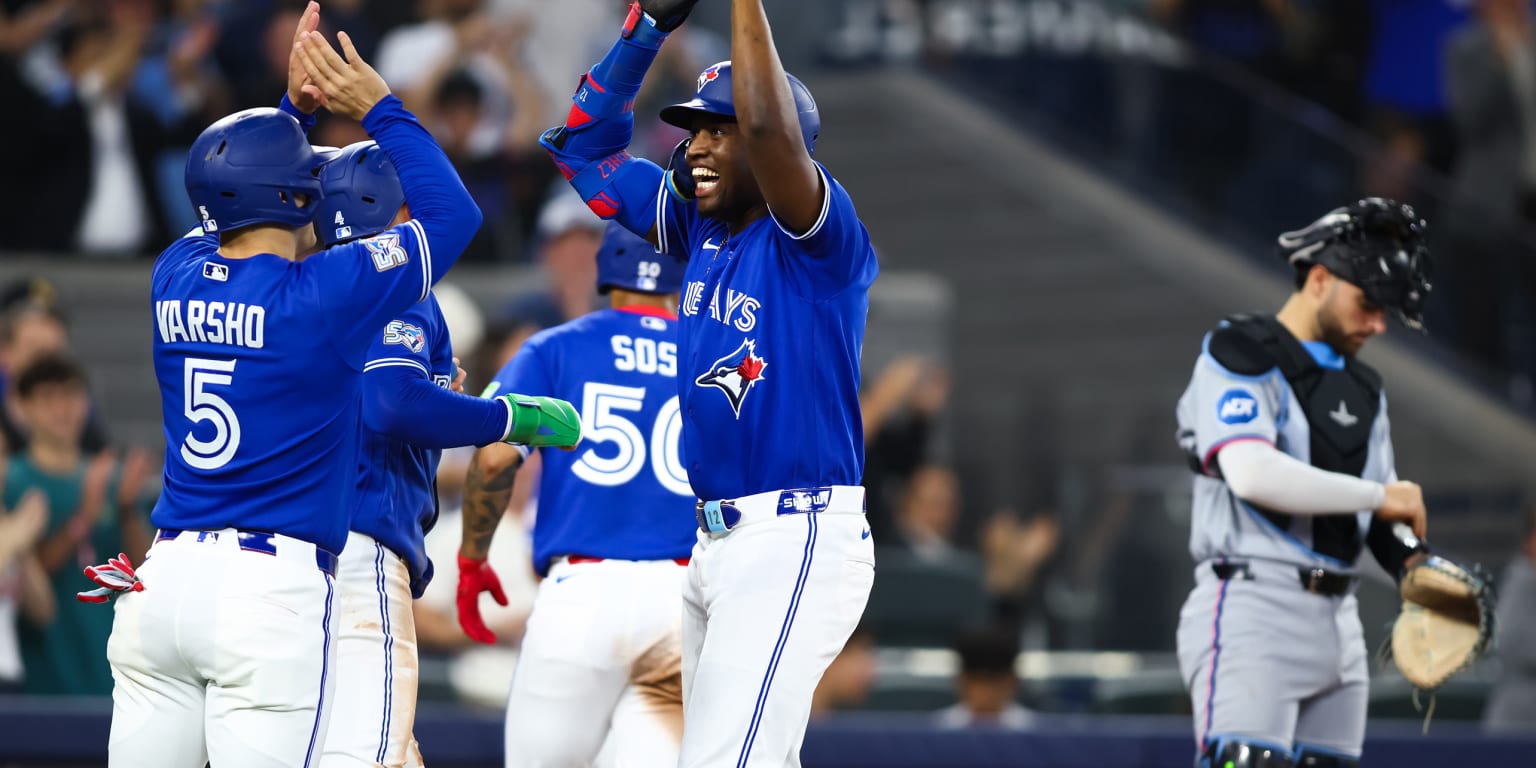
Jesús Sánchez turned on a 98.6 mph fastball from Sandy Alcántara on Tuesday night and launched his first career grand slam in a Blue Jays uniform, powering Toronto to an 8-1 win over Miami. The moment mattered less for what it did to the scoreboard than for what it said about a hitter Toronto paid to acquire: Sánchez, in that one at-bat, reminded the organization why it swapped Joey Loperfido to Houston midseason—a power stroke uncorked by a player built to generate exit velocities that most lineups simply can't match.
The larger context makes the slam something between cathartic and cautionary. Through the first two months of the season, Sánchez's bat speed dipped toward league average as his approach tightened into something unrecognizable—less big hack, more bat control. Toronto's hitting staff spent weeks recalibrating him, nudging him back toward the identity that made him valuable: a hard-swinger whose upside rests on pulling the ball with authority to right and right-center field. Manager John Schneider has been explicit: "Let it rip." That's not a directive aimed at a contact hitter.
The Blue Jays as a whole face a power shortage that has metastasized into roster-wide stress. Toronto sits tied for 20th in home runs (51) and 23rd in slugging percentage (.377). That offensive anemia has shoehorned the bullpen into constant leverage situations, forcing the same core four or five relievers to pitch high-leverage innings night after night. An 8-1 cushion, even against Miami's depleted lineup, finally allowed that group to coast through late innings and preserve arms for Wednesday's finale. One win doesn't reverse the trend, but it does suggest the pressure valve might have a release.
For prop bettors, Sánchez's emergence carries a specific edge: his splits against right-handed pitching versus lefties have been stark. Early-season troubles came largely when forced into rare matchups against southpaws; when Toronto can keep him in the righty-favorable column, his power becomes a reliable component of team scoring. The grand slam raises a question about whether his recalibrated approach—quieter hands, trust in bat speed—will stick now that he's proven it can produce at the highest level. If Sánchez sustains a 40%+ hard-hit rate against righties over the next two-to-three weeks, his home run prop (currently hovering around modest 0.3-0.4 per game) should climb. More importantly, Toronto's team total should tick upward in spots where Sánchez gets extended at-bats against right-handed starters. The grand slam itself is a single event; the behavioral reset it may trigger is the angle.
Vladimir Guerrero Jr., Addison Barger (when healthy), and Kazuma Okamoto will need to follow Sánchez's lead for this offensive arc to hold. But if Tuesday night marks the moment Sánchez truly returned to form—no longer fighting his swing, simply reacting to heaters the way the trade acquisition was designed to do—Toronto's lineup threat profile shifts materially upward.