Misiorowski's 104.5 mph Strikeout Redefines Starter Velocity—and K Props Just Got Sharper
By Erik Schwartz ·
Jacob Misiorowski delivered the hardest pitch ever thrown by a starter in the pitch-tracking era, opening a Friday matchup against Philadelphia with three consecutive strikeouts and a statement: velocity markets may be underpricing his true ceiling.
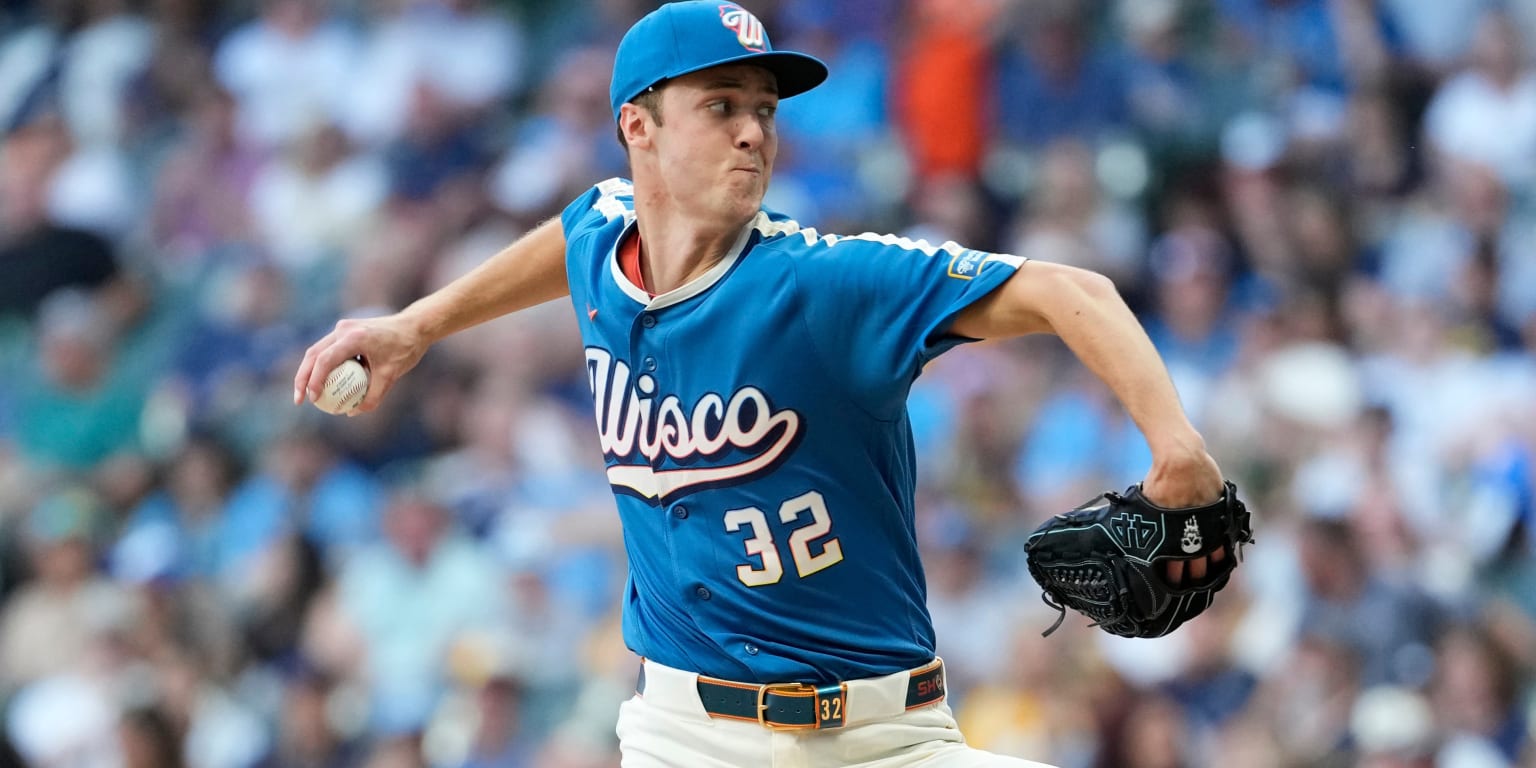
Jacob Misiorowski struck out Kyle Schwarber on a 104.5 mph fastball to open Friday's game between the Brewers and Phillies, marking the fastest pitch from a starter since MLB began electronic tracking in 2008. The fastball—ruled a foul tip that settled into catcher William Contreras' glove—was the first of three consecutive strikeouts in the opening inning. Misiorowski followed by punching out Trea Turner on a 103.5 mph heater, then Bryce Harper on 104.1 mph. By the end of one inning, he'd claimed the top three strikeout velocities for any starter in the pitch-tracking era, including the postseason.
The 24-year-old's velocity profile has been steadily climbing. His previous personal best was 103.4 mph, set on May 25 against the Cardinals. What makes Friday's display significant isn't just the single pitch—it's that Misiorowski now holds the entire top 10 for fastest starter strikeouts. He's not touching the ceiling of human fastball output (Aroldis Chapman hit 105.8 mph as a reliever in 2010; Ben Joyce threw 105.5 mph on a strikeout in September 2024), but the gap between reliever and starter velocity is narrowing, and Misiorowski is the one closing it.
The Phillies' objections to his All-Star selection last summer—they lobbied for Cristopher Sánchez instead—carry a different weight now. At the time, Misiorowski had made five starts. He's since proven he can sustain this fastball profile against major-league hitting. The velocity isn't a one-game spike; it's a baseline he's operating from. When a 24-year-old starter is hitting three-consecutive-strikeout velocity marks against elite hitters like Schwarber, Turner, and Harper, he's not relying on deception or changing speeds. He's just overwhelming them.
For strikeout proposition bettors, this is where the angle lives. Misiorowski's velocity ceiling has visibly risen, which means his K9 (strikeouts per nine innings) should trend upward if he maintains this fastball velocity going forward. The market will adjust to his season strikeout totals and per-game props, but the adjustment will lag the actual velocity data. Early prop numbers on his next start—especially strikeout counts and opponent batting average against fastballs—are likely underpriced because they're anchored to older velocity benchmarks. A pitcher throwing 104+ mph with elite command is a different product than one throwing 102 mph, and the line-making process typically lags velocity shifts by 24-48 hours.
Sánchez pitches for Philadelphia on Sunday, which means we avoid a direct rematch this weekend. But Misiorowski's next outing will carry eyes. If he can replicate Friday's velocity against a non-contending lineup, the K prop will likely move sharply by game day. For now, any strikeout totals published before Saturday morning—before the market fully processes what Friday's opening inning showed—carry an edge on the over side.