MLB
Skenes' Velocity Crater Signals Deeper Mechanical Issues Than WBC Timing Alone
The Pirates ace's 1.5-mph fastball decline wasn't just bad luck—it exposed form problems that won't vanish with rest.
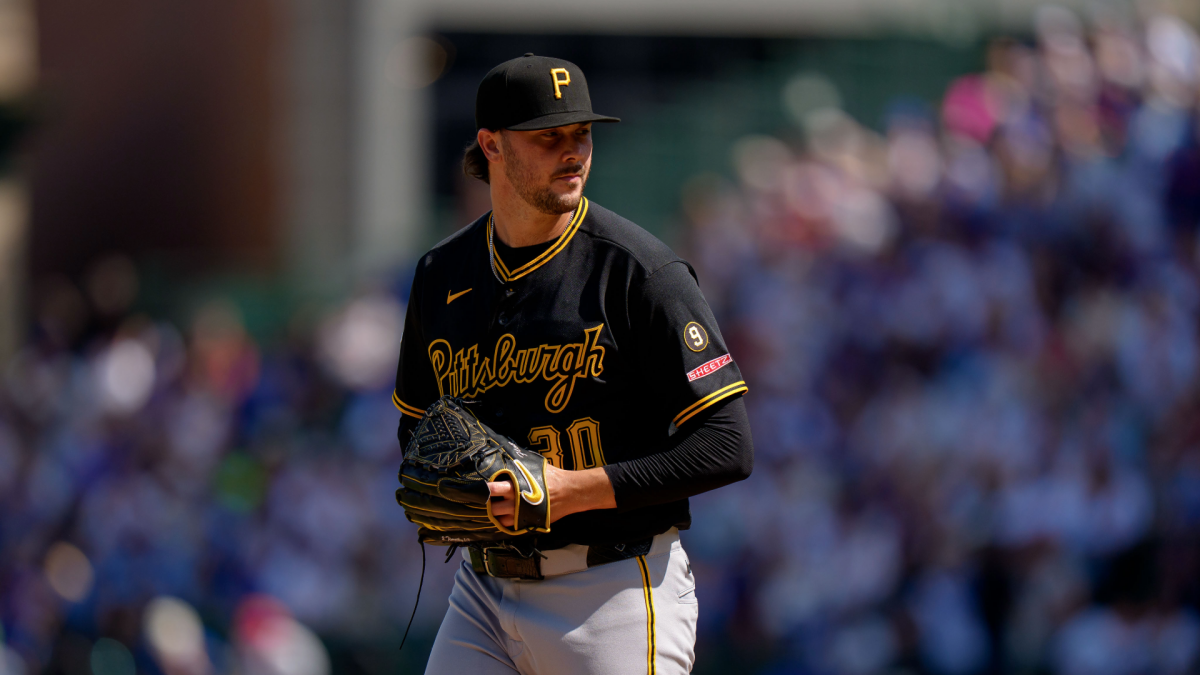
Paul Skenes' 2026 season is officially a historical footnote: a reigning Cy Young winner posting a 3.91 ERA while his team finished 79-77 and missed the postseason. That alone would sting. But the velocity data tells a story Skenes himself doesn't quite want to own. His fastball averaged 96.8 mph this season, down from 98.2 the prior year and 98.9 the year before. He did not throw a single triple-digit fastball for the first time in his three MLB seasons. That's not fluctuation. That's structural degradation.
Skenes pinned blame on the World Baseball Classic, citing how the tournament's pitch limits and mandatory rest windows disrupted his spring training ramp. The logic has surface appeal—he made two starts for Team USA before Opening Day, and the velocity decline accelerated after his April-to-early-May hot streak (1.09 ERA over eight starts). But here's the mechanical reality he acknowledged to the Post-Gazette: his mechanics weren't locked. The velocity swung wildly from outing to outing, suggesting form issues that a cleaner buildup wouldn't have solved. Yes, the WBC may have compressed his preparation window. But once May arrived and he had full access to his normal routine, he never recovered the 98-99 range that defined his first two seasons. The Pirates gave him every opportunity to work through it—he made 33 starts, averaged better than six innings per turn—and the velocity stayed depressed through July. A pitcher whose arm strength has truly been compromised doesn't magically unlock it mid-season, even with time.
The concerning data point for 2027 betting is the 14-start crater from May 17 through July 31: a 5.18 ERA with Pittsburgh going 3-11 in those games. That wasn't noise. That was a stretch where his best stuff abandoned him and mechanical work failed to retrieve it. Other WBC participants—McLean, Rodriguez, Sánchez, Yamamoto—thrived in 2026, which tells us the tournament itself isn't the invisible culprit. Some pitchers absorbed it, adapted, and pitched through. Skenes did not. An offseason can restore feel and mechanics, and Skenes is only 24, so durability shouldn't be written off. But if velocity doesn't return to 98+ mph territory by spring training, bettors need to treat him as a lower-tier ace rather than a Cy Young contender. His strikeout rate was still strong despite the velocity loss—he's a 10.8 K/9 pitcher—meaning the early-season velocity dip created a mixed bag (fewer walks, fewer homers, but also fewer strikeouts and steadier contact). If the fastball velocity stays compressed into 2027, expect elevated ERA and reduced K props relative to his name recognition.
The arbitration number Skenes faces this offseason will be massive—first-year eligible Cy Young winners command eight figures—but the market price on his 2027 pitching props shouldn't move until spring data confirms velocity recovery. If Grapefruit League numbers show him back at 98+, his strikeout lines and ERA props revert to ace territory. If he's still sitting 96-97 in March, the books will have already priced him down. Early-season Skenes props in 2027 will be high-variance plays; wait for spring performance before committing to either overs or unders. The velocity story will be answered in real time.