Harper's Zone Discipline Unlocks Elite Power Again
By Ty Whitney ·
Bryce Harper's refusal to chase has reshaped his offensive profile in 2026, positioning him as one of baseball's most dangerous hitters when pitches are where they should be.
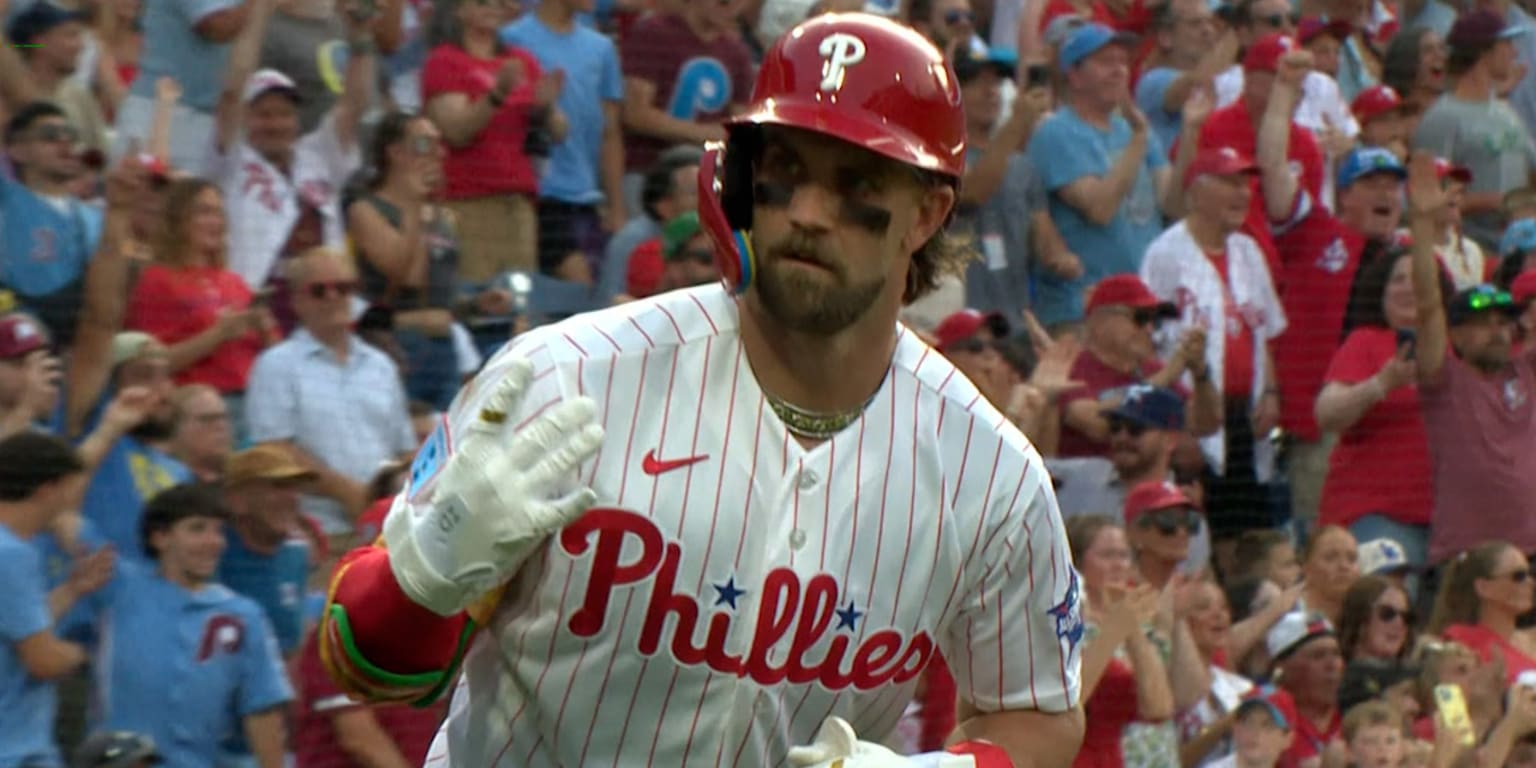
Bryce Harper is punishing strikes again. His .908 OPS ranks ninth among qualified hitters entering Thursday play, and his .409 xwOBA—a Statcast metric isolating what hitters control—sits seventh league-wide, trailing only Alvarez, Soto, Ohtani, Wood, Judge, and Trout. But the deeper story is about restraint. Harper's expected slugging percentage against in-zone pitches sits at .738, his best mark since his 2021 MVP season. That's the third-best single-season mark in baseball this year.
Last season, Harper's approach fell apart. He saw strikes just 43% of the time—the lowest rate among 532 players with at least 200 pitches seen. His expected slugging against in-zone pitches cratered to .604, second-lowest of his career. The mechanics were simple: a hitter can't be elite when he's whiffing on fastballs in the zone and fouling pitches that should carry. Harper absorbed the lesson. Even though his zone rate has dipped further this season—pitches in the zone arriving at an even lower frequency—he's stopped chasing. When pitches land where they belong, his expected wOBA climbs to .465, best of his career against in-zone offerings.
Manager Don Mattingly's interim regime has stabilized a Phillies organization that imploded after a chaotic offseason, and Harper's mechanical reset has accelerated that turnaround. He's seeing fewer strikes but treating them with ferocity, a discipline that defensive coordinators can't game. Nationals skipper Blake Butera articulated it after Harper's go-ahead ninth-inning two-run homer last week: Harper didn't chase out-of-zone pitches, and when strikes came, he stayed through the ball and drove it the other way. That's not luck. That's a hitter who understands his leverage.
For bettors, the implication runs straight into Harper's contact quality when he does swing. His .738 expected slugging against in-zone pitches is durable—it reflects pitch recognition and bat-to-ball mechanics, not sequencing noise. Games where opposing pitchers are forced to work in the zone (against disciplined lineups or when behind in counts) should correlate with elevated Harper power output. His home run prop becomes attractive in matchups where the opposing pitcher walks hitters at elevated rates or when Philadelphia is favored and pitchers can't afford to work around the zone. The edge isn't that Harper will hit more homers; it's that when the pitcher's strike zone tightens, Harper's whip speed and zone discipline compound into power.
The market has likely priced in his .908 OPS standing but may underweight the mechanical durability of his in-zone production. That's not a recency bet—it's a structural play on pitch selection discipline and the hitting profiles that survive late-season pressure.