Bregman's Cubs Slump Has a Mechanical Fix—and a Betting Window
By Ty Whitney ·
The hard-hit rate says Alex Bregman's .233 average is a byproduct of approach, not ability, which means the correction could be steep and sudden.
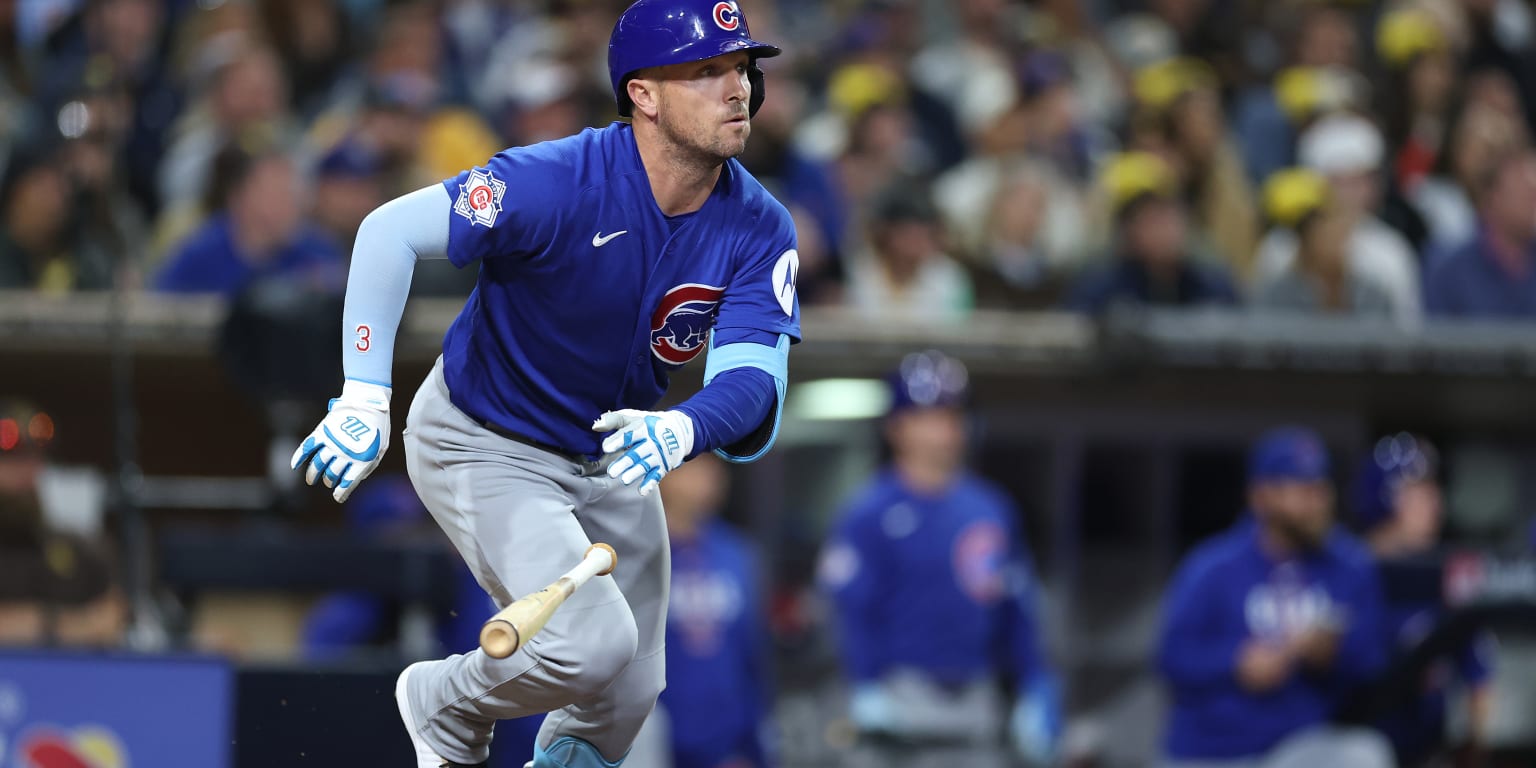
Alex Bregman arrived in Chicago as a $175 million anchor, a three-time All-Star signed to replace not just offensive production but also the defensive credibility Kyle Tucker carried out the door. Five weeks in, he's hitting .233 with three home runs and a 91 wRC+—below league average, a source of visible tension in a clubhouse otherwise cruising on two 10-game win streaks. The Cubs don't need him yet, which is the only reason the franchise isn't in full panic. But the contract size and Bregman's résumé demand answers, and the underlying numbers suggest the correction is already wired.
Bregman is still doing what made him an All-Star: he's hitting the ball hard (44.2% hard-hit rate, well above his career 38.7%), taking walks (12% rate, still strong), and striking out at a reasonable clip (16.9%). The problem isn't effort or contact quality—it's distribution. His ground-ball rate has spiked to 43.4%, a career worst, while his average launch angle dropped to 14.8 degrees from a career 17.7. When he does get the ball in the air, he's popping it up more (up 3.1%) and driving fly balls less (down 8.2%) than his established pattern. This is a mechanical regression, not a talent leak.
The culprit is visible in his plate discipline against breaking balls. Pitchers are feeding him breakers at a 38.7% rate—more than 6% higher than any season in his 11-year career. And Bregman has over-corrected by becoming too selective: he's swinging at in-zone breaking pitches 11% less often than in 2025, while simultaneously whiffing on them 6% more when he does swing. His xwOBA on breaking stuff sits at .208, a disaster. The fix, mechanically, is straightforward—be more aggressive on the zone, especially against the off-speed pitches opponents are using as a roadmap. That's not a talent question; it's a usage pattern Bregman has controlled his entire career.
For betting purposes, this sets up a narrow but durable angle. Bregman's hard-hit metrics and walk rate mean the power drought is not a decline but a launch-angle problem that corrects within weeks, not months. When it does, his isolated power will spike back toward his career 0.185 ISO, and his home run pace will normalize from the current 3 HRs in 140 PA (3.2% of plate appearances) back toward his career 5.2%. The market is currently pricing him as a slumping veteran; the underlying mechanics say he's a temporarily unlucky hitter one adjustment away from relevance.
Don't chase the average—it will improve when the flyballs return. Instead, target his power props over the next 3-4 weeks: home run totals and slugging-percentage props are depressed because the narrative around slow starts drives sharp books to shade conservative. Bregman's exit velocity and plate discipline actually support a reversion upward. The Cubs' run-differential advantage also means he'll get high-leverage at-bats; when the breaker decision clicks, those appearances will compound the value.