The Trade Deadline Reckoning: Which Teams Actually Built for October
By Erik Schwartz ·
Seven weeks after the deadline, the winners and losers are clear—and they're not always the teams that grabbed the marquee names.
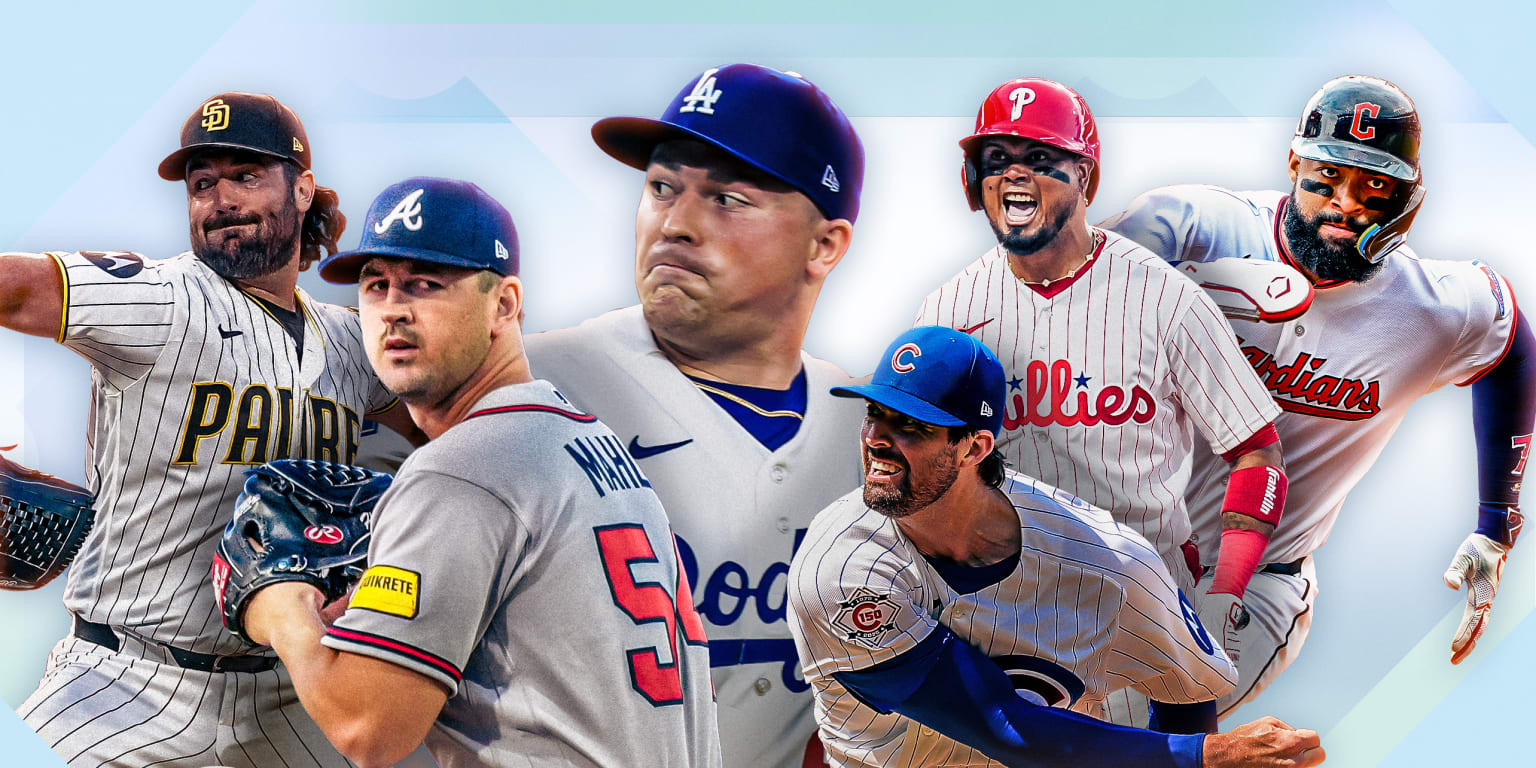
The Trade Deadline passed on August 2nd, and for six weeks the market hummed with conventional wisdom: big names, big trades, obvious winners. Now, in mid-September with the calendar about to flip toward October, the actual impact is measurable. Cleveland and Los Angeles are the clearest gainers—but for entirely different reasons, and that matters for how postseason matchups will play out.
Cleveland's Guardians were a game over .500 at the deadline, hardly the profile of an aggressive buyer. Yet the front office moved decisively, and the results rewrite their season arc. Jo Adell arrived from Los Angeles and has hit six homers in his 47 days in a Cleveland uniform, posting a 107 wRC+. Nathaniel Lowe plugged a cavernous hole at first base—the Guardians ranked 28th in first-base fWAR before his arrival. Foster Griffin lengthened a rotation that had worn thin. The mechanism here is floor-raising, not star-chasing. The Guardians' outfielders carried a four-year power crisis into August (206 combined homers from 2021–25, last in baseball). Post-deadline, those same outfielders slug .433 and have 17 homers in six weeks—league average production in a compact window. That shift, multiplied across a rotation and infield, moved Cleveland's playoff probability from a coin flip to 77.3%—a +34.6 percentage-point jump, third-best since the deadline alongside a +3.4% gain in World Series equity.
Los Angeles presents a different profile. The Dodgers were a playoff lock before and after the deadline; their title odds have barely budged from 24.8%, partly because improving from favorite status is arithmetic ceiling. But Tarik Skubal changes the October equation in a way regular-season value can't capture. Postseason baseball permits front-loaded ace usage—Arizona in 2001 sent Randy Johnson and Curt Schilling out for 58.2% of playoff innings despite pitching 34.6% in the regular season. The Dodgers orchestrated a similar consolidation last October with a broader pitching committee. Adding Skubal (1.80 ERA since September) to a playoff rotation alongside Blake Snell and Yoshinobu Yamamoto gives Los Angeles the clearest path to innings concentration among elite arms. That's a structure advantage that doesn't show in playoff probability models built on regular-season talent distribution.
For bettors, the distinction matters acutely. Cleveland's edge is depth and variance-reduction—they've eliminated their weakest links and narrowed the range of outcomes. That makes them a stronger candidate to advance further in a playoff format that punishes long ballpen usage. The Dodgers' edge is concentration: three Cy Young–caliber arms and the ability to lean on them disproportionately. In a best-of-five divisional round, that asymmetry favors the favorite. In a longer series, it matters less. World Series futures on the Dodgers are pricing in their preseason talent curve plus Skubal; the market has adjusted meaningfully for his arrival. Cleveland's odds have moved upward, but less aggressively, leaving room for the market to reprrice their depth gains as playoff positioning crystallizes. Watch the Guardians' American League pennant odds specifically—they've moved from roughly +1400 in early August to around +900 now, but the actual probability of playoff success may support tighter odds as their rotation and infield stabilize through the final two weeks.
The trade deadline's true winners aren't always the teams that win the offseason argument. They're the teams that fix the specific weakness that would cost them October.