White's Game-Saving Throw Exposes Brewers' Ninth-Inning Vulnerability
By Erik Schwartz ·
Milwaukee's inability to execute in late-game situations against Atlanta's elite closer is becoming a pattern worth tracking in the betting markets.
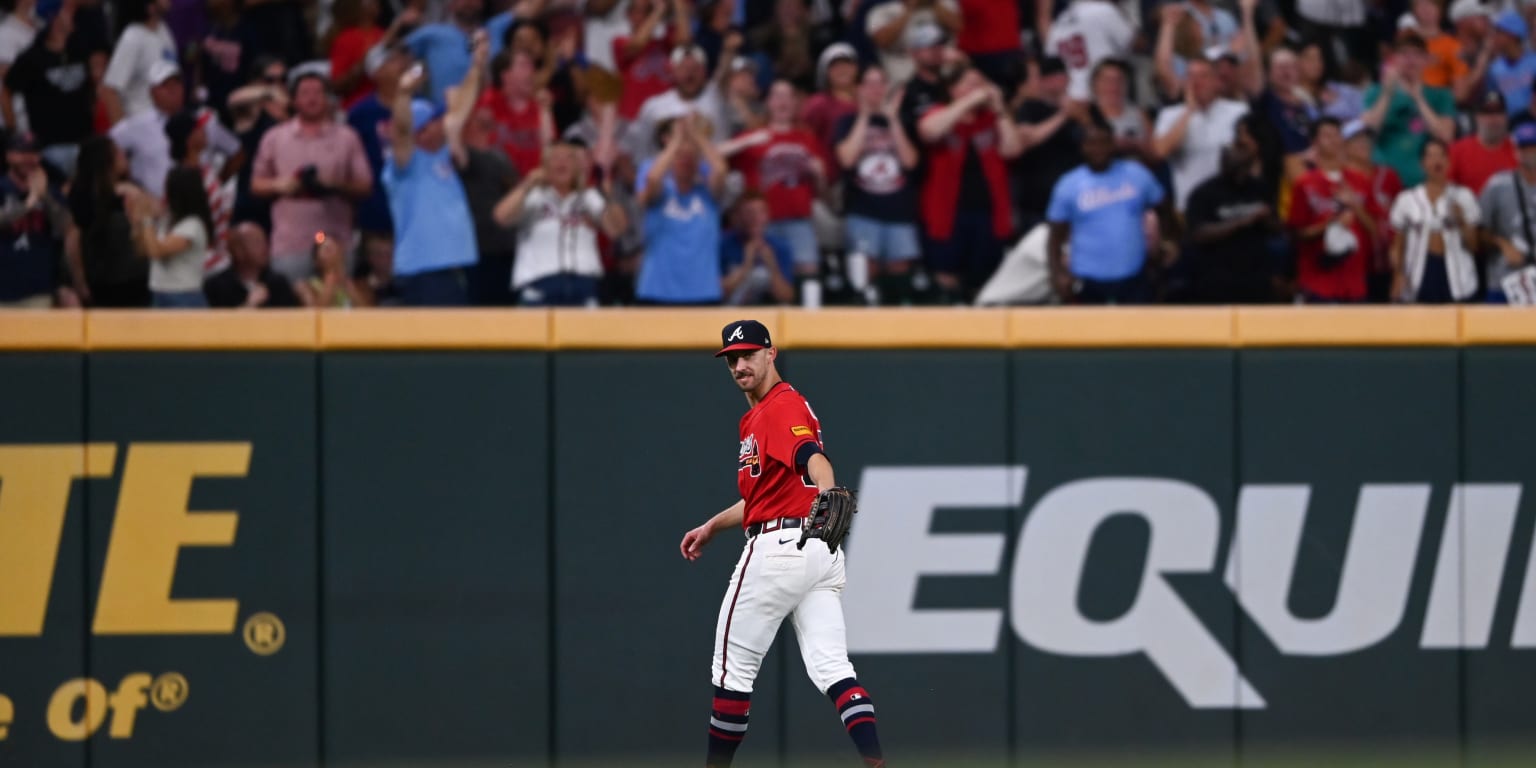
Eli White's 95.3 mph throw home from left field in the ninth inning Friday night at Truist Park—a perfectly-placed two-hopper that beat Jackson Chourio to the plate—preserved Atlanta's 3-2 win and capped a night where the Brewers left baserunners stranded in high-leverage spots. This wasn't a one-pitch swing. Milwaukee had three separate instances where quality contact (Andrew Vaughn's 105.9 mph double-play line drive in the sixth, Christian Yelich's seventh-inning flyout with a runner on, Sal Frelick's bases-loaded comebacker in the eighth) failed to advance their cause. The Brewers generated the traffic but couldn't convert it into runs against a Braves team that features one of baseball's most reliable late-inning anchors in Raisel Iglesias.
Iglesias entered Friday 14-for-14 in save opportunities with a 1.16 ERA—the kind of statistical profile that doesn't just win games in the ninth; it wins them decisively. His ability to suppress runners on base becomes especially valuable when opposing offenses manufacture close calls and near-misses. Milwaukee's ninth-inning sequence—Yelich walk, Chourio double, Turang single—looked like a setup for the tying run, but against a closer operating at that efficiency level, even a clean baserunning attempt (Chourio's slide) doesn't guarantee success.
The broader context: Atlanta entered this series in first place, as did Milwaukee, but their trajectories in clutch moments have diverged. The Braves' closers have locked down the bottom of games precisely when opponents generate their most dangerous situations. Meanwhile, the Brewers' inability to break through against premium bullpen arms in the final inning—evidenced by their quick exit in a series opener that could have gone either way—suggests they're running into a repeatable disadvantage in close games where depth and execution both matter.
For prop bettors, this creates a durable edge in games where Atlanta's closer is available and Milwaukee is chasing late. Iglesias' 14-for-14 save rate isn't random variance; it's a reflection of stuff (1.16 ERA) meeting execution at the leverage moment. When the Brewers face Iglesias in a non-blowout scenario, unders on Milwaukee's team total become more actionable than surface numbers suggest. Conversely, overs on Braves moneyline-adjusted run totals benefit from the knowledge that their closer is one of the few arms capable of neutering Milwaukee's ninth-inning pressure. The game Friday proved it: even when the Brewers manufactured legitimate scoring chances, Atlanta's personnel at the most critical moment executed a flawless defensive sequence that no base runner could overcome. That's not luck shifting; that's systematic advantage in tight spots.