Murakami's Hamstring Recovery Tracking to Mid-July Return; White Sox Lineup Impact Persists
By Ty Whitney ·
The White Sox rookie's four-to-six-week rehab window from a May 29 injury points to a mid-July availability, leaving a 1.5-month gap in first-base production that reshapes lineup construction and run-scoring paths.
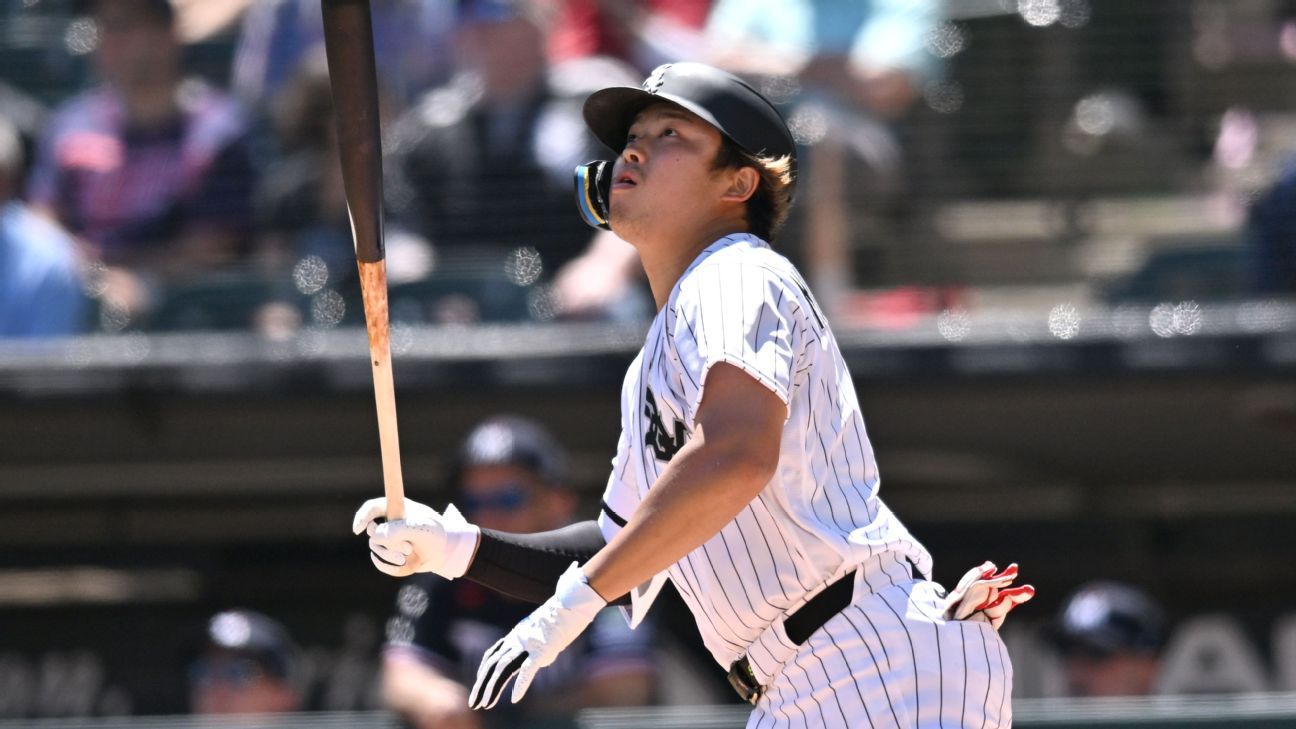
Munetaka Murakami is running again. The White Sox rookie, sidelined since May 29 with a right hamstring strain suffered against Detroit, has entered the active rehab phase—a progression managers and medical staffs guard closely because it marks the boundary between passive recovery and full loading. Speaking Friday through interpreter Kenzo Yagi, Murakami confirmed the obvious markers of progress: day-to-day gains, solid performance in on-field drills. But manager Will Venable offered no firm timeline, a deliberate hedging that signals the club isn't rushing a $34 million, two-year signing back into a lineup mid-June when the injury math says July arrival is more realistic.
The injury window is concrete. Murakami went down May 29; the team announced four-to-six weeks recovery. Computing from today, June 12, puts earliest return in the July 10–24 range—roughly five weeks into what should be the second half of a chase-position July and the start of August. In 57 games before the hamstring, Murakami has authored a .240 batting average with 20 home runs and 41 RBI, a 145-game pace north of 50 homers that carries real run-production weight, especially from the first-base spot in a rebuilding lineup. The White Sox offense ranked 27th in runs scored entering Friday; Murakami's departure coincided with a further offensive stall.
Venable's phrasing—"a lot of boxes that he's got to check"—reflects the staged nature of hamstring recovery: running precedes hitting, hitting precedes full-intensity live batting, live batting precedes game action. This isn't a same-week return path. Catcher Kyle Teel, placed on the IL later and making faster progress, is described as days away from a minor league assignment; Teel hasn't played a single inning this season. For Murakami, who has already accumulated 57 games and 220+ plate appearances, the bar for clearance is higher. The club will demand explosive-first-step testing—the exact athletic demand a hamstring injury threatens—before he logs first-base reps against major-league arms.
From a betting lens, the White Sox run total becomes a fade vehicle for the next 4–5 weeks. Without Murakami's 20-homer pace occupying a middle-of-the-order at-bat, the team's offensive architecture flattens. Dodgers, Yankees, and other contenders who face Chicago in the next three weeks face a materially weakened opponent; team totals on White Sox games drop proportionally, and unders gain structural support independent of pitching matchup quality. The absence window is too long to price as a one-game absence—it's a five-week hole in the lineup. Any White Sox team total priced as if Murakami is available carries embedded risk.