Montgomery's Promotion Signals White Sox Offensive Urgency in Tight Central Race
By Erik Schwartz ·
The arrival of the Crochet trade's final piece reshapes Chicago's outfield and betting calculus as the team fights for division control.
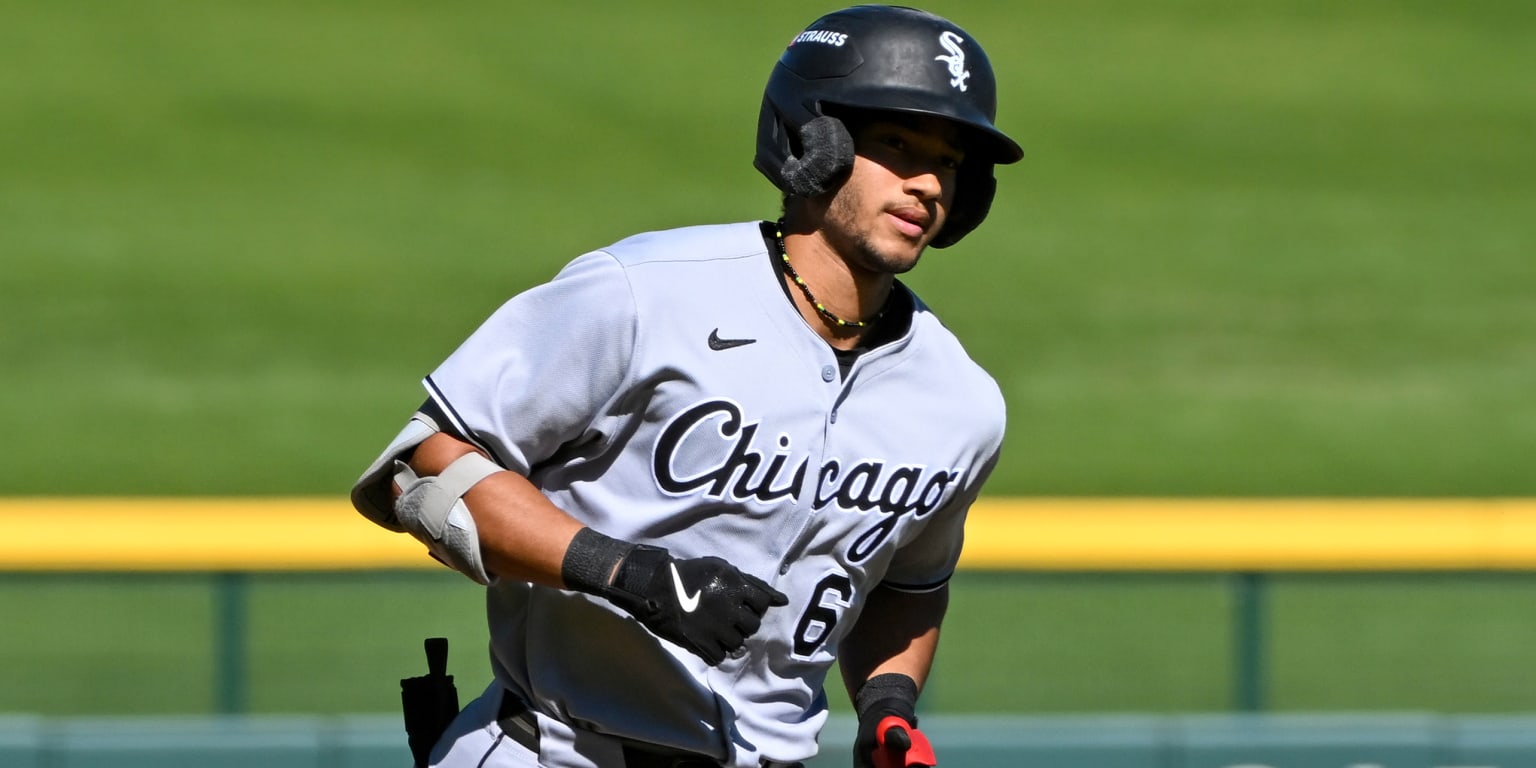
Braden Montgomery is in the White Sox lineup tonight, the culmination of a 17-month arc that began when Chicago shipped Garrett Crochet to Boston on December 11, 2024. The 23-year-old right fielder becomes the fourth player from that trade to reach the majors, and his timing carries weight: the White Sox trail the Guardians by 1.5 games in the AL Central with a 34-31 record, and Montgomery's profile—a .314/.422/.548 slash across Double-A and Triple-A this season with 10 home runs and 41 RBIs—offers immediate offensive thrust to a lineup that has operated below replacement level in right field. The switch-hitter was the 12th overall pick in 2024, proof that Boston's developmental cache landed in the Crochet deal. Montgomery's minor league production trajectory mirrors the offensive construction the White Sox currently lack: his .422 on-base percentage sits in the 85th percentile of minor league plate appearances; his ISO (.234) exceeds league average. The club has deployed him in both right and center field assignments, a positional flexibility that hints at extended playing time rather than a short audition.
Context matters here. The White Sox mortgaged immediate pitching depth—Crochet was a top-30 controllable starter—to acquire future assets. Three of those four players (Chase Meidroth at second base, Kyle Teel behind the plate, reliever Wikelman González) have either underperformed or struggled with injury. Meidroth is starting now; Teel hasn't played a major league inning this season due to right hamstring and right knee issues despite arriving as one of the organization's top prospects in 2025; González has been sidelined at Triple-A since April after a solid rookie relief campaign last season. Montgomery's call-up, then, reads as a corrective move—validation that at least one piece of the trade package is ready to produce. The White Sox front office is betting that adding a young, high-contact bat in a playoff race justifies the earlier gamble.
From a betting lens, Montgomery's arrival should tighten Chicago's team total projections on both sides. The club's run-scoring capacity has been constraining their over-under pricing; adding a prospect averaging .548 slugging percentage reshuffles that calculation. His minor league walk rate (13.2%) and strikeout rate (18.9%) suggest disciplined plate discipline—less volatility than a typical call-up, which matters for consistency in team totals across a six-game homestand against Atlanta and Los Angeles. Over his first 10-15 games, expect his individual hit and RBI props to be overpriced as the betting market adjusts to an unknown quantity; the historical comp—a high-floor prospect in a pennant race—often draws lookahead buying that inflates opening lines 10-15% before regression to baseline minor league run rates. His switch-hitting status and demonstrated success against both right and left-handed arms in the minors (coaches don't deploy two-way switch-hitters without positional flexibility data) suggest his playing time will not be restricted by handedness matchups, reducing fade risk on nights he sits against specific pitchers.
The White Sox themselves have signaled internal conviction by promoting Montgomery during a compressed deadline window. Teams in contention do not promote unproven prospects unless they believe the roster gap justifies the cost. This is not organizational desperation; it is resource allocation under pressure. His prop lines will open wide due to his lack of MLB experience, but the directional signal—that Chicago's decision-makers view offensive volume and contact quality as higher priorities than defensive pedigree or experience—should anchor how bettors calibrate his first-week performance. The minor league splits suggest floor-raising potential rather than ceiling-dependent variance.