The Mason Miller Trade Calculus: Why San Diego's Leverage Matters More Than His Stuff
By Erik Schwartz ·
The Padres aren't selling despite Miller's high-profile availability, and that asymmetry reshapes what contenders will actually pay.
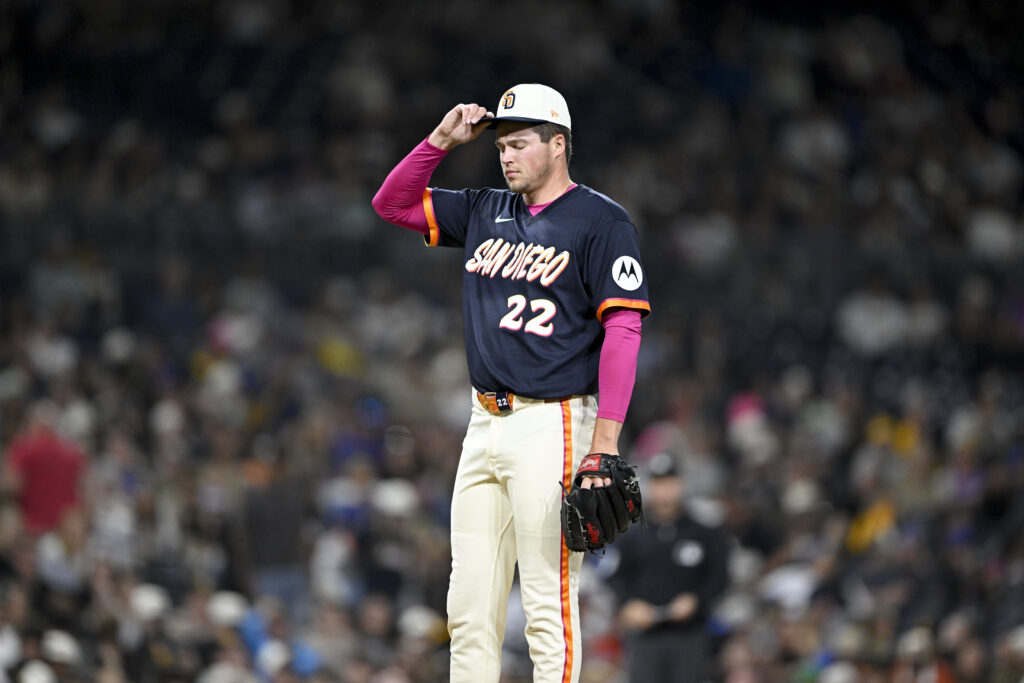
Mason Miller remains one of baseball's most coveted relief arms heading into the deadline, yet the fundamental problem blocking a trade isn't the pitcher's talent—it's the Padres' refusal to act like sellers. At 55-53 after a five-game win streak, San Diego sits just outside playoff positioning but close enough that GM A.J. Preller shows no urgency to part with proven bullpen depth. That calculus instantly eliminates the teams willing to mortgage prospects for rental relief. Miller becomes available only if someone offers major-league talent in return, not lottery tickets.
The nature of contention-window desperation has inverted the typical deadline math. Clubs positioned to contend now—those within 3-5 games of a wild-card slot or division chase—can't afford to gamble on unproven prospects when they need arms that pitch today. Miller's elite velocity and strikeout rate make him immediately useful in October, but acquiring him requires either a team confident enough in its window to trade a major contributor, or a Padres front office convinced that upgrade is worth more than keeping Miller himself. Neither condition is obviously true.
Preller's leverage stems entirely from positioning. The Padres are not clearly buyers (they'd need a September surge to lock in), but they're also not clearly sellers (one more streak could push them into the expanded playoff bracket). That ambiguity means any incoming offer must clear a high bar: not just prospect depth, but a major-league player the Padres prefer to Miller in their current rotation or bullpen mix. The ask effectively becomes a Manny Machado or Trent Grisham-type chip—established talent that addresses a real need.
For bettors, this dynamic matters most to bullpen efficiency lines and relief ERA props tied to high-leverage situations. If Miller stays in San Diego, Padres late-inning win probability jumps; Miller's season K/9 sits around 11.8, well above league average for relief arms. If the Padres do move him, the asking price (a major league contributor) signals Preller sees the team as playoff-relevant, not a deadline dump—meaning the Padres offense and rotation will likely remain competitive, keeping team totals within their current band. Conversely, if a contender actually pays that price, it's because they see Miller as the missing piece to a genuine October run, which compresses unders on bullpen-heavy teams and favors relief strikeout props for the acquiring club's closer-by-committee setup.