The No-Hitter Drought Is About Efficiency, Not Stuff—And That's a Betting Edge
By Erik Schwartz ·
With only nine complete games thrown all season, the next no-hitter belongs to a pitcher who can bury hitters early and preserve his arm—not necessarily the hardest thrower.
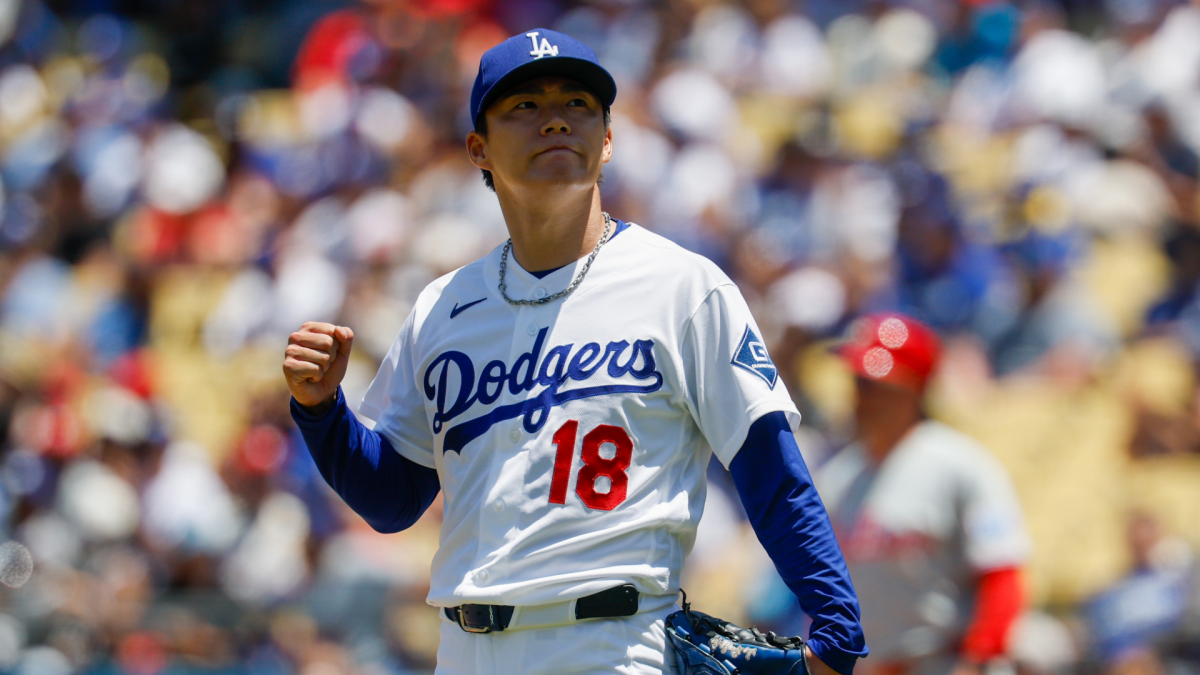
Jacob Misiorowski and Yoshinobu Yamamoto both came within shouting distance of no-hitters within the past week, brushes with history that underscored a deeper truth about 2026's pitching environment: stuff alone doesn't carry nine innings anymore. Misiorowski's one-hit shutout on a 95-pitch economy and Yamamoto's perfect-game performance through eight innings weren't anomalies—they were efficiency masterclasses in a league batting .243 and starved for complete games. Only nine have been thrown all season, and no pitcher owns more than one. The no-hitter drought stretches back nearly 22 months, to Blake Snell's August 2024 gem against Cincinnati. That's an eternity in baseball time, and it's reorienting the candidates.
The traditional ace-tier shortlist still holds real weight. Misiorowski's 95-pitch shutout with 15 strikeouts stands as the clearest statement of intent—a pitcher who generates outs without wasting ammunition. Yamamoto's 1.01 ERA over his last five starts, combined with back-to-back eighth-inning completions, signals a pitcher primed for the distance. Cristopher Sánchez owns the game's highest groundball rate at 56.8% (league average 41.4%), a trait that correlates with fewer hard contact opportunities and faster outs. Tarik Skubal, returning from elbow surgery, has only one career complete game but carries the raw pedigree. Paul Skenes, the 2025 NL Cy Young, threw a pair of two-hit, eight-inning efforts earlier in the season before recent six-start stretch saw him max out at six innings and 100+ pitches per outing—a sign his workload management may have tightened.
But the real prop-betting edge lives in the secondary tier: pitchers with sub-.200 allowed batting averages and improved pitch efficiency who've never been part of the ace conversation. Chase Burns (.192 BAA, only 0.167 lower than Yamamoto's .188) is 8-1 with a 2.01 ERA but has completed only one seventh inning, averaging 5⅔ per start—too much left on the table for now. Kyle Harrison, traded into the Brewers organization, has allowed just 54 hits in over 65 innings and is trending upward as a frontline starter. These candidates carry lower public awareness, meaning their strikeout totals and team-total overs won't be as aggressively bet down when they're taking the mound.
The mechanism for a no-hitter in 2026 isn't raw velocity or Cy Young hardware—it's a pitcher who can get whiffs and ground-ball outs early in the count, preserve his bullpen load, and stay under 95 pitches through six innings. The market prices no-hitter risk into ace-heavy favorites and ignores the sub-aces with elite contact management. When Misiorowski or Yamamoto take the ball against weak offenses, their strikeout lines and team totals tighten immediately; the public bakes in no-hitter risk. Conversely, when Burns or Harrison pitch into a matchup where their opposition is undermanned or vulnerable to ground balls, their strikeout props and first-five-inning overs remain soft because the no-hitter angle hasn't entered the conversation. The edge isn't predicting who throws it—it's understanding that the efficiency tier (Burns, Harrison, Sánchez) will get better value on contact-dependent props because the market is chasing the name-brand ace risk instead.