Wheeler's Cy Young Case Hinges on Durability—And His Next Contract Decision
By Erik Schwartz ·
A Phillies ace on pace for his third runner-up finish is signaling he'll pitch beyond 2027, which changes the math on both his awards candidacy and the team's payroll.
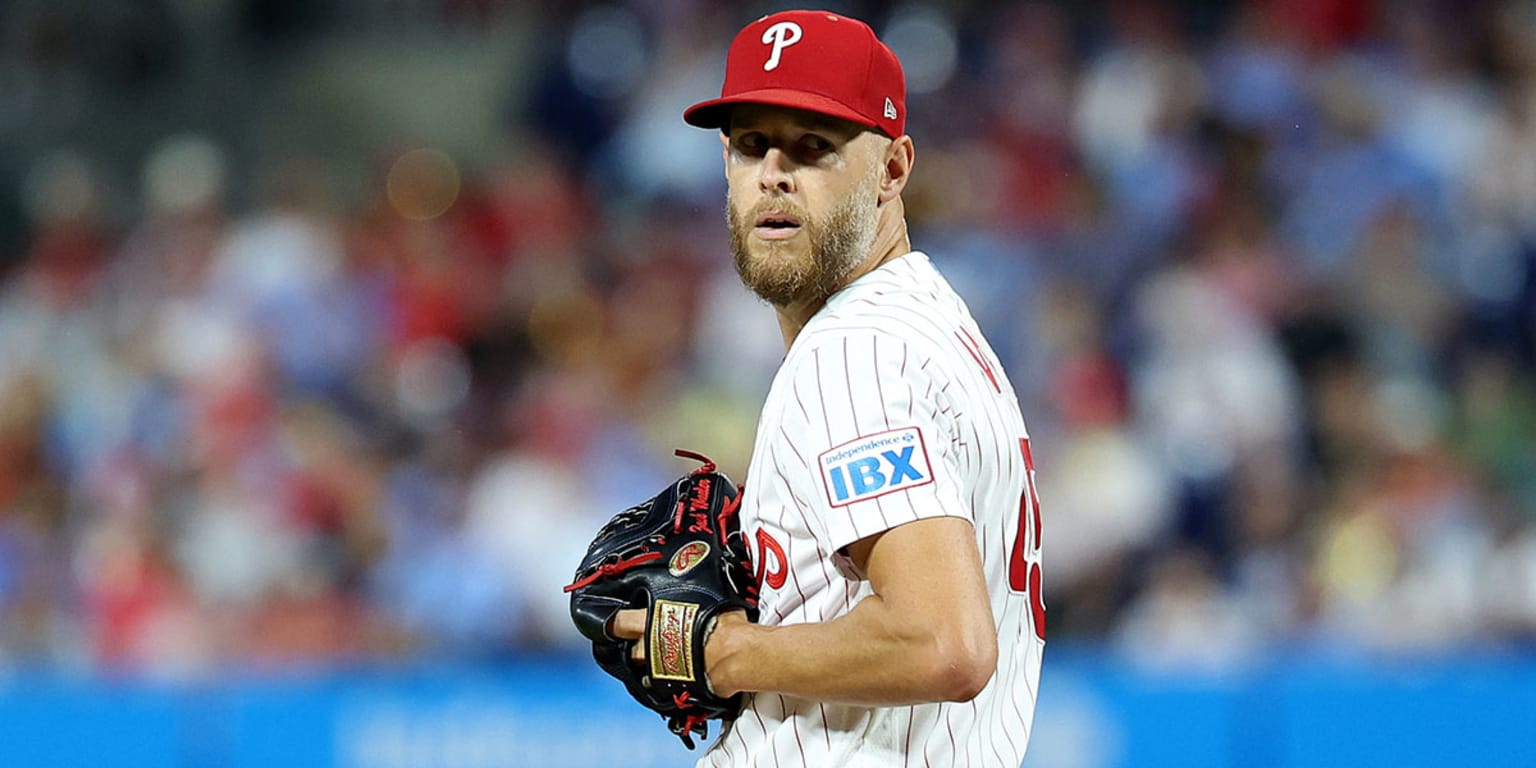
Zack Wheeler has spent the last month saying the same thing three different ways: he might not hang it up when his contract ends in 2027. The shift matters because Wheeler is having the kind of season—10-2, 2.16 ERA, fifth in the NL in fWAR—that puts him in legitimate conversation for a third Cy Young runner-up finish. More importantly, it signals a willingness to extend beyond the three-year, $126 million deal he signed in March 2024 with explicit assurances at the time that he wouldn't.
What's changed? Durability. Wheeler missed the final two months of 2025 and the first month of this season following thoracic outlet surgery in September, yet he still carries the best fWAR (31.7) of any pitcher over the 2020-26 window. That's not recency-driven noise—it's the product of seven seasons as baseball's most consistent starting pitcher. From 2018 through today, he ranks first in wins (102), second in innings (1,456⅔), and second in strikeouts (1,585). His 3.05 ERA over that span places him ninth in baseball, and his postseason ERA of 2.18 ranks third all-time among pitchers with at least 10 starts since 1913. The durability is real. The excellence is established.
The Cy Young conversation this year is tighter than his previous two runner-up finishes. In 2021, he lost to Corbin Burnes despite throwing 46⅓ more innings. In 2024, he finished second to Chris Sale. This cycle, the field—Jacob Misiorowski and Cristopher Sánchez among others—is thinner, and Wheeler has already qualified or will qualify for the ERA title by his next start in Miami, where his 2.16 would rank third in baseball. But Cy Young voting weights postseason performance less heavily than regular-season volume. If Wheeler pitches fewer innings than his primary competitors and they finish strong in August-September, the award goes elsewhere. That's the margin he operates in.
Where the prop angle sharpens: if Wheeler genuinely commits to pitching two or three seasons beyond 2027, his strikeout volume becomes a long-term leverage asset. His current 1,585 strikeouts over a full career put him on a track that never reaches the 300-win or even 200-win thresholds, yet modern Hall of Fame voting (per MLB.com's analysis of 16-of-20 pitchers since 1945 with peak seven-year fWAR entering the Hall) no longer requires it. Wheeler's peak WAR—already elite—compounds with additional seasons of 200+ strikeouts per year. Early-season strikeout lines for Wheeler in any given matchup should tighten if he signals a longer runway; public perception of his career arc inflates his perceived volatility. Sportsbooks price strikeout props on seasonal trajectory assumptions. A pitcher credibly moving from "contract expires 2027" to "I'll pitch until 32 or 33" has lower variance outcomes and higher floor performances.
The real tell is that Wheeler is not saying this to get a bigger contract—he already has one. He's saying it because he's healthy again, dominant, and playing for a contender that will push him into October. Strike that. He's saying it because he's thinking about the Hall of Fame. And when a pitcher of his caliber gets that permission from himself, the durability edge doesn't fade. It compounds.