Garrett Mitchell's Elite Bat Speed Is Rewriting the Brewers' Depth Math
By PropBetEdge Editorial Team ·
A prospect derailed by injury is now hitting at elite bat-speed rates while carrying gold-glove defense in center field—and the market hasn't fully priced his everyday role.
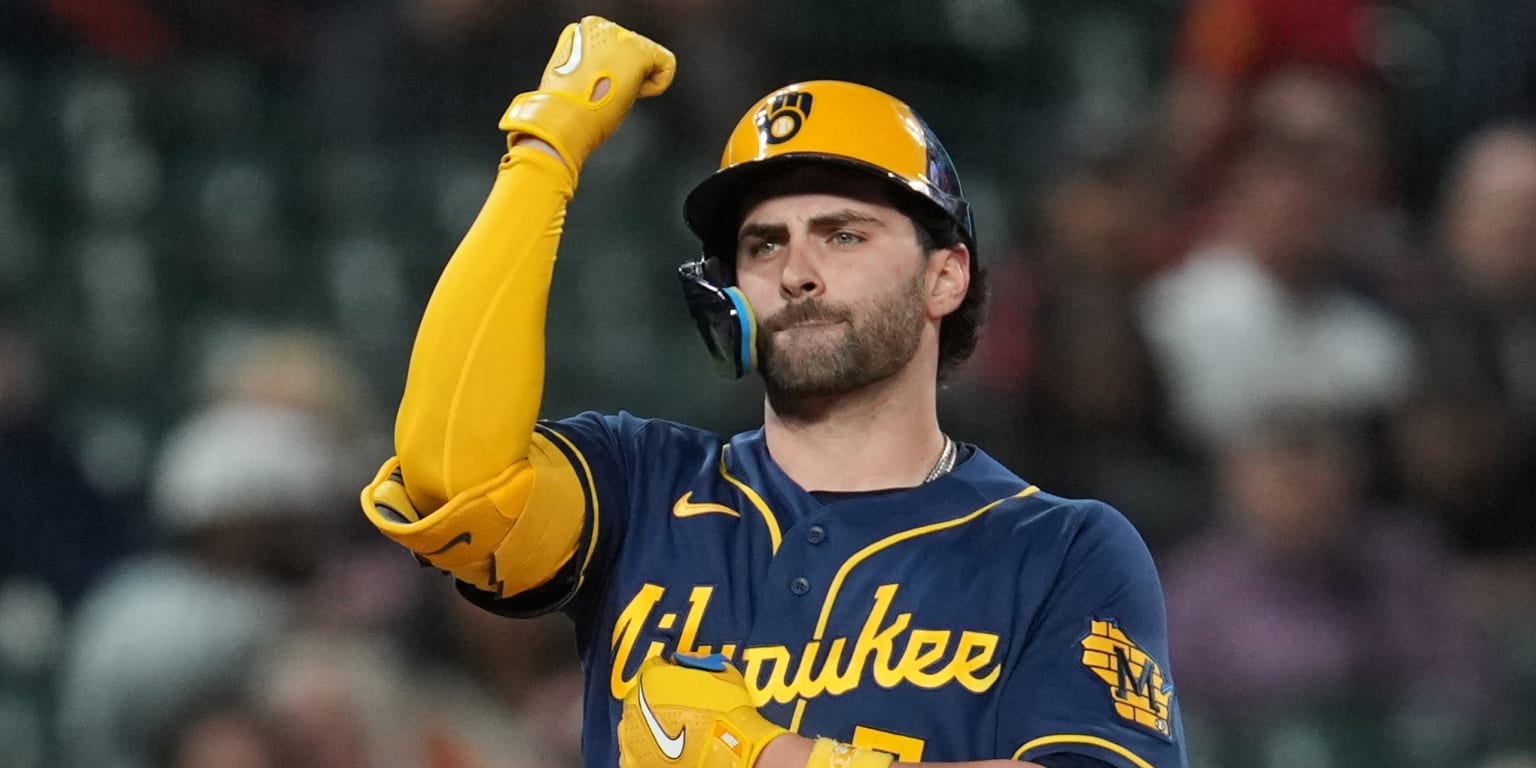
Garrett Mitchell has played in 97 games for the Brewers this season, a career high that marks his emergence from a five-year injury shadow. His slash line of .266/.357/.435 doesn't jump off the page, but the underlying mechanics reveal why Milwaukee's organization—which has led the Majors with 67 wins entering late July—continues to treat him as a centerpiece. Mitchell is swinging a bat at 77.4 mph, placing him in the 97th percentile of qualified hitters and ahead of names like Shohei Ohtani and Kyle Schwarber. That rare velocity translates directly to power production: since bat-tracking became standard in mid-2023, swings above 75 mph have produced a .637 slugging percentage league-wide, versus .340 for slower swings. Mitchell is well above that inflection point.
The power output—eight homers, 22 doubles, three triples—flows from that elite swing mechanics foundation. His 92.7 mph average exit velocity (94th percentile) and 14.1% barrel rate (89th percentile) confirm the contact quality isn't fluky. This is a player generating hard contact at a rate most sluggers can't match, even if his home-run total lags. The Brewers' player-development operation has historically monetized this profile—finding value in tools that don't immediately produce gaudy counting stats but deliver sustainable offensive production. Mitchell fits that mold precisely: he's a high-floor, high-ceiling complement to the Brewers' core.
Defense amplifies the calculation. Mitchell's sprint speed of 29.8 feet per second ranks 98th percentile among qualified players, translating to a +3 Outs Above Average in center field this season after posting +5 last year. His 91.6 mph arm strength on max-effort throws places him 91st percentile. He's elite across all three facets of center-field play—speed, positioning, throwing—which means the Brewers can slot him into an everyday role without defensive drag. That's the inverse of what the market typically prices into position players: most everyday center fielders with Mitchell's contact profile would need to hit 20+ home runs to justify daily at-bats. Mitchell doesn't carry that burden.
For betting purposes, Mitchell's everyday role and elite bat speed create a durable prop angle on hard-hit balls and extra-base hits. His 49.5% hard-hit rate (88th percentile) is sticky—it's a mechanical byproduct of swing speed, not volatile. His doubles total is particularly exploitable: 22 in 97 games projects to 35+ over a full 162-game season. That's a 32-35% higher doubles rate than the league average, driven by a gap-hitting approach that works at elite swing speeds. Late-July and August lines on Mitchell's extra-base props haven't adjusted for the durability of his everyday role; sportsbooks may still be treating him as a platoon bat or injury risk, not a center-field starter with top-percentile tools.
The Brewers' 67-win pace suggests sustained winning and continued at-bat volume for Mitchell through October. His xBA (expected batting average based on exit velocity and launch angle) will likely exceed his actual .266 average as the sample grows, creating further upside. Unders on strikeout totals merit attention as well—Mitchell's 26.8% strikeout rate is slightly elevated, but his elite bat speed and line-drive tendencies (50%+ of swings produce line drives or ground balls) indicate he's making consistent contact. The market has not fully repriced his role from prospect with injury history to everyday starter with legitimate slugging traits.