The Trade Deadline Pitching Auction: What the Savant Data Says About Your Next Starter
By PropBetEdge Editorial Team ·
With 12 days until the deadline, contenders are parsing the difference between strikeout stuff and contact quality—and the market is pricing those skill sets very differently.
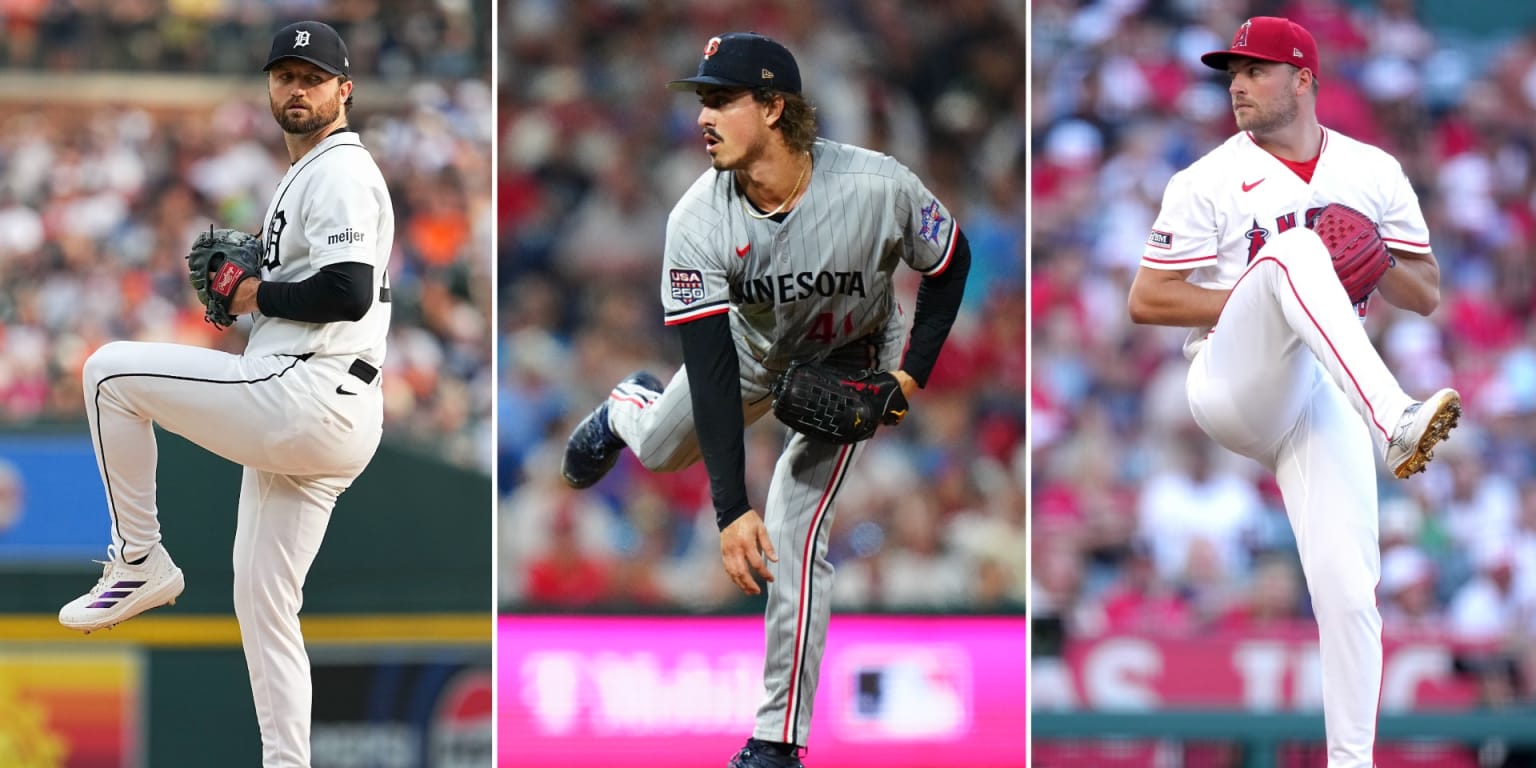
Tarik Skubal remains the singular ace on the block, but the real market action for contenders sits one tier below. As of mid-week, roughly a dozen legitimate trade candidates have emerged, each with distinct Statcast fingerprints that will determine their rental value over the final weeks of August. The question isn't whether these pitchers can help—it's which one's skillset actually maps onto your team's defensive architecture and playoff-run timeline.
Joe Ryan's twin-tower excellence in strikeout rate (83rd percentile at 27.8%) and walk suppression (93rd percentile at 5.3%) has made him the Twins' most tradeable asset. That 22-point gap between his K% and BB% sits comfortably in the top 10 across baseball, which is shorthand for: he accumulates outs without gift-wrapping baserunners. José Soriano's ceiling may be higher—his 14 runs prevented ranks in the 94th percentile, powered by a 96.8 mph fastball and a devastating 31.6% whiff rate on his knuckle-curve—but his cooler stretch since June suggests some regression risk priced into his acquisition cost. Meanwhile, Casey Mize's expected ERA of 3.14 (top 10 among pitchers facing 300-plus batters) hints that his 2.79 actual ERA is sustainable rather than lucky; Statcast's contact quality metrics validate his results in a way that matters for playoff environments where sequencing becomes brutal.
Clay Holmes represents a different archetype altogether. His 55.3% ground ball rate (top 5% in baseball) makes him a defensive-scheme multiplier—a pitcher whose effectiveness scales directly with infield prowess. For a club like the Cubs with elite middle-infield defense, Holmes becomes a different pitcher than he would be on a team with weaker shortstop-and-second coverage. His fractured fibula is the wrinkle; the injury occurred in late July, leaving a realistic four-to-six week recovery window that would slot his full availability around late August or early September—postseason timing. That timeline compresses his rental utility but potentially lowers his asking price if the selling team becomes risk-averse.
For prop bettors, the Savant comparison tool surfaces an actionable angle: strikeout props on Ryan and Soriano should price higher relative to the market's historical baselines because both pitchers' stuff profiles demand extended plate appearances from opponents. Ryan's walk rate means fewer free passes to work around; Soriano's whiff rate generates chase outside the zone. In deep playoff pushes, both will accumulate strikeouts at rates that exceed their per-inning averages due to pitch sequencing in high-leverage spots. Conversely, Holmes props (particularly his innings total in any early-August appearance before full health) should lean under—not because his ability has changed, but because managing his workload through a postseason push will artificially cap his per-start ceiling.
The Aug. 3 deadline sits 12 days away, which means these player profiles will crystallize into market prices over the next week. Teams will price in health status, remaining control, and fit. Bettors who lock in strikeout props on Ryan or Soriano before the trade announcements will benefit from the efficiency trade—their new teams will be contenders using them in optimal offensive environments, which historically inflates K/9 by 10-15% relative to rebuilding contexts.