Ohtani's Cy Young Path Runs Through Strikeout Rate, Not Just ERA
By Erik Schwartz ·
His current 0.82 ERA masks underlying contact quality that suggests regression ahead—and winning the award demands he reclaim his career strikeout rate to stay competitive.
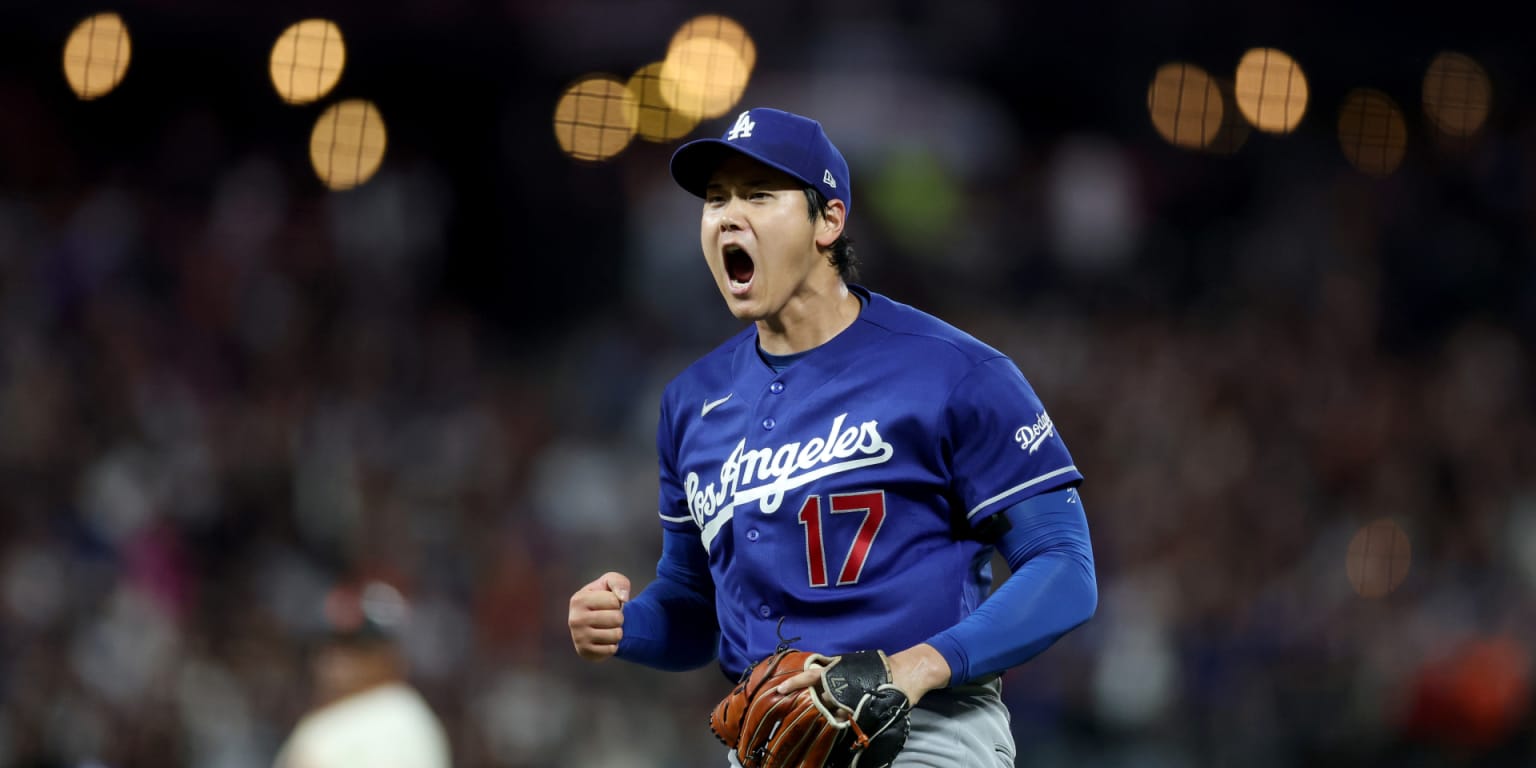
Shohei Ohtani has constructed one of baseball's most improbable résumés: four MVPs, five All-Star selections, two World Series rings, and a performance portfolio that spans both elite hitting and elite pitching across nine major-league seasons. The one omission that gnaws at him is a Cy Young Award—a goal he wrote down in high school and has chased across his entire career without success.
This 2026 campaign presented an opportunity. Through nine starts, Ohtani's ERA sits at a microscopic 0.82, the kind of number that ordinarily commands Cy Young conversation. But the machinery beneath that surface tells a different story. His expected ERA (xERA), derived from the quality of contact opponents have actually made against him, sits at 2.38—a gap of 1.56 runs that cannot persist across a full season. His FIP (fielding-independent pitching), which relies on strikeouts, walks, and home runs, registers at 2.48. Both metrics place him in rarefied air, top 5% of qualified starters, but they're also far more predictive of second-half performance than a sub-one ERA ever will be. The gap exists because Ohtani has benefited from exceptional batted-ball luck and exit-velo suppression early on; that advantage evaporates as sample sizes grow.
Where Cy Young races truly separate is the strikeout tier. Ohtani's career K rate is 31.1%, a mark he's underperforming at 28.6% this season. Competitors like Phillies lefty Cristopher Sánchez (29.4%) and the reigning winner, Paul Skenes of Pittsburgh (29.4%), are already within striking distance, while Brewers breakout Jacob Misiorowski (39.6% K rate) has essentially lapped the field with a performance unlike anything in modern baseball. The volume disadvantage compounds Ohtani's problem: pitching on a six-day rotation rather than five means fewer total innings and fewer opportunities to rack strikeouts. To compensate, he needs to elevate his rate above his historical norm, not retreat further into it. His last outing—six hitless frames but four walks and a 56% strike rate against Colorado—exposed command inconsistency that props up the xERA gap. A Cy Young-winning pitcher at 28.6% K rate is functionally impossible in this era; the market and voting consensus won't support it if Ohtani's competition sustains velocity and miss rates above 30%.
For bettors tracking Cy Young futures, this distinction matters immediately. The narrative around Ohtani's current ERA is seductive—it's the kind of number that looks good in headlines and generates voting momentum in September. But savvy handicappers who've mapped xERA, FIP, and peer K rates understand the edge: Ohtani's odds are inflated by early-season ERA shine, and his path forward requires not sustaining the 0.82 but rather proving he can hold a 2.00-2.25 ERA while simultaneously climbing back above 30% strikeouts. That's a narrower needle than the headlines suggest. His command must stabilize, his velocity efficiency must match peers in a high-K environment, and he must do both over a full season rather than a hot nine-game stretch. The book has already priced in some regression, but it may still be overweighting the raw ERA number relative to the component metrics that actually predict winner selection.
Ohtani's Cy Young chances hinge on whether he reclaims his strikeout identity before the market finishes correcting his ERA. If his K rate stays at 28-29%, fade his award odds aggressively in September; if he climbs back to 31%+ and holds xERA in the 2.00-2.20 band by October, he'll have a legitimate case despite the fewer innings. Right now, the gap between narrative and mechanics is wide enough to exploit.