Montgomery's MLB Debut Reshapes White Sox Right Field—and Lineup Volatility
By Ty Whitney ·
A prospect with Kyle Schwarber-level exit velocity arrives in Chicago's playoff push, but elevated swing-and-miss rates and groundball tendencies create a wide variance window for early performance props.
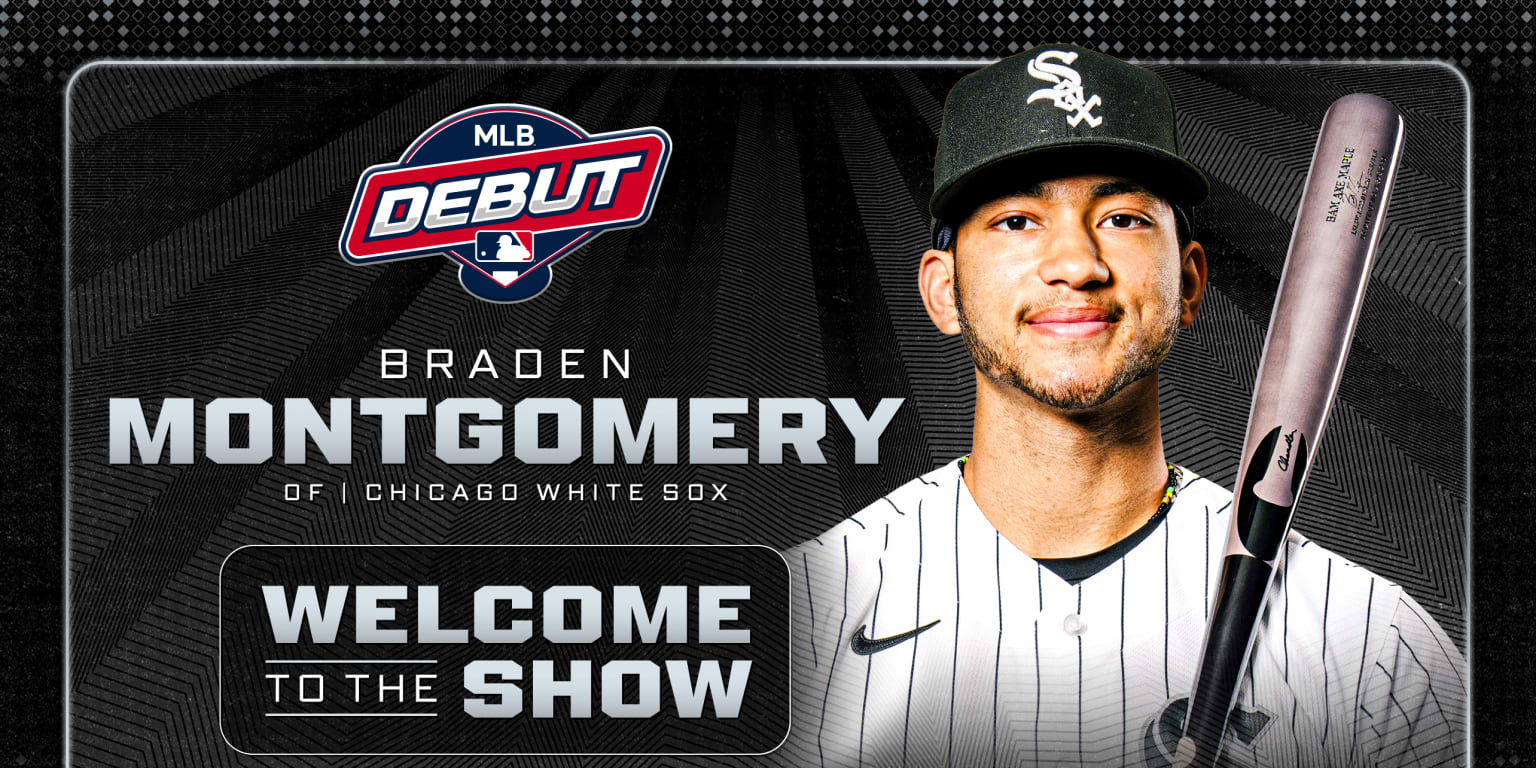
Braden Montgomery made his major league debut tonight for the White Sox, a promotion that arrives nearly two years after the franchise's 121-loss nadir and signals a dramatic shift in organizational trajectory. The No. 21 prospect on MLB Pipeline's top 100 list was acquired in the Garrett Crochet trade at the 2024 Winter Meetings and has ascended from Single-A to the majors in 16 months—a pace that speaks to genuine elite-level offensive tools rather than organizational desperation. Chicago sits 34-31 and holds a two-game lead in the Wild Card chase, making the timing unconventional but not irrational. Right field has been the lineup's softest spot, platooned between Derek Hill and Rikuu Nishida, so the addition of a prospect with proven power generation makes structural sense.
Montgomery's headline tool is textbook: plus-plus raw power fed by premium bat speed. His Triple-A exit velocities (average 93.2 mph, max 113.9 mph) track directly with Kyle Schwarber's 2026 major league output—a rare comp for a 23-year-old in his first week. He hit .314/.422/.548 between Double-A and Triple-A this season and went 18-for-35 (.514) with 10 walks during a 10-game hitting streak immediately prior to his callup. That plate discipline signal is real: a .381 on-base percentage across 177 minor league games suggests he can take pitches and work counts, not just swing through everything. The college pedigree is clean too—he was the highest-drafted position player in Texas A&M history at No. 12 overall in 2024, signed for $5 million, and crushed 62 homers in three college seasons after a notable shift from a two-way prospect into a pure position player.
But the variance band is wider than a typical rookie flex. Montgomery carries a 34 percent swing-and-miss rate against all pitches and a 21 percent whiff rate against strikes in Double-A and Triple-A—numbers that flag contact risk even if his 25 percent strikeout rate is within league norms. His profile tilts heavily groundball, which suppresses home run totals despite the plus-plus raw power. Scouts have described him as making a lot of soft contact relative to his exit velo, a profile mismatch that projects him toward 25-30 homers annually rather than the 35-40 ceiling that the raw power might suggest. He also spent time in center field this spring, suggesting the organization views him as positionally flexible but flagging some uncertainty about his defensive home.
For prop purposes, Montgomery's first two weeks present a binary outcome trap. The upside case—a prospect arriving with Schwarber-comparable exit velo, a recent 10-game hit streak, and a full minor league sample showing plate discipline—supports overs on strikeout lines (he whiffs enough to juice the over, but won't explode into a 40 percent K rate) and cautious interest in hit totals if the market overweights rookie adjustment bias. The downside case hinges on the contact concerns and groundball bias: major league fastballs sit 93-97 mph, a gear shift from Triple-A, and his swing-and-miss rate suggests he'll chase early and often, compressing his first-week hit rate and potentially driving early strikeout totals higher than the minor league rate would predict. The market will likely price his strikeout prop assuming rookie volatility (K over/unders typically widen 1-2 strikeouts for callups), so the real edge is in how quickly that over/under settles after his first 2-3 games. If he hits the groundball more than the tape suggests (a real possibility), strikeout totals could compress fast as pitchers get fewer swings-and-misses and shift to contact pitches.
Monty's integration also matters for White Sox team totals and right-field platoon stability. The club has underperformed offensive expectations in 2026, sitting at a .734 OPS that belies their competitive record. Hill and Nishida combined for a .651 OPS in right field, so any improvement there—even a .750+ OPS from Montgomery—removes a leak in the lineup and could push team total unders into sharper focus if the market had been pricing in continued right-field dysfunction. Watch the first week's team total movement; if the line holds steady despite his arrival, that signals the market already baked in the offensive upgrade, making unders at certain thresholds less attractive.