Colt Emerson's MLB debut signals Seattle's patience with a prospect bet they've already made
By Erik Schwartz ·
The Mariners didn't rush their No. 1 pick to the majors on a whim—they've locked him down long-term and are betting his plate discipline and contact skills survive the adjustment.
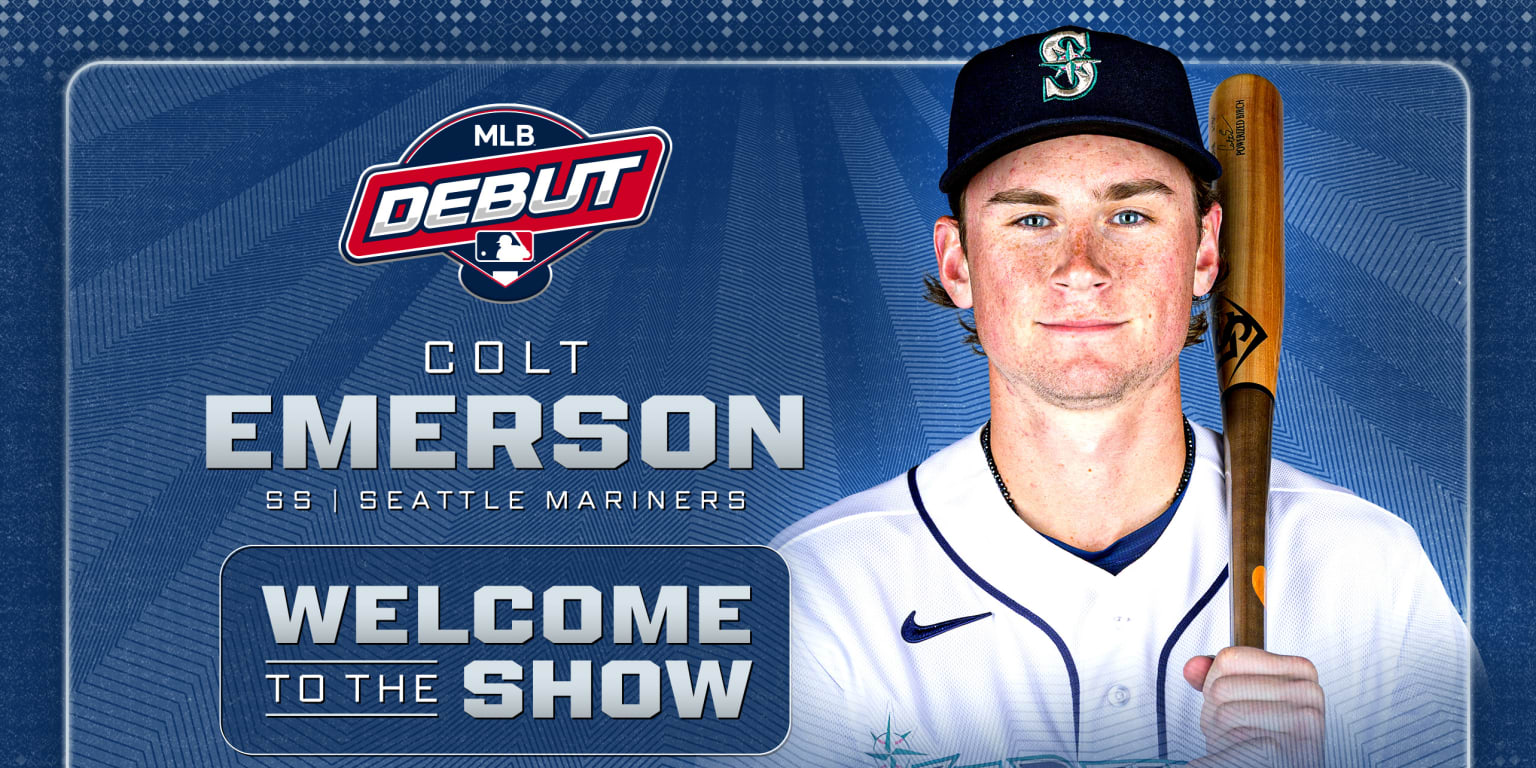
Seattle called up Colt Emerson on Sunday to replace injured Brendan Donovan, making the 20-year-old infielder the third member of the 2023 high school class to reach the majors. The moment itself was workmanlike—0-for-2 with a walk against a struggling White Sox lineup—but the framing matters more than the stat line. The Mariners signed Emerson to an eight-year extension in March, a deliberate signal that this isn't a desperate stopgap. They're committing capital to a prospect who posted a .828 OPS in spring training but needed Triple-A runway to adjust.
The numbers out of Tacoma told a story of a young hitter pressing. His .255/.347/.469 slash line masked mechanical regression: a 27.2-percent strikeout rate and 37-percent chase rate, both career-high offenders, suggested Emerson was overswinging to validate that contract and earn his call. For context, across three levels in 2023, he'd whiffed just 20 percent of the time while chasing at 26 percent. That's a meaningful deviation—not catastrophic, but enough to signal pressure rather than skill loss. Yet the last 10 games in Tacoma showed signs of recalibration: exit velo climbed to 93.6 mph from 86.7 in the prior 28 games, hard-hit rate jumped to 54.8 percent from 38.5 percent, and whiff rate dropped to 26 percent from 38.5 percent. These are tiny samples, but they track with the profile that got him drafted sixth overall: a hit-first, disciplined left-handed bat with smooth mechanics and the ability to work counts.
Seattle's willingness to deploy him daily—not as a utility band-aid but as an everyday contributor—reveals what the organization's investment thesis really is. They're betting that the plate discipline that produced a 12.9-percent walk rate in 2024-25 resurfaces once Emerson stops chasing validation. His career 17.4-percent strikeout rate across both years, paired with that elite walk rate, isn't a fluke; it's a foundation. The power is there too—16 homers in 2025, mostly to right-center and right field, with a promising uptick in opposite-field home runs that suggests he's maturing as a threat across the zone.
For prop bettors, Emerson's debut unlocks a runway that favors discipline-heavy plays over power plays in the near term. His whiff rate should compress as the pressure lifts and he settles into the lineup; that compression directly suppresses strikeout props over the next 2-3 weeks. Conversely, his walk rate should normalize back to that 12-percent neighborhood once he stops pressing, making walks props and on-base rates the cleanest early indicators of whether Seattle's patience bet was justified. The team isn't asking him to be a savior—they're asking him to be what he was before Tacoma rattled his mechanics. That's the information edge: the market will likely price Emerson's debut and early games as a raw rookie adjustment, when the actual story is a talented hitter decompressing into his natural approach.
Watch his first five games closely for early exit-velocity and chase-rate trends. If those metrics revert toward his career marks, the structural edge is real and durable, not a one-game fluke.