Westburg's Tommy John Surgery Ends Orioles' Third Base Search—and Tests Baltimore's Depth Bet This Season
By Erik Schwartz ·
The loss of a 2024 All-Star forces the Orioles to lean harder on unproven internal options, compressing their infield flexibility when they can least afford it.
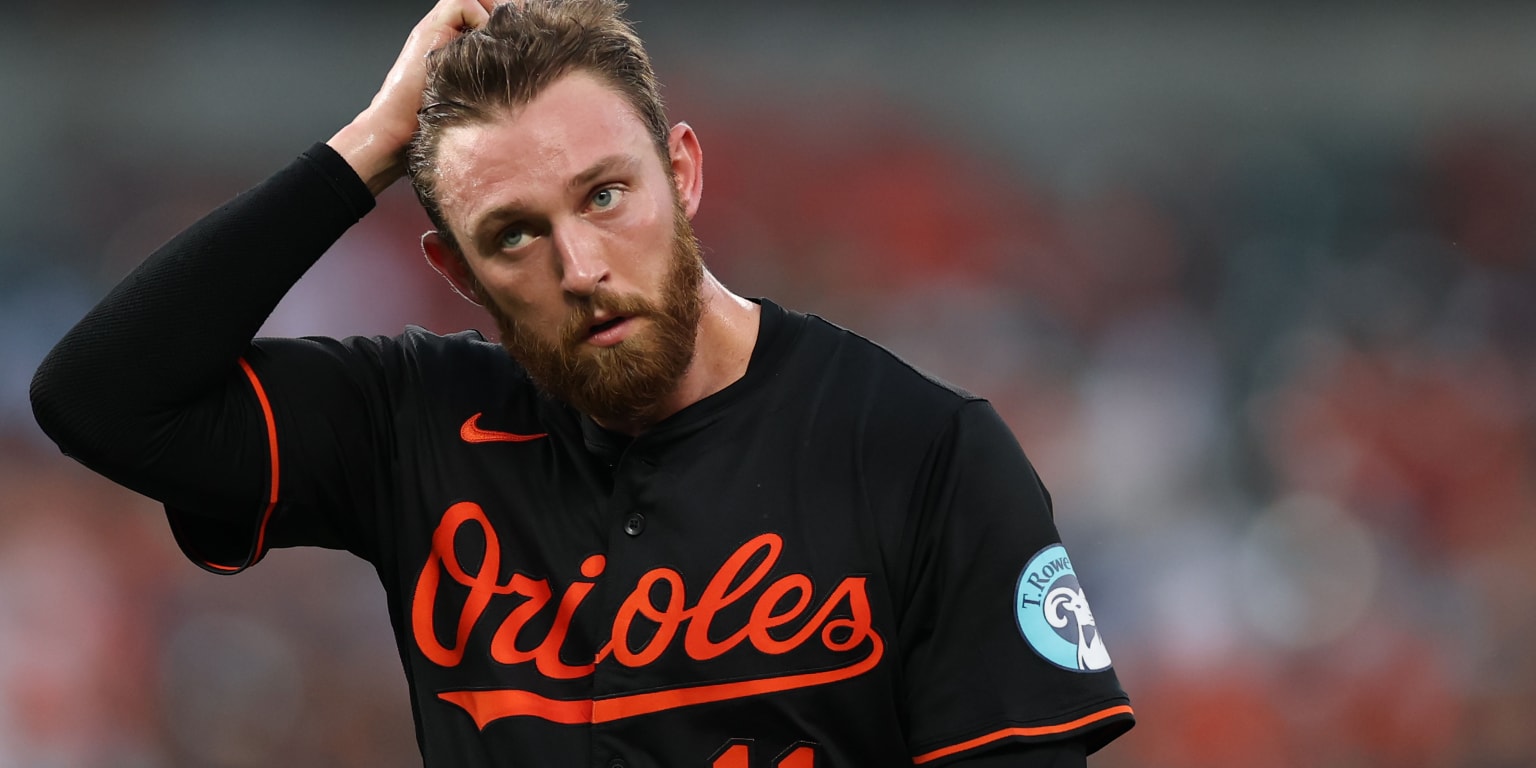
Jordan Westburg will not play in 2026. The 27-year-old Orioles infielder underwent Tommy John surgery Friday after a partial UCL tear in his right elbow worsened during spring training rehab, ending what had already been a brutally fragmented career arc. Westburg's decision came after a platelet-rich plasma injection in February failed to hold; he felt renewed discomfort while throwing at the team's complex in Sarasota and was shut down earlier this month. The timing is particularly cruel: the Orioles' third-base rotation was already a patchwork of necessity, with Westburg's consecutive injury-plagued seasons having forced the front office to develop a workaround rather than a solution.
Westburg's absence extends a damaging injury pattern that has defined Baltimore's season since opening day 2025. The Orioles have cycled 29 players through the injured list last year alone and are now tracking 19 different players on IR in 2026, with 13 currently sidelined. Westburg absorbed much of that damage himself: he appeared in just 85 games last season after dealing with a left hamstring strain, a fractured right hand, a left index finger injury, and a right ankle sprain. This year he came into spring dealing with right oblique soreness before the elbow issue surfaced. For a player who hit .264 with 38 home runs and a .768 OPS across 260 games over three seasons when healthy—good enough to make the 2024 All-Star team—the inability to string together meaningful playing time has become a structural problem rather than bad luck.
The immediate burden falls on Coby Mayo, Blaze Alexander, and Weston Wilson at third base, with Mayo starting 26 of Baltimore's 44 games. Mayo is 24 and still developing defensively; a two-out throwing error on May 7 cost the Orioles a walk-off loss to Miami, a reminder that youth and leverage don't always coexist smoothly. Wilson has absorbed three of the past four starts at the position. Jackson Holliday, currently rehabbing from right hamate surgery, is being cross-trained at third during his minor-league assignment and could slot in once he returns—possibly as soon as next week. The Orioles are building contingency on top of contingency, which works until it doesn't.
For bettors, this is a cascading effect on team total dynamics rather than a single-player prop blowup. Westburg's healthy OPS of .768 represented real run-generation value in the middle of the order; his absence forces the Orioles to lean more heavily on younger, less-proven hitters to produce consistent at-bats in high-leverage spots. The team's offensive profile becomes more volatile and younger—higher variance, fewer guaranteed counts at the plate in close games. Baltimore's team total at the open of the season reflected a core that included Westburg in semi-regular rotation; his permanent removal means the Orioles are now operating with less offensive redundancy. Games where Mayo or Wilson strikes out or makes an error represent real counting-run losses that Westburg might have mitigated. Over a full season, that compounds into a measurable reduction in offensive efficiency—not dramatic, but real. Bettors should monitor whether Baltimore's team totals have already adjusted downward; if the market is pricing the Orioles as if Westburg is still available for 85-100 games, there's edge in fading overs on Baltimore's team total for the remainder of the season.
The deeper issue is sustainability. A third-base platoon of players with defensive questions and minimal track records will generate variance in run prevention as well as run creation. The Orioles' bullpen and pitching staff will be asked to work harder innings because the defense behind them is less stable. That pressure extends to moneyline value on both sides: favored Orioles games become slightly more vulnerable, and underdog opponents gain a small structural edge because Baltimore's margin for error in close games has shrunk. This is not a one-game adjustment. It's a season-long compression of the Orioles' competitive cushion.