Wells' 430-Foot Statement Arrives at Worst Possible Moment for Job Security
By Erik Schwartz ·
Austin Wells launched the longest homer of his career Saturday as the Yankees beat Philadelphia, but front office uncertainty and a Bellinger hamstring injury complicate any narrative momentum.
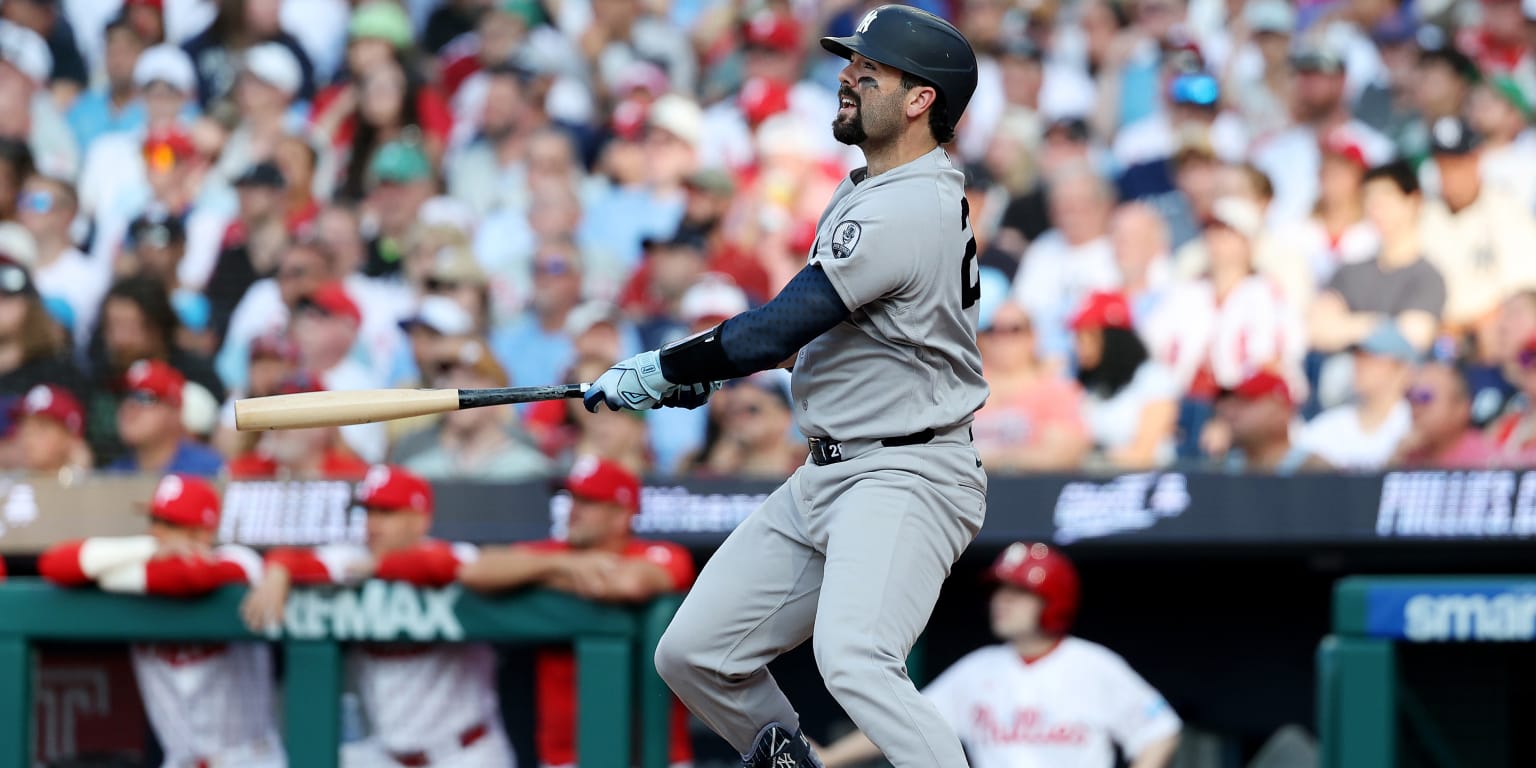
Austin Wells delivered his most impressive offensive display of the season Saturday at Citizens Bank Park—a 430-foot opposite-field blast that extended the Yankees' lead in a 3-1 victory over the Phillies. The distance ranks as a career high for the catcher and represents the kind of power stroke that should erase doubt about his offensive ceiling. Yet the timing exposes the fragility of his position. With the Aug. 3 Trade Deadline nine days away, the Yankees front office is openly shopping for catcher upgrades, a signal that management views Wells' current performance as something to be hedged rather than invested in long-term.
Manager Aaron Boone publicly defended Wells' mental resilience in the face of that organizational noise, noting that the position demands a particular discipline—the ability to compartmentalize front-office intrigue while managing a pitching staff and controlling the running game. Wells' ability to separate external pressure from plate execution has been genuine enough, but the organizational context matters for prop bettors. One 430-footer, even one as impressive as this one, does not reverse a season-long narrative of inconsistency at the plate. His average and strikeout rate have both remained problematic; a single outlier performance—however visually striking—tends to trigger overcorrection in the betting market within 24-48 hours.
The Cody Bellinger hamstring injury in the eighth inning introduces a different wrinkle. Bellinger entered the game as a crucial veteran presence in the lineup; his exit mid-game after recording a tiebreaking single in the sixth suggests a severity that could reshape the Yankees' offensive planning over the next week. If Bellinger requires time to heal, Wells' overall value in the lineup context changes—not because he is a sudden hitter, but because the organization's offensive depth shrinks, which typically results in more consistent at-bats and situational opportunity.
Ryan Weathers' 5 2/3 innings of one-run ball, his second quality start in his last five outings, keeps the Yankees pitching narrative stable. Strikeout volume has been a strength for Weathers; he struck out seven Phillies on Saturday, which aligns with his trajectory post-All-Star break. For Wells specifically, the prop angle hinges on sample contamination: a 430-foot homer is a genuinely outlier event, driven more by barrel angle and pitch location than by underlying skill trend. Wells' ISO and exit velocity metrics, over a larger sample, do not yet support treating his line as materially higher. Early bets on Wells' next-game props—HR line, TB line, slugging props—will likely see sharp reverse-line movement as the market recognizes the spike as noise rather than signal. The edge for bettors exists in fading the overcorrection, not chasing the momentum. Wait 36-48 hours for the market to overestimate the durability of his power surge, then lean toward his season-to-date baseline.
The broader Yankees narrative heading into a Trade Deadline week centers on depth and desperation. Wells' 430-footer is a genuinely impressive individual feat, but it arrives in a context where the organization is signaling doubt about his future role. That contradiction—a statement performance amid organizational uncertainty—is precisely the moment when single-game outliers get mispriced highest.