MLB
Jordan Walker's Mechanical Fix Unlocks Cardinals Ceiling—and Transforms His 2026 Price
A 234-point OPS jump in a single year is rare enough to demand explanation; Walker's is built on a measurable plate approach change that redefined his leverage in the Cardinals lineup.
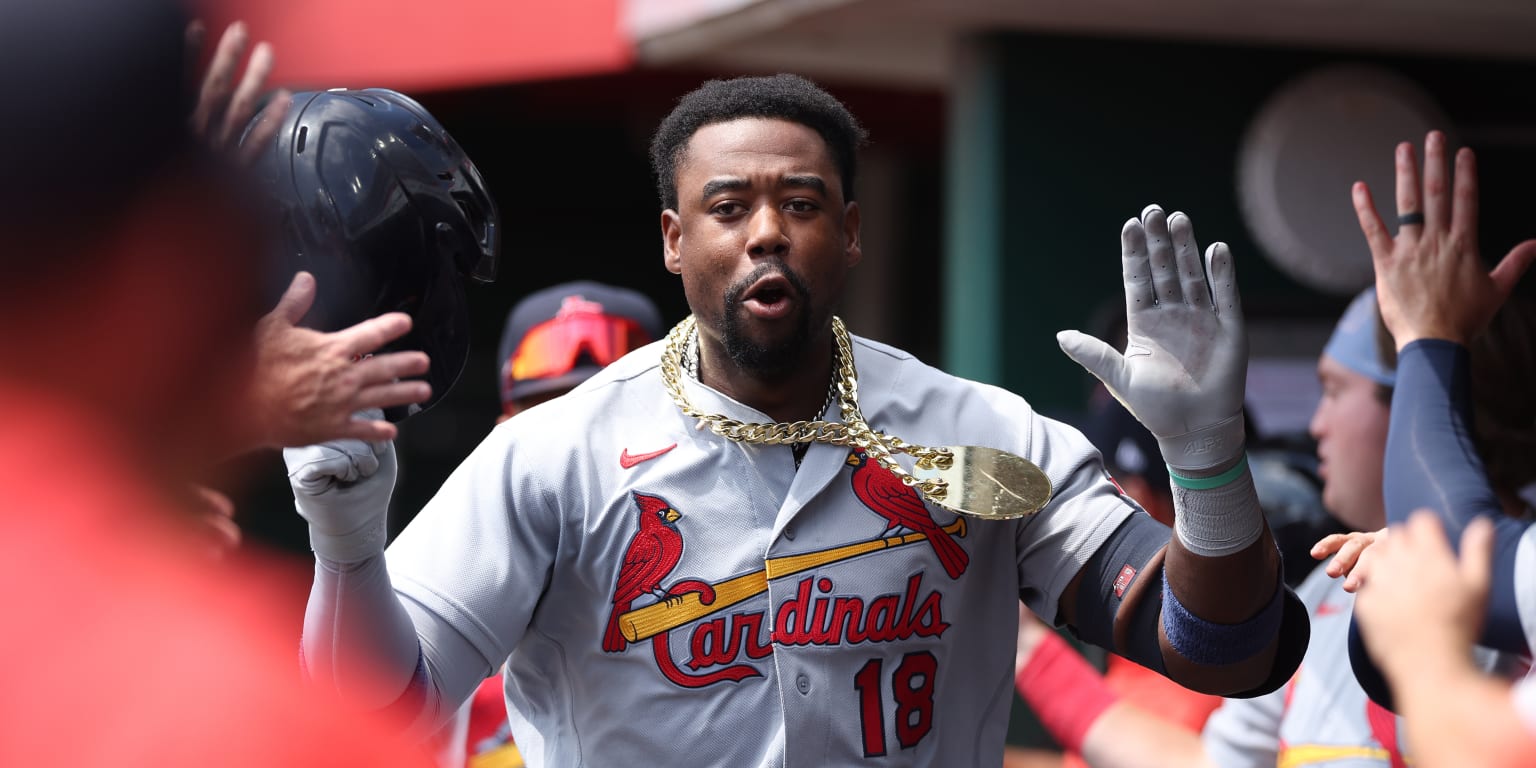
Jordan Walker entered 2026 as a cautionary tale. Following a 2025 season in which he posted a .595 OPS—287th among 291 qualified hitters—and finished dead last in fWAR (-1.9) in that same group, the Cardinals' once-heralded prospect looked destined for another year fighting to stay in the lineup. Manager Oliver Marmol and hitting coach Brant Brown had both made public their demands: Walker needed to show urgency, rebuild his approach, and prove he could compete at the major league level.
What happened next was neither gradual nor predicted. Walker arrived in spring training hitting .205 with a .273 slugging percentage across 44 at-bats, suggesting another wasted year was imminent. Then came the intervention: three days in the Cardinals' hitting lab during late camp, where assistant hitting coach Casey Chenoweth—who had worked extensively with Walker during a 2025 Double-A rehab stint—helped him unlock a mechanical shift. The adjustment was surgical: Walker stopped chasing pitches outside the zone, began lifting the ball with consistent authority, and adopted a plate presence built on confidence rather than desperation. By April, the transformation was undeniable. He slashed .284/.354/.552 with nine home runs in 30 games—more long balls in one month than he'd hit in all of 2025.
The scale of this turnaround demands scrutiny because it defines his betting profile going forward. A 234-point OPS improvement year-over-year is the largest swing among all qualified hitters with at least 350 plate appearances in 2025, according to league data. Walker also became the Cardinals' first 20-20 player since Tommy Pham in 2017, and at age 24 he joined Albert Pujols and Fernando Tatis as the only players in franchise history to reach 28 home runs and 100 RBIs before turning 25. These aren't statistical flukes—they're the byproduct of a repeatable mechanical foundation. That foundation matters for prop pricing because it separates sustainable improvement from statistical noise.
For bettors, Walker's volatility remains material. He posted a .611 OPS in the first 15 games of September, reminding us that he'll still encounter slumps. But the critical change is his recovery speed from those stretches. The hitting lab work gave him a diagnostic toolkit—he knows what went wrong and can self-correct faster than he could before. That resilience is priced into 2026 lines but may be underpriced for 2027 projections and late-season October props, where teams and books often anchor to full-year season numbers rather than month-by-month production patterns. Walker's strikeout rate improvement is the mechanical proof point: he wasn't just swinging harder in April, he was swinging smarter.
The Cardinals' investment in his development—both in coaching resources and roster patience—is itself a valuation signal. A team doesn't spend that capital on a prospect they've already written off. Walker's inclusion in late-game leverage situations, his plate appearances against right-handed pitchers with runners in scoring position, and his home run prop lines all carry the implicit assumption that he's reverted to his 2025 floor. That assumption is now outdated. Early-season lines built on 2025 comps have already adjusted, but postseason props and 2027 projection-based lines haven't fully captured the durability of this mechanical shift.