Vázquez's Second No-Hitter Catch Signals Astros' Bullpen Depth and Pitching Development
By Erik Schwartz ·
Christian Vázquez caught his second no-hitter Monday against Texas—a combined effort that exposed both Houston's organizational pitching strength and the volatility baked into its younger arms.
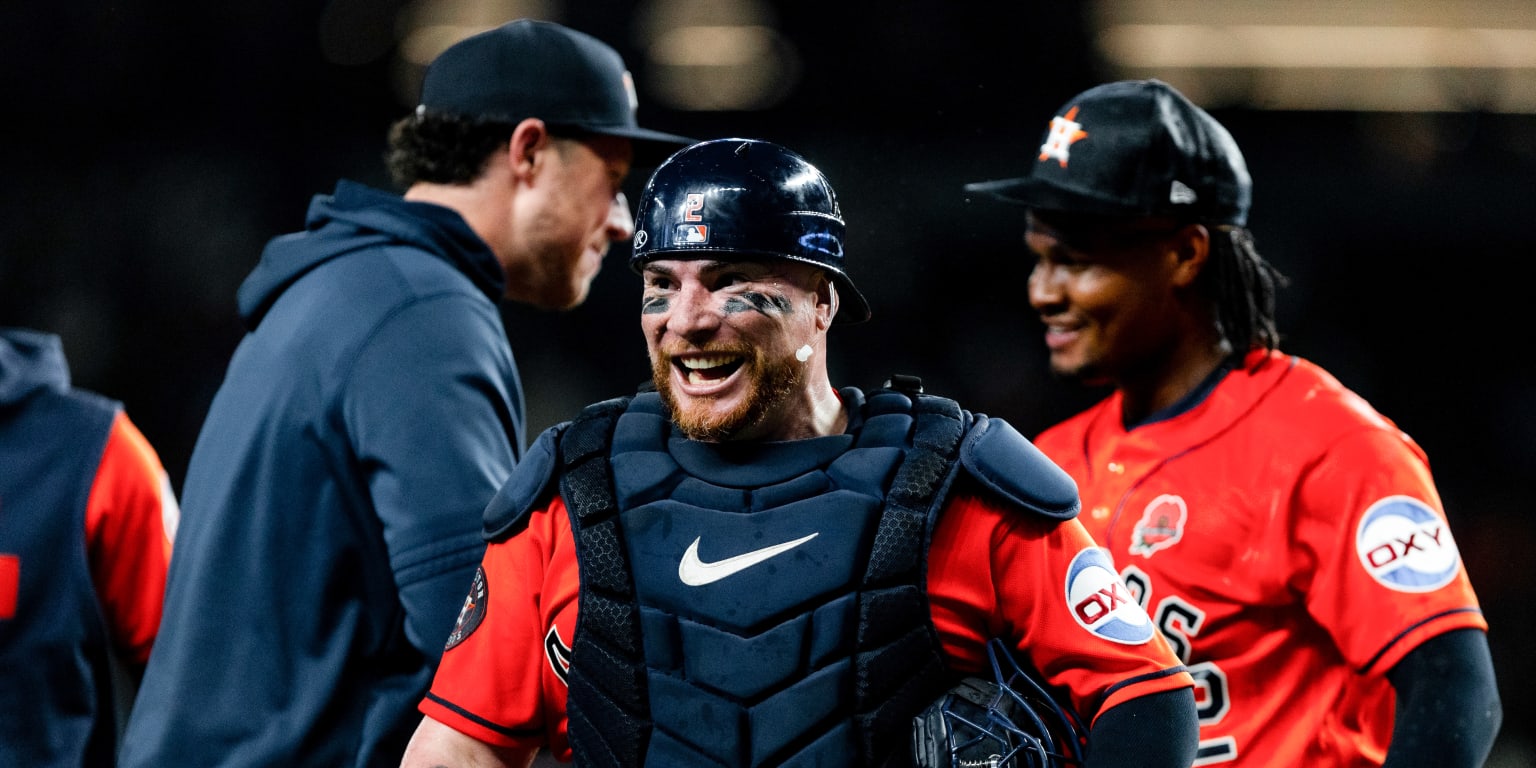
Christian Vázquez is now one of only two catchers in MLB history to catch a World Series no-hitter and among an even smaller group to catch multiple no-hitters. He was behind the plate Monday for the Astros' 9-0 combined no-hitter against the Rangers, joining Martín Maldonado as the only backstops to work two combined no-hitters—both wearing Houston colors. The feat places Vázquez in rare institutional company: the Astros have thrown five combined no-hitters, three more than any other franchise, and Vázquez has now been directly responsible for the game-state management on two of them.
The mechanics of Monday's no-hitter reveal something more useful than historical footnotes. Tatsuya Imai threw six innings of the no-hitter but walked three batters in the first inning alone—half of his season total walks have come in inning one. Steven Okert handled the seventh cleanly, and Alimber Santa, a prospect called up for this series, recorded the final six outs on his MLB debut, becoming only the second pitcher ever to throw in a no-hitter in his first game (Bumpus Jones in 1882 was the first). The bullpen depth necessary to execute this game—three different arms, each handling their assigned role without surrender—underscores Houston's construction philosophy: younger, higher-ceiling arms supported by proven veterans like Vázquez managing the pace and psychology of a rare outcome.
But the stress Vázquez described carries actionable intelligence. He said that managing Imai through the early-inning walks created more tension than the bullpen sequence that followed, because Imai had rhythm after the first frame. That rhythm pattern is worth tracking: Imai has shown pronounced first-inning walk rates suggesting either mechanical inconsistency early in outings or difficulty establishing his breaking ball against fresh hitters. If Houston's coaching staff can compress those opening-inning struggles—Vázquez indicated they're working on it, emphasizing Imai's sweeper-slider arsenal—Imai's innings-per-start ceiling rises, reducing bullpen burden and ownership of extended platoons.
For prop bettors, the near-term signal is the Astros' sustainability in games where Imai starts following Yainer Diaz's injury. With Vázquez back in the lineup and catching, walk-rate volatility on Imai becomes the swing variable in team-total and first-five-innings targets. Games where Imai manages a clean first inning should correlate with lower bullpen usage and higher team-total ceilings; games where the three-walk pattern repeats trend toward earlier substitution and depressed run-environment upside. The combined no-hitter proves the bullpen can execute at excellence, but that excellence is most sustainable when the starter avoids early trouble.