Yankees' Power Display in Cleveland Sweep Signals Offensive Reset After Humbling Loss
By Ty Whitney ·
New York's three-game dominance over the Guardians—built on extra-base hits and situational hitting—rewrites the series narrative and exposes a vulnerability in Cleveland's right-field defense that bettors should track going forward.
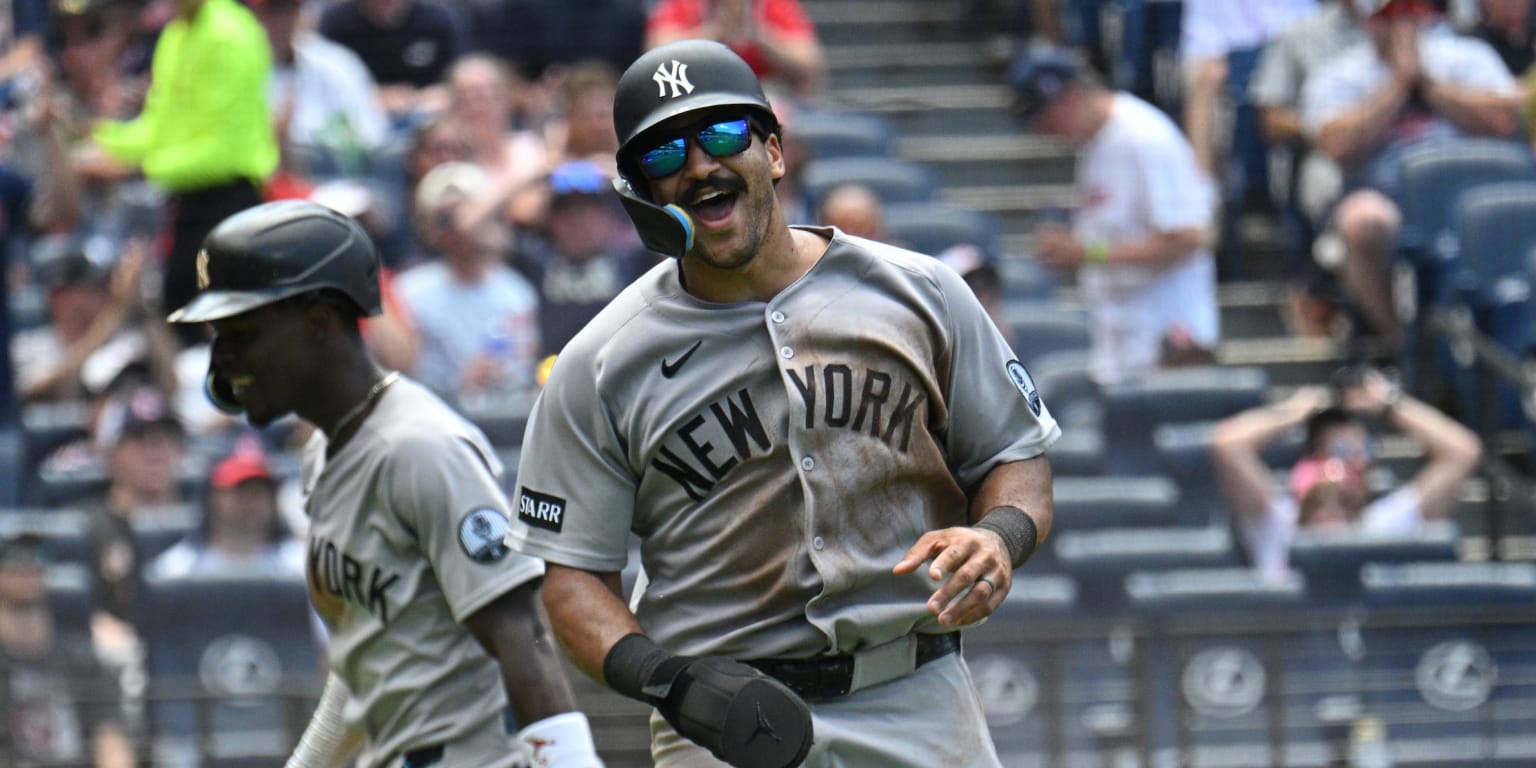
The Yankees dismantled the Guardians across three games in Cleveland this week, capping the series with an 8-4 victory that followed two close wins to complete the sweep at Progressive Field. The damage centered on extra-base production: Jazz Chisholm Jr. drove in three runs with a two-run triple in the second inning, and Trent Grisham added a crucial triple in the sixth that set up a three-run advantage that would stand. For a Yankees offense that absorbed a series loss at home to Cleveland last week, the reversal was emphatic.
The mechanics of the sweep reveal discipline over luck. Chisholm's first triple—struck to right field with such carry that it would have cleared the wall at Yankee Stadium—was less about overperformance and more about Cleveland's inability to position for it. That same vulnerability materialized again when Grisham lined a ball into the right-field corner that Angel Martínez misjudged. Carlos Rodón, starting for New York, allowed three runs across six innings while striking out seven; he worked within himself (four hits, three walks) and let his defense and offense do the heavy lifting. The pattern suggests the Yankees are rotating through lineup configurations that exploit Cleveland's defensive alignment, particularly in right field where Martínez's range and positioning became a liability across multiple at-bats.
From a season context, sweeps carry real information. One series win erases the narrative damage of a road loss, but three straight wins against the same opponent—especially when built on situational two-strike hitting and extra-base success—indicates offensive coherence rather than variance. The Yankees struck with runners in scoring position multiple times and converted. Chisholm's RBI total, Grisham's run-scoring ability, and Anthony Volpe's double in the sixth all tracked within the zone of repeatable, coached outcomes rather than fortunate bounce. Rodón's command (seven strikeouts, controlled walk rate) also suggests the rotation is stabilizing.
For prop bettors, the sweep carries a narrow but real angle: Cleveland's right-field defense remains a structural liability that opposing teams—particularly switch hitters who can attack it from both sides—will continue to target. When the Yankees face Cleveland again, monitor Chisholm and Grisham's early plate appearances against Cleveland's right-field positioning. If Martínez remains in the same alignment without adjustment, expect continued success on pitches to the gap. More broadly, the Yankees' offensive output (three runs in one inning, controlled strikeout rate despite power production) suggests team totals for New York against similar defensive profiles will have edges if lines haven't yet priced in the upgraded contact discipline.
The larger takeaway: sweeps rarely happen by accident against division opponents. When one does—and it's constructed on sequential extra-base hits and defensive miscues by the opponent—the team that won has usually identified and exploited a repeatable flaw. Bettors should track whether Cleveland makes tactical adjustments (shift changes, different right-fielder) or whether the Yankees face the same alignment next time. That gap between perception (a dominant three-game run) and structure (a specific, exploitable defensive flaw) is where value lives.