Gonzalez's MLB Debut Against Boston Carries Platoon Risk—Twins May Park Him
By PropBetEdge Editorial Team ·
The Twins called up prospect Gabriel Gonzalez for a three-day fill-in role, but his lefty-heavy track record and aggressive plate approach make him a platoon candidate in a matchup with Boston's southpaw starter.
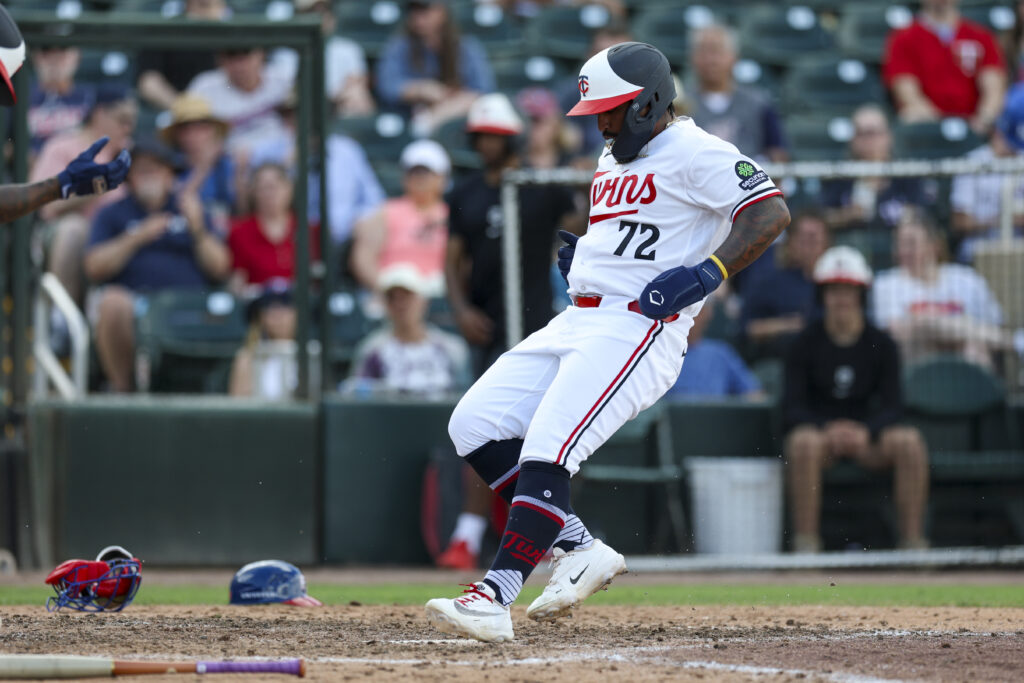
Minnesota recalled outfielder Gabriel Gonzalez from Triple-A St. Paul on May 22 to cover infielder Tristan Gray's paternity leave, a move that typically lasts three days before the roster reverts. Gonzalez, a 22-year-old acquired as the centerpiece return in the Jorge Polanco trade two years ago, finally gets his MLB look after a winding organizational journey marked by injury and inconsistent production. The timing of the call, however, carries a specific strategic angle: Boston's starting pitcher is lefty Payton Tolle, and Gonzalez's profile is screaming platoon split.
Gonzalez's Triple-A numbers this season look pedestrian at first glance—.216/.294/.392 over 197 plate appearances—but that aggregate masks a striking platoon dependency. Against lefties this year, he's hitting .263/.328/.544 with eight home runs across the season. Last year in the minors, the split was even more dramatic: .368/.430/.592 versus left-handed arms. That 200-point slugging advantage against southpaws is not noise. It's a deliberate strategic advantage, the kind that big-league managers exploit when roster flexibility allows. His struggle against righties (.190s range in Triple-A this season) and his aggressive approach—which drives a high ground-ball rate and limits in-game power realization—make him a classic platoon candidate, not an everyday player.
The organizational context reinforces this reading. Baseball America ranks Gonzalez the #10 prospect in Minnesota's system, crediting him with above-average hit tools and raw power but noting that his aggressive plate approach and ground-ball tendency have suppressed in-game production. He's a below-average runner who can't play center field, which means his bat has to carry the full load. At 22, in his first season at Triple-A, he's still developing plate discipline. The Twins would be rational to use him strategically against lefties during this brief window, then ship him back to St. Paul.
For bettors, this creates a mismatch opportunity on Boston's side. If Gonzalez enters the lineup as advertised against Tolle, he's a high-variance hitter with a legitimate leverage platoon split—but that also means the Twins may choose not to start him at all if the matchup risk feels too high for a three-day call-up. Monitor the pregame lineup card. If Gonzalez does play, consider that his strikeout rate (20% in Triple-A) and aggressive approach will likely lead to quick ABs and limited offensive impact beyond the platoon-favorable lefty matchup. A player deployed in such specific circumstances typically contributes below his ceiling.
The broader bet is structural: don't over-index on Gonzalez as a new bat injection into Minnesota's offense. This is a roster patch, not a lineup upgrade. Gray will return within 72 hours, Gonzalez will head back to St. Paul, and the Twins will revert to their standard outfield distribution. The novelty of a prospect debut shouldn't move team totals or individual player lines. If sportsbooks have already priced in Gonzalez as a starting contributor or adjusted Minnesota's team total upward based on his call-up, that's overcorrection to a temporary move.