Lewis's Triple-A Surge Opens a First-Base Path Back to Minnesota
By Erik Schwartz ·
A resurgent swing and new positional flexibility could fast-track Royce Lewis back to the majors as the Twins' infield picture clarifies.
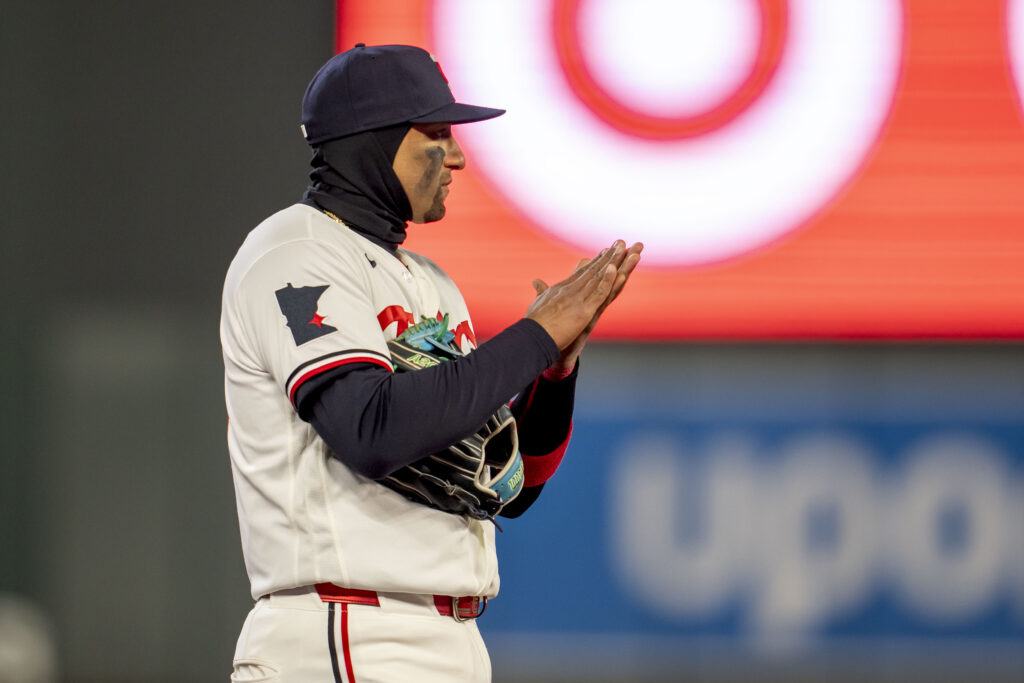
Royce Lewis has hit eight home runs in roughly two weeks since the Twins optioned him to Triple-A Saint Paul—a dramatic reversal from a season in which he struck out 31.1% of the time and batted .163 through his last stint in the majors. His slash line since the demotion sits at .367/.446/.939, a stark contrast that signals his bat hasn't left him; the exposure to better pitching at the major-league level and the mental weight of his early-season struggles appear to have been the real culprits. What makes this resurgence matter beyond the minor-league box score is what happens next: the Twins have begun experimenting with Lewis at first base and second base, positions he has barely played in his career. That positional flexibility could be the key to his return.
The context here is straightforward. Lewis owned the third-base job when the Twins sent him down, but they slid Brooks Lee into the role and have prospects like Kaelen Culpepper rising through the system at short. At second, Luke Keaschall has the primary role, though his .245 average and sub-.700 OPS give the Twins reason to consider alternatives. First base, however, is where the real opportunity lives. Josh Bell is hitting .227/.289/.345 and is an impending free agent—a dead weight on a contending roster. Kody Clemens and Victor Caratini have shared the position, but Clemens's true value lies in his ability to cover the outfield, and Caratini has been forced into a primary catching role since Ryan Jeffers suffered a hamate fracture in mid-May. In other words, the Twins have a gaping hole at first, and Lewis's trial runs there—his first professional game at the position came just this week—suggest Minnesota is seriously considering him as a solution.
Lewis's offensive track record supports the gamble. In 2022 and 2023, he compiled a .307/.364/.549 slash line across just 280 plate appearances, proof that he can produce at the major-league level when healthy. The 31.1% strikeout rate in 2026 was an outlier tied to his mechanical breakdown and poor pitch recognition—both issues that can be corrected with extended looks at Triple-A pitching and a mental reset. The drop in strikeout rate to 19.6% since the demotion is not an accident; it reflects a deliberate recalibration. The Twins have him in a controlled environment where he can build confidence, and the positional versatility assignment means they're plotting a specific role for his return, not a desperation call.
From a betting lens, Lewis's trajectory carries implications for both team-total and individual hitter props once he's recalled. If he returns to Minnesota within the next month and slots into the first-base role, the Twins' offensive profile shifts. Their current first-base platoon is dragging down their league-average run production; even a Lewis hitting at his 2022–2023 average (.307) would lift the team total and improve the odds of him accumulating hits and RBIs himself. The prop market will likely overshoot the first time he's called up—assuming he hasn't spent more than three weeks in the minors, books will price him as a cautious play, leaving early overs on hit and RBI props undervalued. The real edge comes from tracking when the Twins show confidence through increased playing time. If Lewis starts getting three consecutive games at first base with primary lineup placement, that's the signal to attack his hit total in the subsequent series; the market will still be pricing in hesitation.
What remains uncertain is the timeline. Lewis needs to prove he can handle first base defensively—a few games tell you almost nothing about error rate or positioning instincts—and the Twins, currently in a pennant race (the article is dated June 5, 2026, and Minnesota is likely in contention), will not rush the transition. But the pieces are clicking into place. His strikeout rate is normalizing, his power stroke has returned, and the positional need is real. The calculus for Minnesota's front office is straightforward: a healthy, adjusted Lewis at first base is considerably better than what they currently have, and the minor-league data suggests adjustment is underway.