Clemens' Walk-Off Slam Erases Twins' Historic Futility; Royals' Collapse Signals Bullpen Vulnerability
By PropBetEdge Editorial Team ·
Minnesota's two-strike ninth-inning grand slam breaks a 508-game drought in comeback situations, while Kansas City's blown save exposes late-game depth issues with the trade deadline closing.
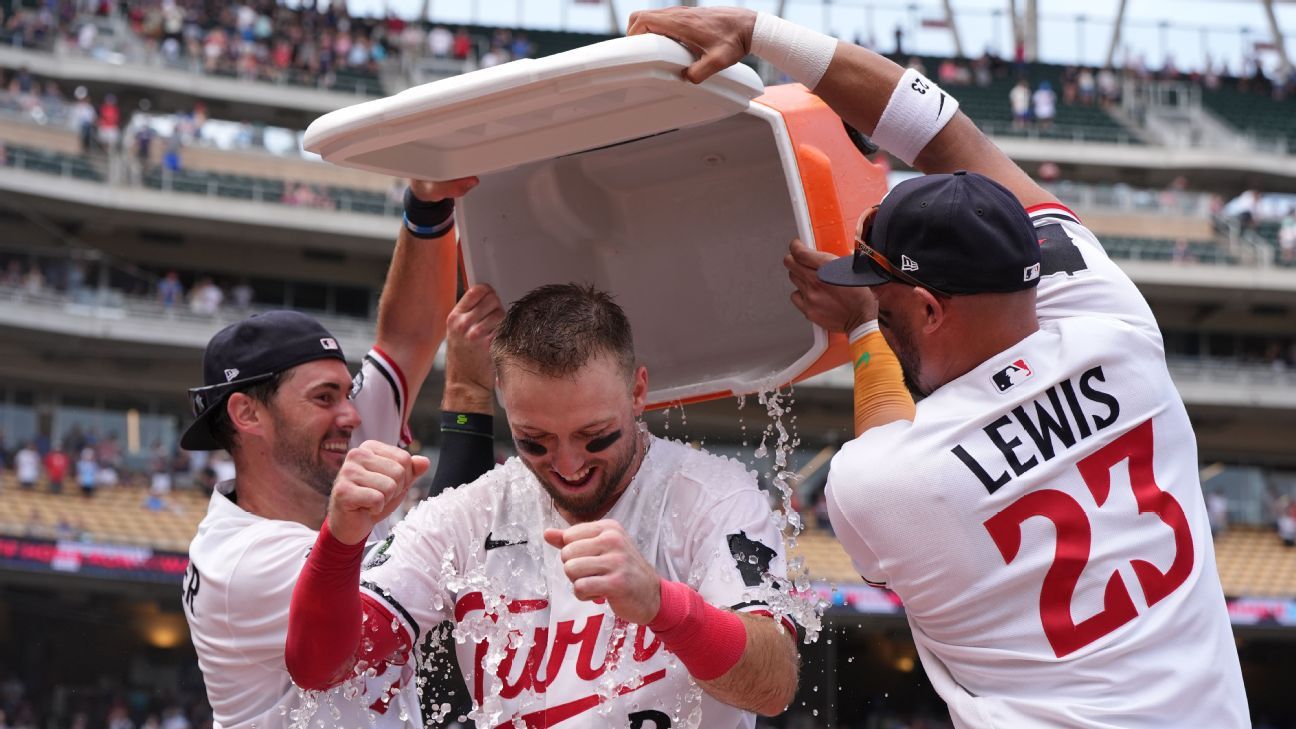
Kody Clemens swung at a 0-2 slider with two outs in the ninth inning Thursday and ended Minnesota's 508-game losing streak in games where they trailed by three or more runs entering their final at-bats. The Twins defeated Kansas City 4-3 on a walk-off grand slam—only the sixth in franchise history—after Noah Cameron had blanked them through eight innings on just 97 pitches, one hit, and two walks. It was the first walk-off grand slam hit by any player down to his final strike since David Bote's 2018 blast for the Cubs against Washington.
What started as a Cameron masterclass became a Royals bullpen implosion. After Cameron's eight scoreless innings, Lucas Erceg retired the first two hitters before surrendering the critical hits: a hit-by-pitch on Ryan Jeffers, a single to Royce Lewis, and a walk to Josh Bell that loaded the bases. Matt Strahm took over and grooved a slider that Clemens deposited into the flower box above right-center field. For Kansas City, the ninth-inning collapse caps an otherwise dominant effort—Cameron struck out seven and looked untouchable through six innings. But the moment the lineup worked counts and got aboard, the closer and successor couldn't hold. It was the Royals' 21st blown save of the season, tied for third-most in the league, and it erased their 242-game winning streak when leading by three or more runs entering the ninth inning or later.
The statistical extremes here deserve emphasis. Minnesota's 508-game drought in comeback situations from down three-plus suggests either historic bad luck, poor roster construction late-game, or both. The Royals' ability to win 242 straight games in that scenario speaks to elite closing depth—until Thursday. The breakdown in the ninth reveals that late-inning management matters as much as starting pitching. Cameron's game extended the scoreless streak to 16 consecutive innings, but the follow-up arms couldn't hold a three-run lead with the leverage situation most critical.
For betting purposes, this game presents two distinct takeaways. First, the Twins' inability to complete comebacks has been so historically poor that any future pricing on their walk-off probability or ninth-inning moneyline should have factored in that drought. That edge has now partially corrected—the public narrative shifts after a drama-ending performance like this. Second, Kansas City's bullpen depth becomes a liability marker moving forward. Erceg was forced to pitch to multiple hitters in a three-run lead situation and couldn't locate. Strahm entered with runners on and gave in. If the Royals' late-inning arms continue to show this wear pattern—especially if injuries or trades thin the group further before the deadline—their team totals and second-half bullpen props deserve scrutiny. A 21st blown save in late July suggests fatigue or inconsistency, not random variance.
The Clemens moment itself—a two-strike heroic swing for a backup infielder—carries minimal forward-looking prop value. Single-game walk-off drama doesn't predict his next eight games; it's a 0.1% outcome that will never recur at that probability. But the Royals' systemic ninth-inning slippage, paired with Minnesota finally escaping their comeback desert, does shift season-long bullpen reliability and close-game expectancies. Watch for Royals team totals to compress in the coming week if this signals a deeper late-inning fracture.