Twins Lock in Lackey at No. 3 with Second-Largest Draft Bonus Ever—What It Signals About Their Catcher Future
By PropBetEdge Editorial Team ·
Minnesota's nine-figure investment in a Georgia Tech backstop reshapes their long-term offensive ceiling and minor-league development timeline.
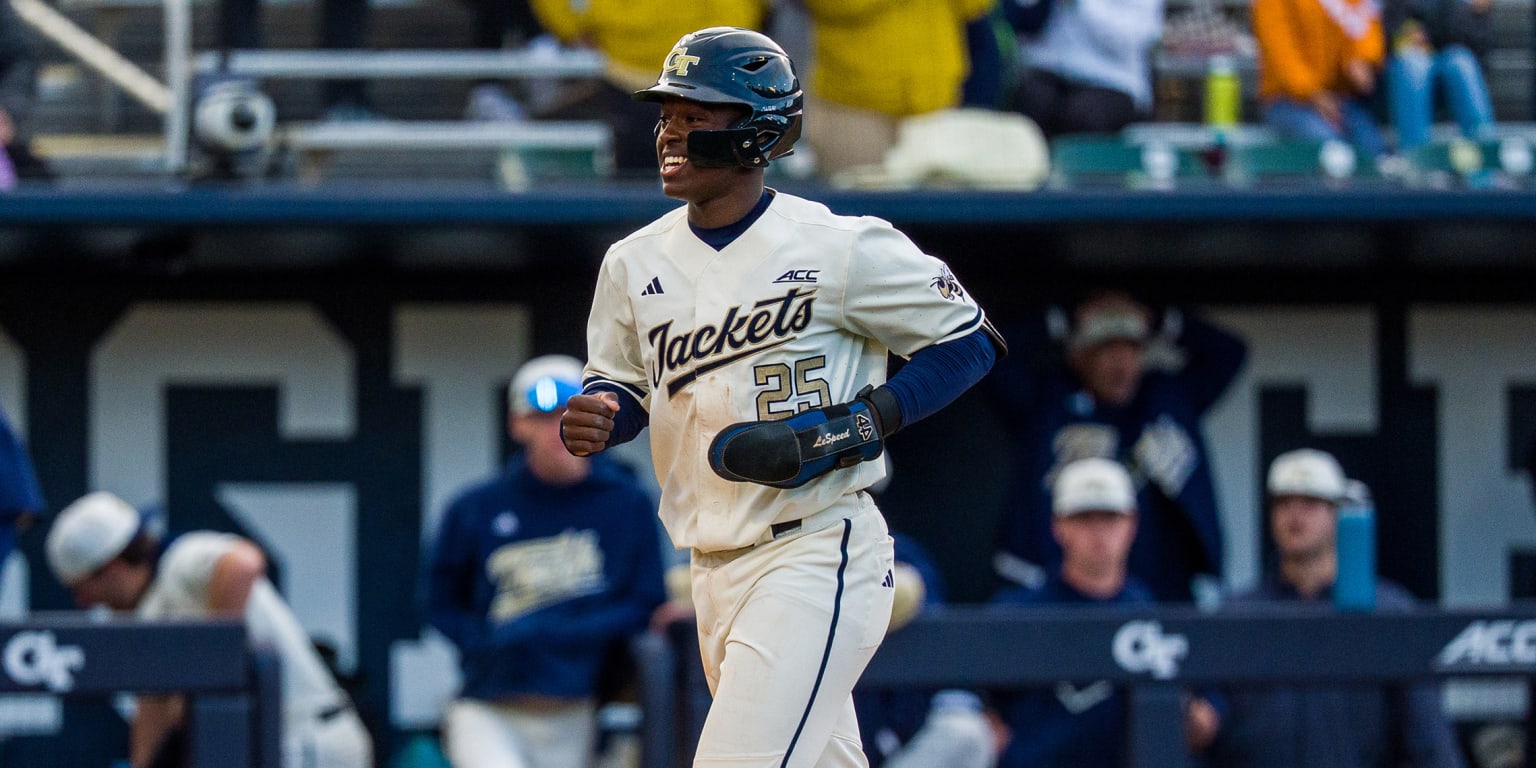
Vahn Lackey, the Twins' No. 3 overall pick in this year's MLB Draft, has agreed to a $9.497 million contract—the second-largest signing bonus in draft history, trailing only 2026 No. 1 pick Roch Cholowsky. The deal, pending a physical, slots just under the $9.74 million slot value for the pick and leaves Minnesota with over $7.4 million remaining in its $16.93 million total bonus pool. The club expects to finalize terms as early as this week.
Lackey, 21, spent two seasons as a starter at Georgia Tech and erupted this spring with a .397/.519/.772 line, 20 home runs, and 15 stolen bases—numbers that catapulted him into the elite tier of draft prospects and signaled the Twins that he could remain behind the plate through his minor-league climb and into the majors. That's the operative constraint here: elite catchers are scarce, and teams that identify one with legitimate plus bat speed and plate discipline at the college level rarely let the pick slip. Minnesota's last first-round catcher was Joe Mauer in 2001—a Hall of Famer—and Lackey's skill set (gap power, speed, contact quality) suggests the club sees a similar rare commodity.
The bonus size is the real signal. Nine-figure commitments to draft picks aren't discretionary—they reflect internal conviction that a player will reach the majors and impact winning. The Twins traded away some of their immediate flexibility to secure Lackey's commitment, and that capital allocation telegraphs their belief that a productive major-league catcher is a multi-year accelerant. Catchers typically take longer to develop than position players due to defensive work and game management responsibility, but when they arrive, their impact on run prevention (framing, blocking, game-calling) and team chemistry compounds across a full rotation.
For prop bettors tracking the Twins' 2027 and 2028 seasons, this is background noise masquerading as noise. Lackey won't factor into Minnesota's major-league production for at least 2-3 seasons; the minor-league development path alone—Single-A to Double-A to Triple-A to call-up—requires time. Where the angle materializes is in how this investment changes the Twins' organizational mindset about catching depth. If Lackey is earmarked as the franchise cornerstone at the position, Minnesota may deprioritize short-term catcher acquisition in free agency or trade, which could lower their offensive ceiling relative to other AL Central clubs in the near term. Long-term bettors building models for 2028-2029 Twins seasons should weight a Lackey-anchored catcher upgrade into their projections. Near-term (2026-2027), this move is organizational infrastructure, not active betting leverage.
The bonus itself—nearly $9.5 million—also confirms that slot inflation at the top of the draft shows no signs of moderating. Teams with the capital continue to use it as a separating mechanism. For Minnesota, the real question isn't whether the investment is justified; it's whether the Twins' farm system and developmental infrastructure can unlock that upside. Franchise value flows through execution, not check-writing.