Twins Load Late-Inning Deck With Hoffman's Swing-and-Miss Upside
By PropBetEdge Editorial Team ·
Minnesota trades prospects for a former All-Star closer carrying elite strikeout stuff but a playoff scar—a depth move that restructures bullpen leverage late in a contention window.
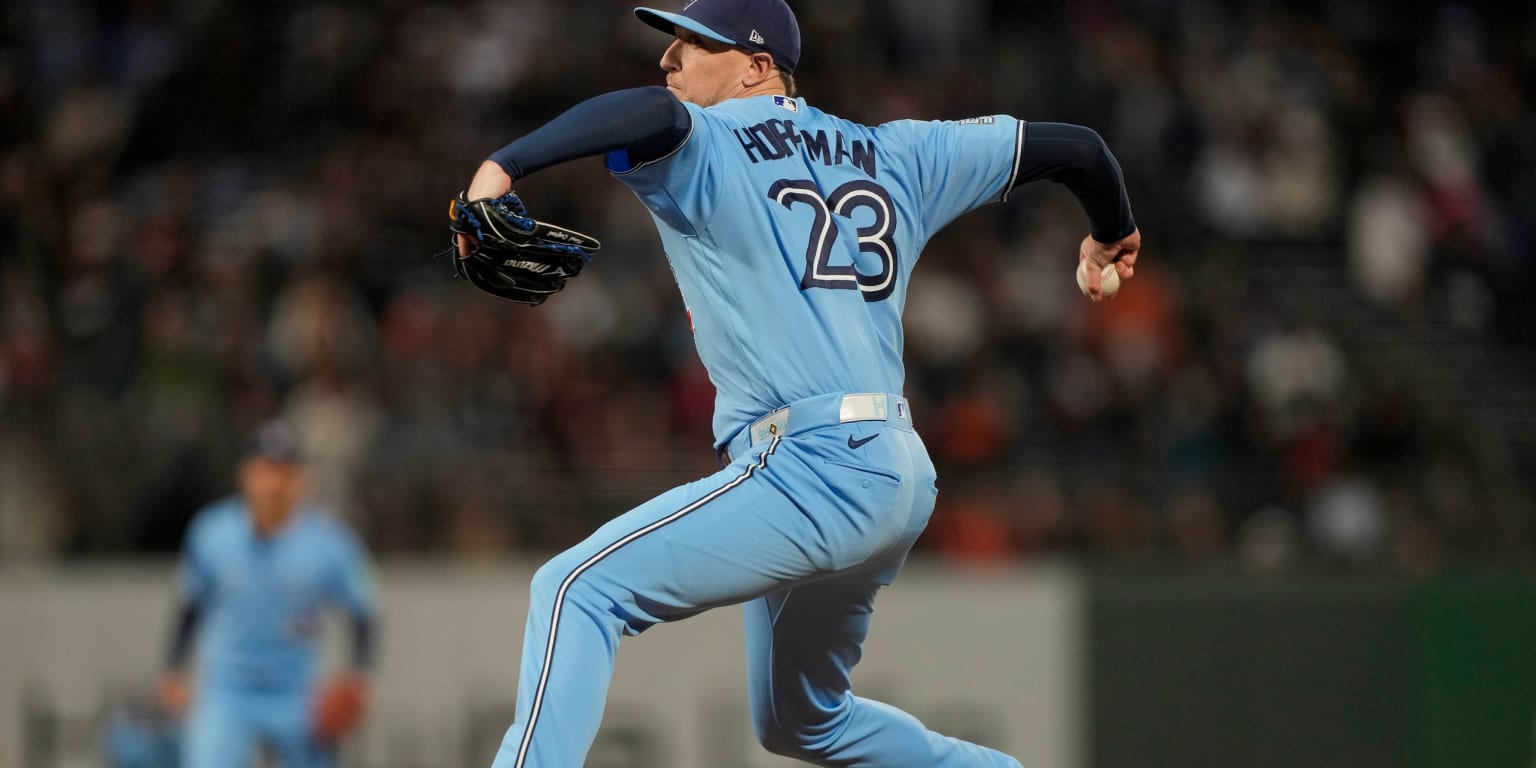
The Twins acquired Jeff Hoffman and cash from Toronto on Monday, surrendering a prospect package headlined by Dasan Hill (No. 7 in the system) to land a 33-year-old right-hander who closed 33 games for the Blue Jays last season and has punched out 75 batters in 48 innings this year. The move caps a July spending spree—Minnesota also added Tommy Nance, AJ Minter, and Dean Kremer—that signals ownership willingness to accelerate a contention timeline with fresh October ammunition.
Hoffman's profile is clean where it matters for a late-inning arm: he's a swing-and-miss machine at 14.1 K/9, a rate that eclipses both Yoendrys Gomez (9.8 K/9) and Andrew Morris (10.2 K/9), the Twins' reliable core closers. That strikeout premium addresses a tangible structural gap. Gomez and Morris have been effective at converting save opportunities, but neither generates the whiff rate needed to strand runners against elite postseason hitters. Hoffman also brings proven closing pedigree—50 career saves before this trade—and the ability to operate in multiple leverage spots, giving Derek Shelton tactical flexibility his bullpen lacked.
The cost: Minnesota shipped prospect depth and international pool money to absorb $3.25 million of Hoffman's $33 million three-year deal with Toronto. The Twins will foot that bill through season's end; Toronto chips in $3.75 million toward his 2027 salary. This is a calculated mid-deadline bet on a pitcher whose stuff remains elite but whose narrative carries residual friction. Hoffman surrendered the tying home run to Miguel Rojas in Game 7 of last year's World Series—a single pitch that overshadowed an otherwise stellar postseason and may have triggered his demotion from closer later in 2026. Recency bias cut both ways: Toronto was ready to move him; Minnesota read a buy-low opportunity.
For bettors, Hoffman's strikeout floor is the relevant angle. His K/9 rate has been stable for three straight seasons north of 14.0, and closing roles—whether as the primary save option or in high-leverage setup—amplify fastball usage and swing-and-miss frequency. Tonight and through the regular season, look for Hoffman to accumulate appearances in save situations and inherited-runner scenarios. His strikeout prop line, when offered individually, should track closer to his raw K/9 than to Gomez or Morris benchmarks; the market may underprice his whiff upside relative to the late-inning role he's stepping into. Conversely, if Shelton deploys him as a secondary setup man (a stated possibility), his per-appearance volume could compress, making single-game strikeout props less reliable. The roster move itself should modestly shrink Twins bullpen earned run exposure late in close games—relevant for team total unders—but that effect is marginal and will be priced quickly.
The trade reflects Minnesota's institutional willingness to spend finite capital on depth rather than a star acquisition. That's a organizational signal: the Twins believe their core offense and rotation are sufficient and that marginal relief upgrades are the swing factor in October. It's not a dramatic move, but it's a disciplined one, and it may tighten the range of outcomes in close late-inning spots over the next two months.