Kyle Tucker's Mechanics Problem Is Hiding a Betting Opportunity
By Erik Schwartz ·
The Dodgers' $240 million outfielder is swinging too early and hitting the ball too softly—but his hard-contact ceiling remains intact, and patience bettors can exploit the discount.
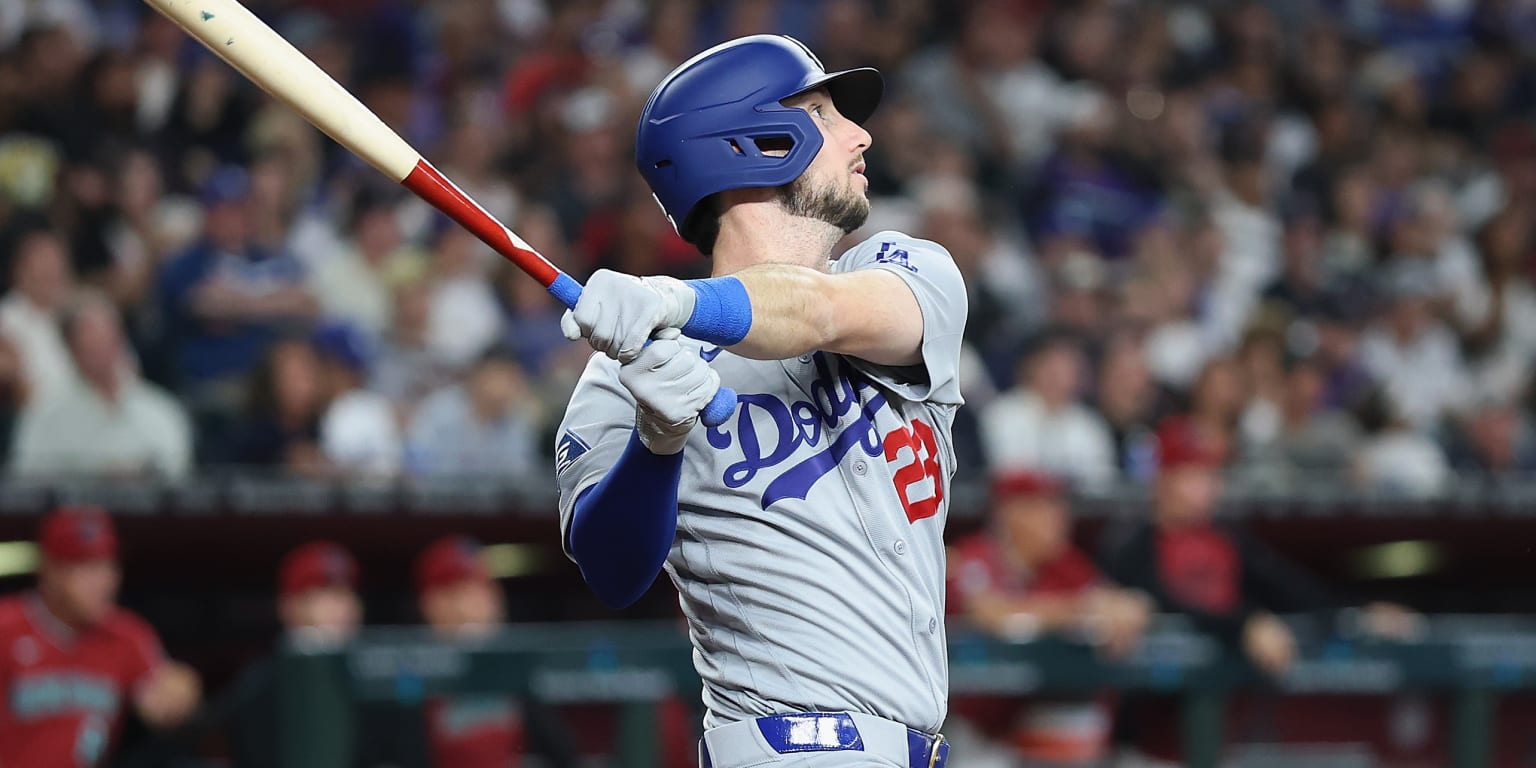
Kyle Tucker entered Wednesday hitting .243 with a .739 OPS through 59 games, a performance that has underdelivered sharply against the expectations attached to his four-year, $240 million contract signed this past offseason. But buried inside his season-long inconsistency is a fixable mechanical issue rather than a skill erosion—and that distinction matters for prop bettors willing to wait out the correction.
Tucker's core problem traces to swing selection, not bat strength. His chase rate sits at 24.1%, elevated from his historical 17.5% standard, but more damaging is his first-pitch aggression: he's swinging at 46.4% of opening pitches compared to 36.3% last season. That early commitment is cascading into worse counts and forcing him into fastball-dependent situations where he has less time to locate quality pitches. Manager Dave Roberts diagnosed it plainly: Tucker is being "much more hyper-aggressive than I recall," abandoning the patient approach that made him valuable enough to lead the free-agent market. His swing rate overall has climbed to 49.4% from 45.2%—a small number with outsized consequence because it reflects urgency rather than selection.
The contact quality has suffered as a result, though not catastrophically. His average exit velocity dropped one mph to 89 mph, and his barrel rate has been sliced in half from 10.8% to 5.3%—a meaningful decline that correlates directly with his swing-decision pattern. His .246 xBA nearly matches his actual .243 BA, meaning the batting average itself isn't suppressed by luck; he's simply not hitting the ball hard enough or frequently enough to generate offensive value. What's crucial: Tucker has shown he can snap back. He posted a .297 BA with a .910 OPS over a three-week stretch after dropping out of the No. 2 hole, proof that mental resets can recalibrate his approach. And his Wednesday three-hit game included a 107.6 mph homer—his hardest-hit ball of the season—signaling his power mechanism still functions when he connects cleanly.
For prop bettors, the angle is timing, not direction. Tucker's current discount reflects legitimate underperformance, but his underlying skill set—elite plate discipline when healthy, top-tier exit velo when engaged—hasn't evaporated. The market is pricing him as a below-average hitter in year one of a mega-deal; that overcorrects. If Roberts and Tucker's coaching staff can reinforce the patience protocol that made him a $240 million target, his next three-week hot streak will arrive at significantly better plus-money odds than his career profile justifies. Over props (hitting average, slugging percentage, total bases) on Tucker will likely compress from current levels once he posts two or three consecutive above-.300 xBA weeks. His barrel rate is also unlikely to stay at 5.3% for a full season; career regression toward 8-9% is standard for a hitter of his caliber, even one mired in mechanical funk. Early-June numbers are punishing him for a fixable problem, not a permanent one.