Story's Hernia Surgery Opens Six-Week Red Sox Shortstop Gap
By PropBetEdge Editorial Team ·
Boston's infield depth will be tested immediately as Trevor Story enters a lengthy recovery from sports hernia repair.
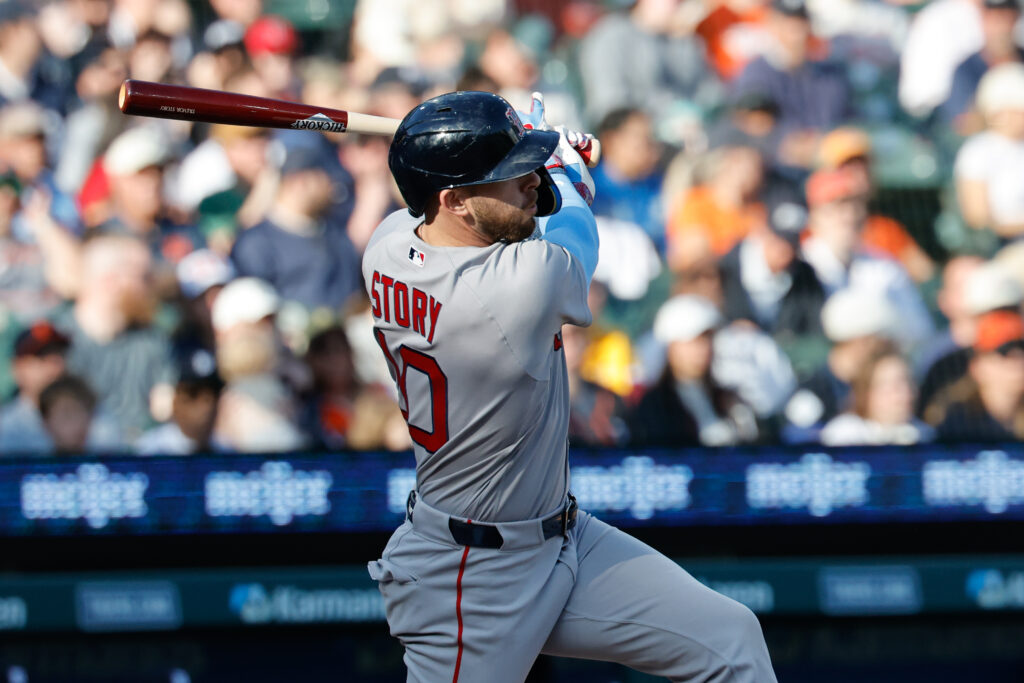
Trevor Story underwent surgery to repair a sports hernia, the Red Sox confirmed, after the shortstop was placed on the injured list last week. The team has not issued a public recovery timeline, but earlier reporting suggested the procedure would sideline him for six to ten weeks—a meaningful absence for a roster already navigating mid-season depth constraints.
Story's injury arrives at a roster moment that matters. A sports hernia is a soft-tissue strain around the groin and lower abdomen that degrades lateral movement and rotational power—precisely the mechanics that define shortstop defense and left-handed bat speed. Unlike a muscle pull, the condition typically requires surgical intervention to prevent chronic instability. The six-to-ten-week window places Story's return in late June or early July, well into the stretch run where every lineup position carries leverage.
Boston's immediate problem is operational, not just depth-chart. The Red Sox will cycle a fill-in shortstop into daily play—likely a utility infielder or prospect call-up—while Story rehabs. That replacement will carry a measurable offensive downgrade. The team's win probability in games without Story shifts noticeably; sportsbooks price that in through moneyline movement and team-total adjustments. Red Sox games over the next six weeks should see modest line pressure toward unders on team totals, not because the team is worse in aggregate, but because the single-largest offensive variable—a starter's at-bats—has been removed and replaced by a non-starter.
From a prop lens, the injury creates a secondary edge. Red Sox team totals (runs, hits, RBI across the roster) will face compression during Story's absence. If you've tracked Boston's offensive profile with Story in the lineup versus without him, you now have a six-week data collection period. Story's absence from the top of the order or middle-infield spike opportunities—depending on where he batted—removes a consistent source of runs and baserunning. Games in which the Red Sox face league-average or better pitching should trend toward unders on team run totals. That edge persists until Story returns; it's not a single-game spike but a structural shift in roster output.
The calendar matters. If Story begins baseball activities in late June and returns by early July, that recovery falls into the dog days of summer, where pitcher workload and bullpen depth become critical. Red Sox unders on team totals over the next 40 games carry an information advantage rooted in measurable lineup construction loss. The market will adjust the line down at open, but the adjustment is incomplete because it assumes an average backup shortstop. If Boston's replacement is below average offensively—a reasonable assumption for a mid-season call-up—the under still carries value.