Cleveland's Offense is Sputtering Into the Deadline—but the Pitching Anchor Keeps Them Alive
By Erik Schwartz ·
The Guardians have built their playoff case on elite pitching while their hitters rank dead last in slugging; deadline acquisitions will follow the team's pattern of restraint rather than desperation.
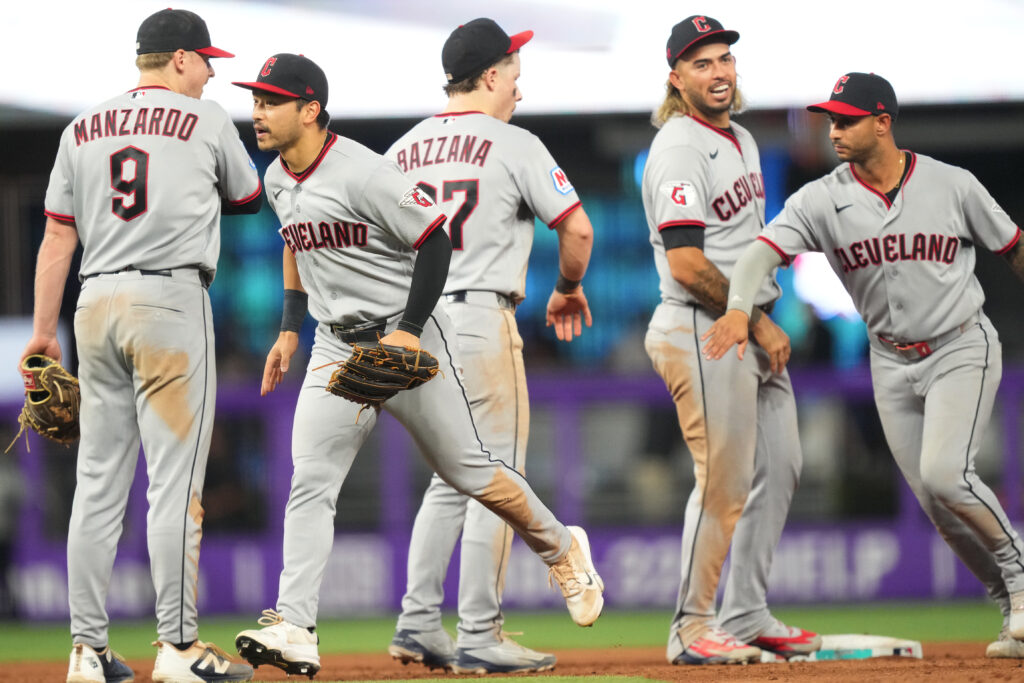
Cleveland enters the trade deadline as a fringe playoff team despite one of baseball's worst offenses. The Guardians sit in a nominal tie with the White Sox atop the AL Central at 51-46, though they trail Chicago in the tiebreaker and currently occupy the Wild Card line. That they're competitive at all is a testament to their pitching staff carrying an historically weak lineup.
The numbers are stark. Cleveland has scored just 385 runs, second-fewest in baseball ahead only of San Diego. Their hitters are batting .229 (29th), posting a .310 OBP (23rd tie), and slugging .369 (last in the majors). The 93 home runs rank fourth-fewest. What makes this particularly damaging is the absence of the traditional Guardians trade-off: elite contact. Their 22.4% strikeout rate sits 17th, no better than league average (22.1%), while their walk rate (9.8%) barely edges the MLB norm (9%). They're swinging and missing at a league-typical clip while also failing to drive the ball. This is not small-ball excellence hampered by modest power—it's a fundamentally broken offensive engine pretending to be a station-to-station operation.
The team's approach to catcher defense further illuminates the organizational philosophy: they traded for Patrick Bailey in May when he was hitting .146/.213/.185, prioritizing his elite glove over offensive production. That calculus works if your offense is elite elsewhere and you're optimizing the margins. It's a luxury tax on an already-depleted lineup. First base and multiple outfield spots are targets at the deadline, and rotation depth and relief help are on the board. Yet the Guardians historically resist splashy deadline acquisitions, preferring to retain high-end prospects. This reluctance—reasonable when you're defending a division crown but concerning when your offense ranks bottom-five in run production—will likely shape a measured rather than aggressive buyer's approach.
From a betting lens, this creates a structural edge: Cleveland will remain constrained by its offense regardless of deadline moves. The pitching staff will continue to suppress offensive outputs in their games, but the team's inability to manufacture runs means their own team totals carry elevated under risk. Even if they add an outfield bat or rotation help, the offensive ceiling remains dampened by a lineup that's presently 29th in batting average and last in slugging. Opponents will game-plan around limited run expectancy, and Cleveland's pitchers—despite their quality—will remain in low-leverage run environments where strikeout props flatten and margin-dependent props (first-five strikeouts, run-production lines) reward patient contrarians.
The playoff odds sit at 61.6% per FanGraphs, suggesting the market has priced in their pitching prowess and the weak AL. But that same market may overcorrect on deadline-addition optimism, pricing modest offensive additions as transformative. They won't be. Cleveland's offensive architecture is too broken to be fixed by a mid-tier trade deadline swap. Lean toward unders on their team totals and stay skeptical of any props that require their lineup to produce volume.