Pratt's First MLB Homer Signals Arrival Window for Brewers Shortstop
By PropBetEdge Editorial Team ·
Cooper Pratt's breakthrough power moment in his 28th game reveals the timeline for a prospect's offensive ramp-up and what it means for Milwaukee's lineup construction.
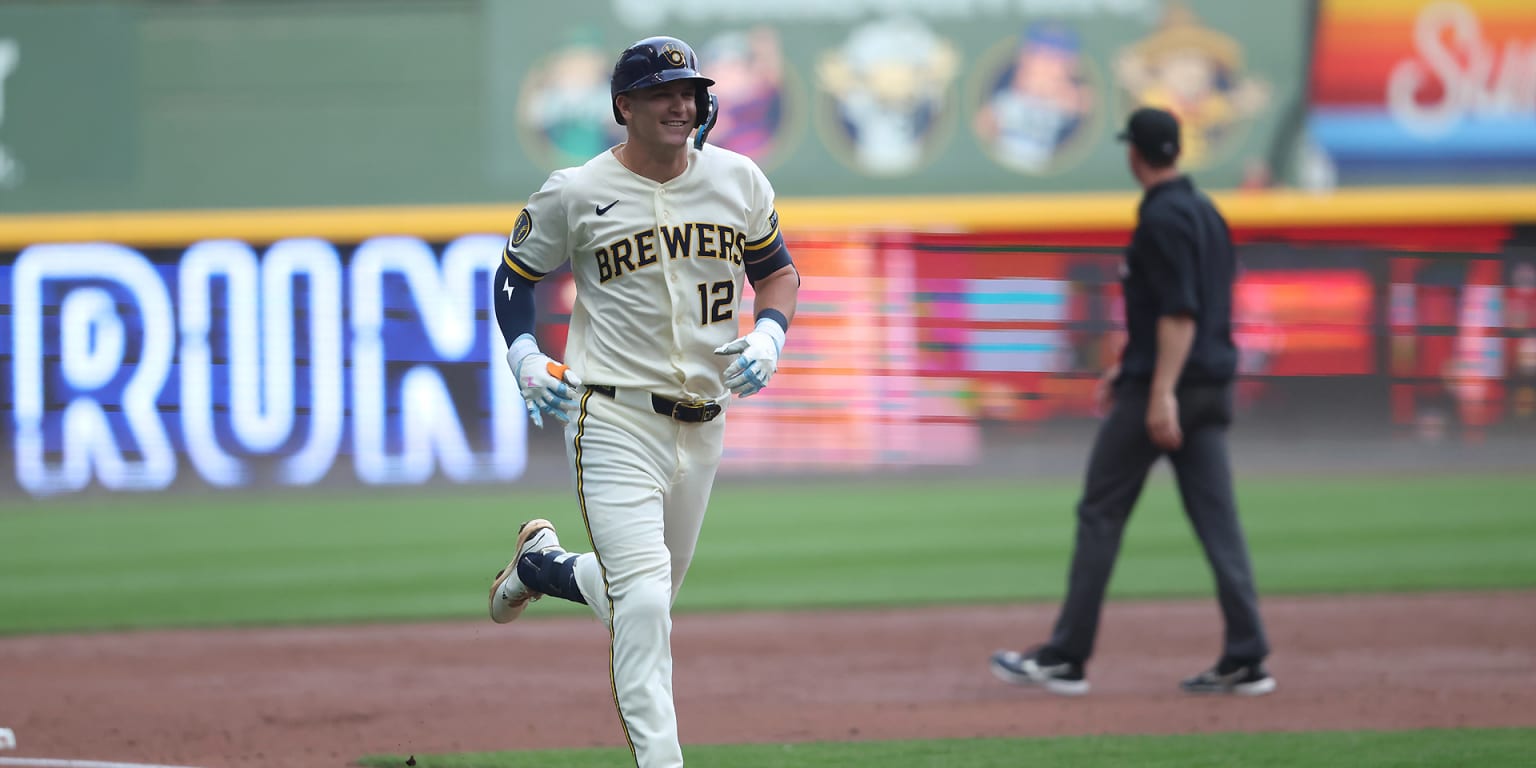
Cooper Pratt launched his first Major League home run Monday night at American Family Field, a second-inning solo shot off Mets right-hander Freddy Peralta. The Brewers rookie shortstop—MLB Pipeline's No. 53 overall prospect and Milwaukee's third-ranked talent—has now crossed a threshold that separates prospect performance from MLB sustainability. The homer came in his 26th start at the position, his 28th game overall since being called up on June 16.
The timeline matters here. Pratt entered Monday hitting .244 with seven RBIs across 27 games, a stretch that tracks close to what scouts expect from a young shortstop absorbing Major League pitching velocity and movement for the first time. The 21-year-old wasn't flailing—he was processing. That .244 average masks a player still calibrating his approach against a tier of competition he hadn't faced in the minors. The first home run, statistically, arrives somewhere between games 25 and 35 for most top-100 prospects who stick at their position without immediate demotions. Pratt is tracking inside that window.
The opponent—Peralta, a former Brewers stalwart now pitching for New York—carries narrative weight but limited predictive value for the angle. What matters is that Pratt connected on a fastball from a big-league starter, proof that his bat speed and approach aren't breaking down under MLB conditions. The Brewers have him at shortstop five times a week, meaning they're comfortable with his glove and willing to let his offense develop on a regular cadence. That deployment pattern is internal validation that Milwaukee doesn't see him as a short-term placeholder.
For prop bettors, Pratt's first homer opens a new layer of Milwaukee offensive construction. Through June and most of July, the Brewers' lineup lacked a young shortstop showing consistent power potential—Pratt fills that gap. His plate appearance volume is guaranteed; his home run pace will depend on pitch selection and velocity exposure. If he homers once in 28 games (his current rate), the expectation tilts toward one homer per week in the second half, assuming 3-4 at-bats per game. That's approximately 8-10 homers over the remaining 60-70 games Brewers are likely to play. The market has not yet repriced Milwaukee's offensive ceiling with Pratt as a reliable mid-lineup threat. His HR prop lines for the rest of July and August still carry old-regime pricing that assumes he's a .240 hitter with gap power only. Any line offering under 0.5 homers in a four-game stretch (roughly 15-16 plate appearances) understates his emerging power frequency.
The one-homer milestone also signals that Pratt's strikeout rate and contact frequency have stabilized enough for home runs to become a regular event, not a novelty. The Brewers will not bench him; the lineup depth doesn't allow it. Volume is locked. The only variable is power output per 500 plate appearances—and first homers are the market's last chance to buy low on that rate before Vegas adjusts.