Abrams in Play as Braves Scramble for Deadline Solutions
By PropBetEdge Editorial Team ·
CJ Abrams' breakout season looms over Atlanta's shortstop crisis with four days remaining before the trade deadline.
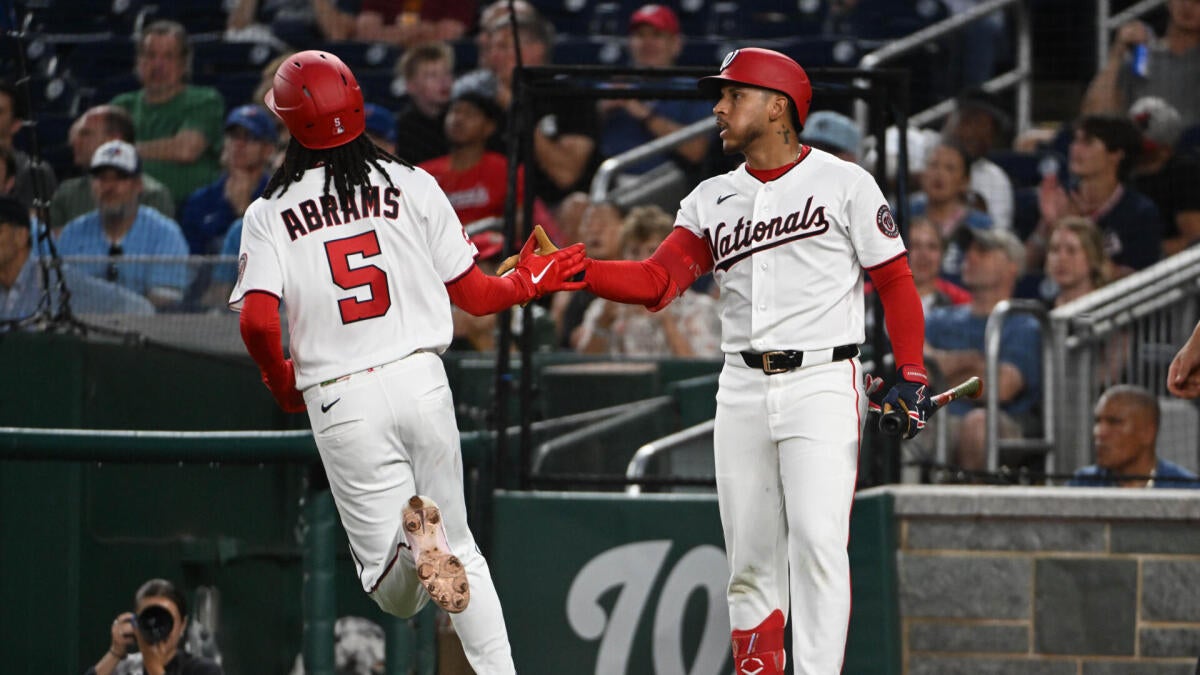
The Atlanta Braves open a four-game series against Washington on Thursday knowing exactly what they're missing: a functional shortstop. Their position group ranks 29th in on-base percentage (.274), 26th in batting average (.220), and 25th in OPS (.618)—a profile that hasn't changed since the season began. The Nationals counter with CJ Abrams, the 25-year-old hitting shortstop the Braves would build around if the math worked out. Abrams leads all shortstops with 27 home runs and 82 RBI while posting a .292 average and a .526 slugging percentage. That combination—elite power with respectable contact quality—represents the exact toolbox Atlanta needs before August 3rd passes.
Abrams' production is no mirage. Over a full season's worth of plate appearances, he's posted a .926 OPS, a mark exceeded by only one qualified shortstop in baseball (Kansas City's Bobby Witt Jr.). The timing is brutal for Washington's front office. The Nationals sit at 55-54, just two games behind Philadelphia for the third Wild Card spot. That thin margin means holding Abrams is a credible playoff-chase move, not a leverage gimmick. The Braves, despite the shortstop drought, enter Thursday as -155 favorites, a line that reflects Atlanta's overall roster strength and pitching edge. Grant Holmes (6-4, 3.79 ERA) opposes Washington's Jake Irvin, who's making his first start after a 60-day absence for a right shoulder strain. Irvin's track record is ominous: he led baseball in earned runs allowed last season with 114.
The betting market hasn't fully absorbed Irvin's health uncertainty. A starting pitcher returning from a two-month shoulder injury typically shows elevated walk rates and reduced fastball velocity in the early outings—a pattern that extends his pitch count and invites more traffic on the base paths. Irvin's career mark of 3.8 BB/9 sits above league average, and a rusty delivery off IL time compounds that. Holmes has been efficient this year, posting a 3.79 ERA with a 1.16 WHIP. The Braves' moneyline value at -155 is legitimate, but the angle with cleaner mechanics flows through the first five innings: Atlanta's run production should come early, before Washington adjusts to Irvin's availability.
For prop wagering, the Irvin return creates a single-event edge. His shoulder strain history and extended absence suggest elevated fastball pressure in innings 1-3, which tends to spike hard contact and HR rates against power-heavy lineups like Atlanta's. The Braves scored 4+ runs in the first five innings in seven of their last ten games—a rate inflated by their habit of pouncing on early fastball counts. Irvin's need to establish his fastball coming off IL lines up perfectly with that aggression. This isn't a persistent pattern (Irvin is a new variable), but a one-off alignment that will likely evaporate by game two of the series if the Nationals make a deadline move or if Irvin proves more intact than expected.
The broader context matters: this is a series preview, not a deep dive into the trade market itself. But the shortstop gap is material enough to move Atlanta's lineup into higher-leverage counts, especially against a pitcher managing his return. The moneyline stands at a fair price, but bettors seeking more durable value should focus on early-inning totals and first-five strikeout props, where Irvin's conditioning status creates a direct mechanical disadvantage.