McGreevy's Velocity Trade-Off Reveals Cardinals' Ace-Without-the-Heat Strategy
By PropBetEdge Editorial Team ·
The Cardinals' 25-year-old starter is pitching like a top-tier ace despite losing 1.6 mph off his fastball, a mechanical deficit he's weaponizing through precision sequencing rather than raw power.
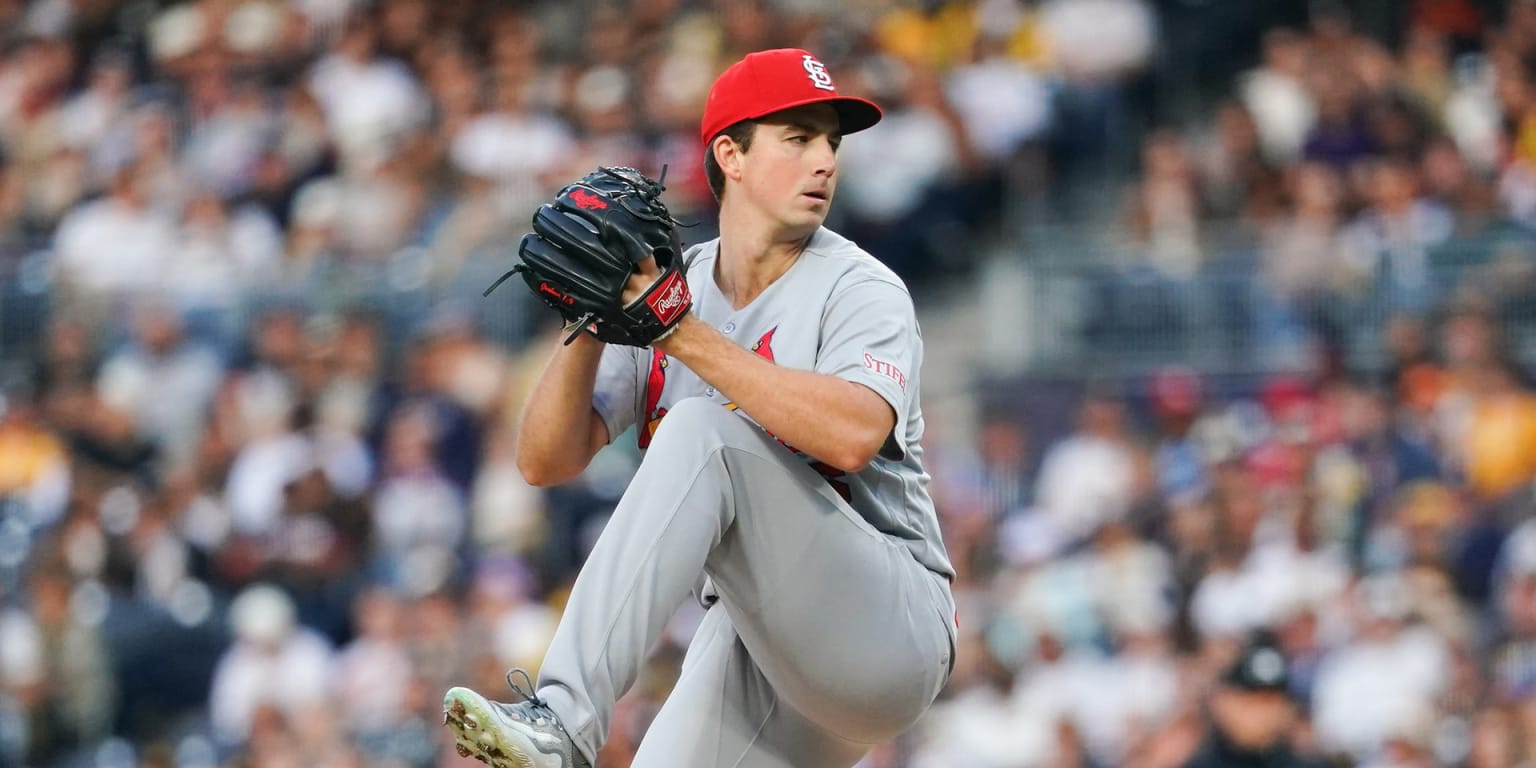
Michael McGreevy is running a 2.10 ERA through nine starts with a 0.88 WHIP and .189 opponents' batting average—elite marks that would earn a cy young conversation on any contender. The Cardinals are 21-9 in his starts since his 2024 debut. Yet he's doing it with his fastball sitting at 91.4 mph, down 1.6 from last season, a velocity loss that would normally signal decline. Instead, McGreevy has engineered a recalibration.
The mechanical story traces back to spring training: he arrived with a sprained ankle, pitched through it, and the compensation pattern it created gradually eroded his arm angle and extension. That's why the fastball lost juice—not because of age or injury severity, but because his release point drifted. He's aware of it. Unlike pitchers who panic when radar guns dip, McGreevy has treated the loss as an operational constraint, not a failure. His four-seamer and sinker combine for 97th-percentile fastball run value (8 inches of induced break), meaning the movement profile has stayed intact even as velocity compressed. That's the mechanical edge: he's throwing harder pitches through better location, not softer pitches period.
The sequencing shift is where the strategy becomes visible. McGreevy upped his changeup usage by 11 percentage points from 2025, generating eight whiffs in a single start against San Diego. That's not stat-chasing; it's tactical. Left-handed hitters have historically given him trouble, and a softer off-speed pitch thrown from his fastball arm slot creates a timing problem that raw velo alone never would. He's also more selective with his fastball now—he sits at 92-93 mph most of the time, saves the occasional 94-95 mph pitch for specific hitters or counts, making those rare touches register as harder than they are. This is old-school Cardinals baseball: strike-throwing, pitch-craft, situational discipline.
For prop bettors, the velocity dip creates a market disconnect. Books may shade McGreevy's strikeout prop down reflexively—velocity loss usually correlates with whiff rate erosion. But his 97th-percentile fastball run value and elite WHIP suggest the opposite trade is in effect: he's sacrificing some strikeouts on contact (fewer 95+ mph heaters) but compensating with better command and worse contact quality. His opponents' batting average of .189 ranks in the league's top tier, which is a contact-suppression stat that doesn't require high velocity. His cumulative ERA and WHIP are built on not giving hitters anything to elevate or center. As his ankle mobility continues to improve and his mechanics fully return to form, the fastball velocity will climb back toward 93 mph—his true baseline. When it does, the command stays intact and the strikeout rate should tick up without his ERA moving materially. That's the durable angle: McGreevy is proving his pitching skill isn't velocity-dependent, which makes his strikeout props undervalued relative to the quality of competition and his emerging off-speed arsenal.
The Cardinals' 25-18 record with McGreevy anchoring the rotation signals they're buying into the long-term upside. He's a legitimate mid-rotation starter now, trending toward frontline if the ankle rehab completes. Single-game strikeout props will move as word spreads about his top-10 WHIP and top-15 ERA, so the edge window is narrow. But multi-start projections—over the next 15-20 appearances—could find value if the market is still pricing him as a velocity-down risk rather than a pitcher navigating temporary hardware damage while his stuff remains intact.