Verlander's Farewell Season Resets Tigers' Rotation Math
By Ty Whitney ·
The future Hall of Famer's retirement announcement after 2026 reshapes Detroit's pitching depth and opens the door to prospect acceleration down the stretch.
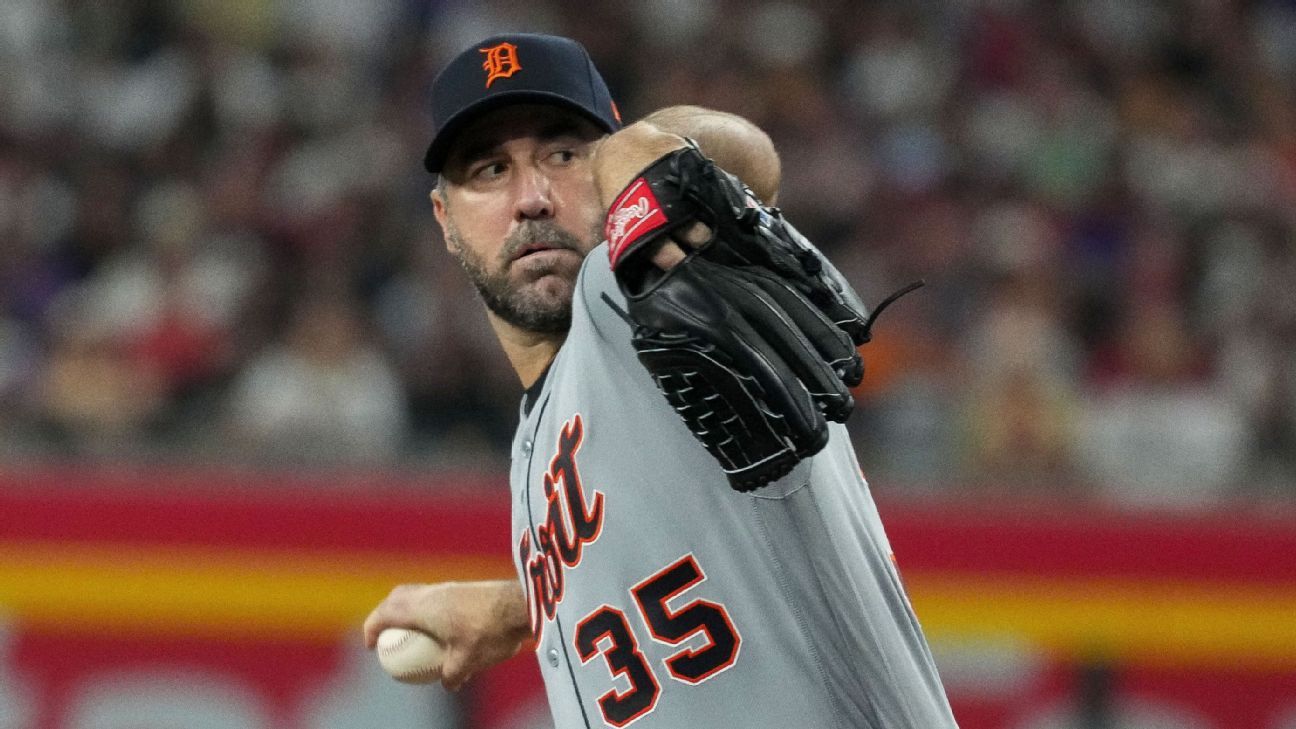
Justin Verlander announced his retirement Wednesday after the 2026 season ends, closing out a 21-year career that began in Detroit and will end there too. The three-time Cy Young winner, at 43 the oldest active player in baseball, made the decision public via statement, citing physical and mental toll accumulated over months of hip and hamstring trouble that has limited him to a single start in 2026. He was also named to the All-Star Game as a Legend Pick by commissioner Rob Manfred on the same day.
The timing matters as much as the fact itself. Verlander has pitched only 0.2 innings this season before landing on the injured list in April. Detroit entered 2026 with unclear rotation depth behind him—a gap the organization will now accelerate filling rather than waiting for prospects to develop on schedule. The Tigers have young arms in their system and will face decisions about innings limits and call-up windows that no longer depend on Verlander's availability or recovery timeline. A pitcher who won 266 games and struck out 3,554 batters leaves a void, but voids create opportunity in developmental hierarchies.
From a betting lens, Verlander's announcement doesn't move Tigers win totals or playoff odds materially—he hasn't pitched enough in 2026 to impact the team's actual trajectory, and the market already priced in his fragility at age 43. What shifts is confidence in the rotation's backend depth over the final three months of the season. If Detroit brings up a young starter ahead of schedule to compensate, that pitcher's workload patterns and usage rates change. Bullpen leverage also edges higher if the Tigers lean more heavily on relief depth to compensate for rotation uncertainty.
The prop angle centers on Detroit team totals and first-five-innings unders in the short term. With Verlander unavailable and younger arms likely to carry higher walk rates and lower strikeout frequencies than his career baseline, games where the Tigers field a substitute starter carry structural risk on the under side of their run production. Verlander, despite his age, maintained a 3.33 career ERA and elite strikeout rates—his absence flattens the team's expected output. Any lineup-based props tied to Tigers games where a call-up pitcher makes his first start warrant caution until that pitcher's actual performance data accumulates.
The broader narrative—a franchise icon closing his career where it started—plays well in headlines and legacy segments. From a betting standpoint, it's a roster composition event, not a talent acquisition or injury shock. Monitor roster moves and rotation sequencing over the next week; that's where the actionable angles surface.