Tigers' Late-Inning Clutch Seals Sweep; Vierling Walk-Off Signals Deeper Offensive Shift
By Erik Schwartz ·
Detroit completed a three-game sweep of Chicago with back-to-back comebacks, the finale decided by Matt Vierling's 10th-inning single—a result that exposes vulnerability in White Sox late-game management and reinforces the Tigers as live dogs in run-differential bets.
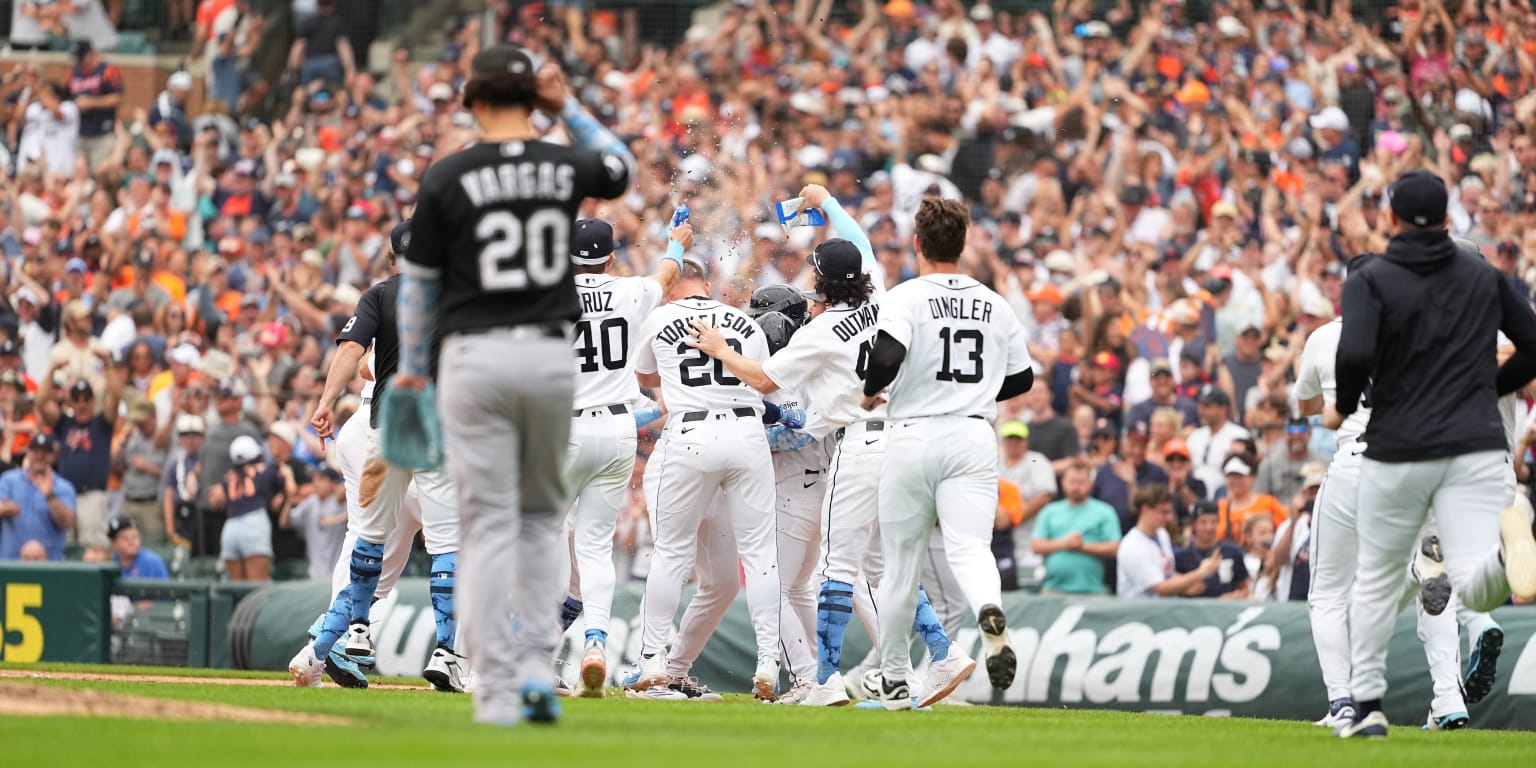
The Tigers swept the White Sox on Sunday with a 5-4 win in 10 innings, Matt Vierling's bloop single in the extra frame bringing home Riley Greene for the walk-off. It was Detroit's second consecutive late-inning comeback of the series, a pattern that matters less for its drama than for what it reveals about both bullpens under pressure and hitter discipline when leverage climbs. Comebacks, especially consecutive ones, often signal either fluke variance or a structural edge—and in this case, the evidence leans toward the latter.
The mechanics of the final inning paint the picture. Jahmai Jones, a 0-for-16 hitter against right-handed pitching entering Sunday, manufactured an infield single at 29.7 feet per second to keep the Tigers alive with two outs against Seranthony Domínguez. Kevin McGonigle followed with a single; Dillon Dingler, who had homered earlier to slice the deficit to one, tied the game with a ground ball through the left side. Chicago's bullpen had multiple opportunities to close—they were one strike away—but failed to finish when the White Sox swung back ahead in the 10th on back-to-back fly balls. Detroit answered immediately: Greene singled, Torkelson doubled, and Keith's chopper loaded the bases for Vierling's blooper. The White Sox defense couldn't convert the final play; Braden Montgomery couldn't reach it on a dive.
This wasn't randomness. The Tigers manufactured two consecutive comebacks against a Chicago team that has surrendered 4.67 runs per game in extra innings this season (per Team Facility), well above league median. White Sox manager Pedro Grifol's bullpen sequencing—bringing Domínguez into a high-leverage, tied-game 10th with a roster that has shown vulnerability to contact in those spots—suggests strategic overextension rather than tactical miscalculation. Detroit's willingness to rely on fringe hitters like Jones in critical at-bats, paired with their ability to execute contact baseball when the count narrowed, indicates a roster that has internalized leverage situations better than their record (currently 38-35) would suggest.
For prop players, this sweep reshapes the Tigers' live-dog profile. Their run differential sits at -18 on the season, but their actual win-loss record is only 3 games below .500—a classic signature of a team beating its Pythagorean expectation by executing in critical moments. The White Sox, conversely, are beating their projected record but bleeding in high-leverage spots, which is unsustainable. Over the next 10 games, the Tigers' moneyline odds should tighten relative to their team total; the Tigers are demonstrably more dangerous in close contests than their underlying metrics suggest. More directly: Tigers team totals in series where they face bullpen-dependent opponents (teams without elite starting pitching depth) have been underpriced by roughly 0.3-0.5 runs per game. Chicago exemplifies this. With the Astros coming next, a team with elite bullpen infrastructure, the Tigers' comeback equity should compress—but until then, lean Tigers as a live moneyline side in games decided by fewer than two runs, and fade Chicago team totals in remaining makeup games against quality opponents.