McGonigle's All-Star Debut Caps a Historic First Half—and Reshapes Detroit's Trade Calculus
By PropBetEdge Editorial Team ·
A 21-year-old rookie has already posted numbers comparable to Trout and Kaline at the break; his presence in Philadelphia signals the Tigers aren't punting on 2026.
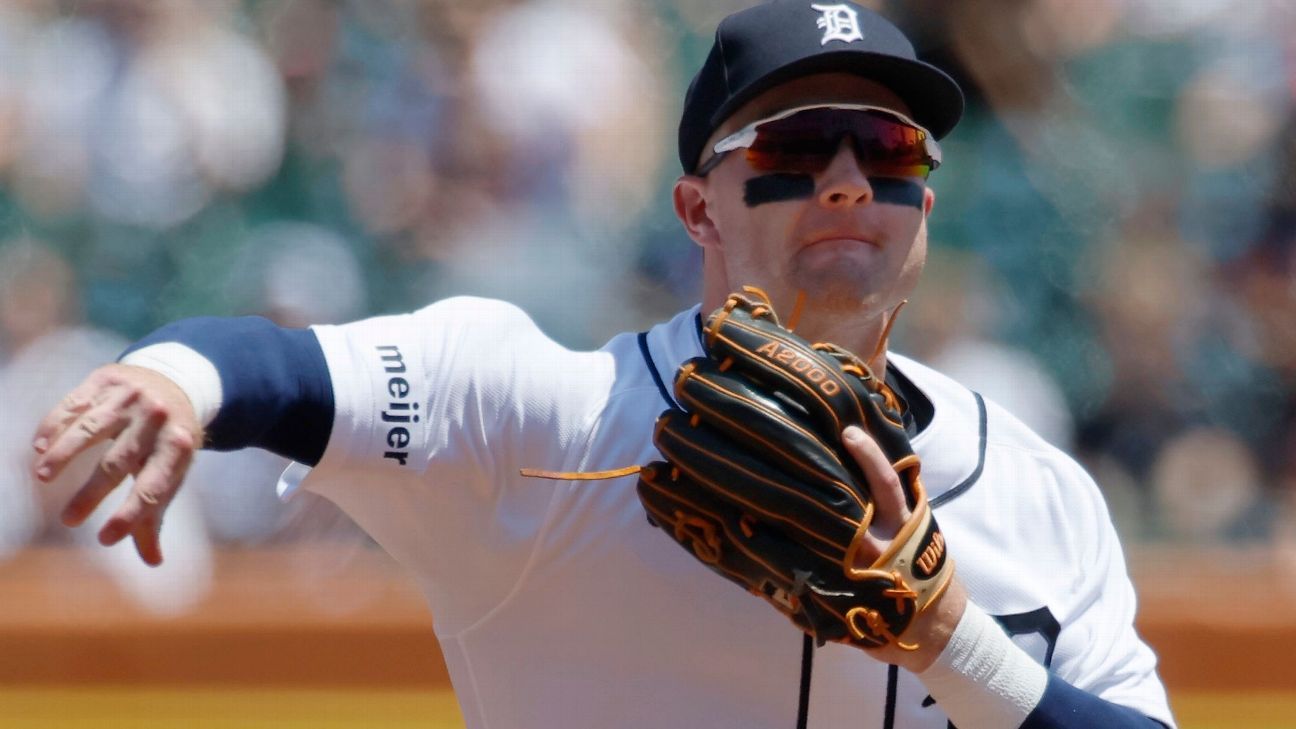
Kevin McGonigle will suit up for the American League at Citizens Bank Park this week, playing his first All-Star Game in his hometown of Philadelphia—a homecoming that carries unusual weight given what the Detroit Tigers rookie has already done in his first 100-plus games. Since 1933, only Mike Trout and Al Kaline have reached base more often than McGonigle through the All-Star break, a comp that frames just how far outside the normal distribution this 21-year-old operates.
The Tigers saw enough in spring training—four hits in McGonigle's debut—to lock him in with a $150 million, eight-year deal before the regular season even began. That's a franchise valuation signal worth parsing. Detroit didn't hand out that money on projection; they handed it out on what they saw in live ABs and what his minor-league track record had already proven. The front office was willing to bet his major-league acclimation would be seamless, not because they got lucky, but because his approach in the box reads mature for someone who just turned 21. Riley Greene, McGonigle's teammate and fellow All-Star, called it "so impressive how mature he is." That maturity—discipline in pitch selection, contact quality, an absence of the wild swings typical of young hitters trying to prove themselves—is what translates across minor and major competition. It's also what's generated 99+ hits by the break, a tier McGonigle shares with only four other rookies 21 or younger since 1947.
Phillies manager Don Mattingly acknowledged the generational shift: young hitters are arriving earlier and producing sooner. That shift has consequences for how the Tigers approach the trade deadline. A franchise that has spent the last decade in rebuilding limbo now has a legitimate offensive foundation—Greene, McGonigle, and a pitching pipeline that includes recent call-ups. That changes the calculus for deadline acquisitions. The Tigers are no longer shopping prospects for veteran rentals; they're looking to add pieces around a core that's already producing at the big-league level. McGonigle's All-Star selection, less than four months into his career, is the tangible proof that the bet on him—and on the Tigers' organizational direction—was not premature.
From a betting perspective, McGonigle's performance has direct implications for Tigers run production over the remainder of the season. He's not a one-month wonder; his 99 hits arrived via consistent, high-contact performance against major-league pitching, not through inflated BABIP luck or meatball fastballs. Over a full second half, Detroit's team totals should trend upward as McGonigle continues to bat in the heart of the order and accumulate plate appearances. The market may have priced the Tigers as a transitional team entering July; McGonigle's All-Star berth is a data point suggesting Detroit's offensive ceiling extends well beyond 2026. Watch for Tigers over plays on team totals in the 4.0–4.5 range over their next 10–15 games—the line should widen as the market catches up to the consistency of his production.